- All of Microsoft
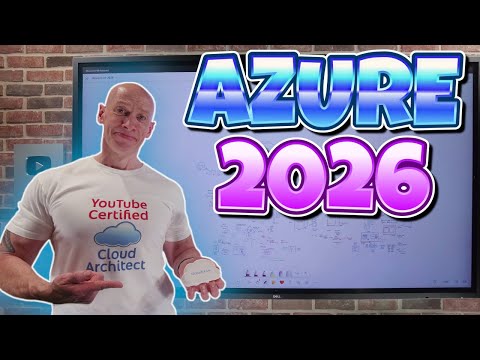
Azure State of the Union 2026: Key Wins
Principal Cloud Solutions Architect
Azure compute, regions and zones, governance with Entra ID RBAC, security via Key Vault and managed identity expert
Key insights
- Regions and Availability Zones: Azure is expanding zones and regions to improve resiliency and lower latency, adding zones in multiple U.S. regions and government clouds in 2026.
These additions help customers build zone-redundant architectures and meet stricter recovery and compliance needs. - VM types, pricing, and capacity: Azure covers diverse compute needs with general-purpose, burstable, spot, and confidential VMs and newer generations for AI workloads.
Use the pricing calculator, Savings plans or Reserved Instances for predictable workloads and plan for capacity guarantees when you need committed availability. - Governance and identity: Use Entra ID, management groups, resource groups and RBAC to control access and apply consistent rules across subscriptions.
Combine Policy, budgets, and scopes with infrastructure-as-code and deployment stacks to enforce compliance and automate safe deployments. - Storage and data for AI: Azure Storage now focuses on large-scale AI training and inferencing with features like denser block storage and data processing units for faster, more efficient throughput.
Plan tiering and hybrid movement to Azure AI services to balance cost and performance for model training and agentic workloads. - Azure Local and sovereign options: Azure Local supports disconnected on‑premises control planes and site-to-site recovery for edge and isolated environments.
Sovereign Landing Zone updates simplify compliance accelerators and in-country processing to meet national and regulated workloads. - Security and core compute services: Protect data with Azure Key Vault, disk encryption sets and managed identities; use availability sets, zonal or zone-resilient patterns to meet SLAs.
Design networks, proximity placement groups, and managed disks around latency, availability and security needs to optimize real-world application performance.
Introduction
In a recent YouTube presentation, John Savill's [MVP] reviewed the core state of Azure in 2026 and walked through key compute and platform topics for enterprise architects and cloud operators. This summary reports on that video and highlights the main themes, choices, and tradeoffs he presented, rather than presenting original research. Consequently, readers will find a clear snapshot of capacity, resiliency, governance, compute types, and storage advances as discussed in the video. Overall, the coverage helps teams plan for scale and compliance while weighing cost and complexity.
Capacity, Regions, and Expansion
Savill emphasized that Microsoft continues to expand datacenter capacity and region footprints to meet demand, and that this expansion affects design choices for global deployments. For example, adding new Availability Zones in specific regions reduces latency options and improves failover choices for distributed applications, but it also introduces planning complexity when choosing primary and secondary regions. Moreover, he noted that customers must balance latency and residency needs against cost and operational overhead, because using multiple regions incurs cross-region bandwidth and management costs. Therefore, teams should evaluate application requirements and expected traffic patterns before committing to a multi-region strategy.
The presenter also covered capacity guarantees and reservation options, suggesting that commitments such as savings plans and reserved instances deliver predictable pricing but reduce flexibility. In contrast, burstable and Spot instances offer cost savings for noncritical workloads while increasing the risk of interruption for stateful services. Thus, the tradeoff between price and reliability remains central: organizations willing to accept preemption can save substantially, while mission-critical systems should prioritize reserved capacity and availability features. Savill encouraged testing mixes of purchase options to find a balance that matches workload tolerance and budget.
Resiliency, Availability Sets, and Zonal Design
The video reviewed options for building resilient applications, comparing zonal deployments, zone-resilient services, and traditional availability sets. Savill pointed out that zones provide better fault isolation across datacenter infrastructure, but they require application-level design to handle the possibility of zone loss, which can complicate stateful systems and data replication. Additionally, proximity placement groups and capacity planning influence performance for latency-sensitive applications, while availability sets remain useful for older workloads that cannot span zones. Consequently, architects must trade simplicity against stronger isolation when choosing an availability topology.
Savill also discussed SLAs and the challenge of aligning service level agreements with actual deployment designs and recovery objectives. He stressed that higher SLAs often mean higher costs and more operational controls, and that customers should match their SLAs to tolerable recovery time and recovery point objectives. In short, improving resiliency typically requires more redundancy, orchestration, and testing, so organizations must factor in both technical and financial implications. Regular failover testing and capacity planning are essential to ensure that theoretical SLAs translate into practice.
Governance, Identity, and Management
A significant portion of the session focused on governance, including Entra ID, management groups, resource groups, RBAC, policies, and budgets. Savill recommended a layered governance model where management groups provide top-level guardrails and resource groups handle lifecycle boundaries, while role-based access controls limit permissions at the necessary scope. However, he warned that governance can become overly complex if policies and scopes proliferate without clear rationale, so teams must simplify where possible and document why specific rules exist. As a result, governance success depends on balancing control and agility to avoid slowing development cycles.
In addition, the video covered the division between control plane and data plane operations and how that affects auditing and security. Savill suggested using managed identities and centralizing secrets with Azure Key Vault where feasible, but he also highlighted the tradeoff between central control and application independence. Therefore, organizations should design identity and secrets management so that developers can move quickly while security teams retain visibility and the ability to revoke access. Clear automation and well-defined scopes help reduce human error and improve compliance.
Compute Types, Pricing, and Security
Savill walked through VM types, generations, confidential compute, and disk options, noting that newer VM families and DPUs improve performance for AI and data-intensive workloads yet require updated cost models. He explained that confidential compute offers strong protections for sensitive processing, but it can raise latency and limit available instance sizes, representing a tradeoff between security and cost or performance. Likewise, managed disks, disk encryption sets, and storage tiers offer choices between throughput and expense, so teams must profile workloads to avoid overprovisioning. Consequently, benchmarking and pilot projects remain critical before wide-scale migration.
The presenter also addressed pricing tools such as the calculator and noted that savings plans or reserved capacity can lower bills if you can predict usage. Conversely, the flexibility of on-demand and spot pricing suits variable or noncritical workloads but makes budgeting harder. Savill ended by urging a pragmatic mix: use reservations for steady-state systems, spot and burstable instances for flexible tasks, and confidential compute only where compliance requires it. In this way, teams can optimize cost while meeting reliability and security needs.
Storage Innovations and Final Takeaways
Finally, the video touched on storage developments aimed at AI-scale workloads, including tighter integration between block storage and AI services and new data processing units to handle heavy IO and compute tasks. While these advances boost performance for large models and agentic systems, they also increase the need for careful data lifecycle management and hybrid data movement strategies. Savill emphasized that partner ecosystems and co-engineered solutions ease migration, yet they introduce vendor choices that must align with existing architectures and compliance regimes.
In conclusion, the presentation offered a comprehensive look at the technical options available in 2026 and the practical tradeoffs teams must balance. As Savill made clear, better resiliency and performance often come with greater cost and complexity, so deliberate planning, testing, and governance are essential. Therefore, organizations should run targeted pilots, document decisions, and monitor usage to refine designs over time, ensuring that their cloud strategy meets both technical goals and business constraints.

Keywords
Azure State of the Union 2026, Azure 2026 updates, Azure announcements 2026, Azure roadmap 2026, Azure innovations 2026, Azure cloud trends 2026, Azure keynote highlights 2026, Microsoft Azure State of the Union