Power Platform: How AI is changing low-code development
Power Platform Cloud Solutions Architect @ Microsoft | Microsoft BizApps MVP 2023 | Power Platform | SharePoint | Teams
Power Platform remains an enterprise platform for apps, automation, data and agents as AI adds new ways to build.
Key insights
- Power Platform combines Power Apps, Power Automate, Power BI, Power Pages, Copilot Studio and Dataverse.
- The platform’s direction includes natural-language app creation, visual editing and code-based development.
- The research describes Power Platform as the execution, data, governance and security layer behind AI-assisted development.
- The available material does not establish licensing, tenant availability or prerequisites for the highlighted capabilities.
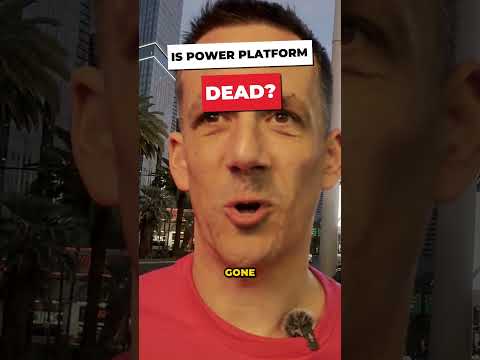
Microsoft Power Platform is evolving beyond traditional low-code as AI-assisted application creation joins visual design and code-based development. The shift matters to makers, developers and administrators deciding how to build business applications and govern their data and automation. Damien Bird’s material raises the question of whether Power Platform is still relevant, while the available research describes Microsoft’s continued platform strategy.
What's new
The change is not that Power Platform is being discontinued; the research describes a broader set of ways to build solutions on it. Instead of treating low-code as a separate development category, the direction is to combine natural-language prompts, visual designers and code. The underlying platform continues to provide services for applications, automation, analytics, websites, agents and business data.
The research says Microsoft highlighted building Power Apps from the Microsoft Copilot app, using underlying Power Platform capabilities such as connectors, Dataverse and administrator-defined policies. It also describes AI-assisted canvas and model-driven app development, hosted runtimes for AI-generated applications, and links with coding agents and external development tools. These are strategic directions in the research, not proof that every capability is available to every organization.
Who it is for and what you need
This direction concerns both business makers and professional developers, as well as administrators responsible for governance. The platform’s components include Power Apps for business applications, Power Automate for workflows, Power BI for analytics, Power Pages for external-facing websites, Copilot Studio for agents, and Dataverse for structured business data. The research describes connectors as a way to connect the platform with Microsoft and external services.
The supplied material does not specify required licenses, plans, regions, prerequisites or a rollout schedule for the AI-assisted capabilities it discusses. Administrators should verify those details for the particular feature before planning deployment. The research also describes governance controls for environments, connectors, data policies, security and application lifecycles as part of the platform’s role.
How it works
- Choose the solution type: an app, automated workflow, report, website or agent.
- Build through a visual designer or, where supported, use natural language and AI-assisted authoring. The research also describes collaboration with code and coding agents.
- Connect the solution to business data and services, including Dataverse or connectors where appropriate.
- Apply organizational governance, including administrator-defined policies and controls over environments, connectors and security.
This overview is a platform-level description, not a verified click-by-click setup guide. The supplied material does not give menu paths or instructions for enabling a specific AI feature.
Limitations and open questions
The available material supports the conclusion that Power Platform is changing, but it does not independently verify the rollout, licensing or availability of individual announcements. It also does not give implementation steps for the Copilot app experience or the hosted runtime. Treat those as items to validate against current Microsoft documentation before making tenant decisions.
Nor does the material establish that traditional low-code tools are disappearing. Its central point is that AI-assisted, visual and code-based development can coexist on the platform. No official Microsoft source URL was supplied with the research, so the source list links to Damien Bird’s material only.
Sources
Frequently asked questions
Is Microsoft Power Platform being discontinued?
The research says it is not being discontinued. It describes a shift toward AI-assisted development alongside visual and code-based approaches.
What products are included in Power Platform?
The research lists Power Apps, Power Automate, Power BI, Power Pages, Copilot Studio and Microsoft Dataverse.
What license do I need for AI-assisted Power Platform development?
The supplied material does not specify required licenses or plans. Check the requirements for the particular capability before deployment.
How do administrators govern Power Platform solutions?
The research identifies controls for environments, connectors, data policies, security and application lifecycles. It does not provide specific setup steps.