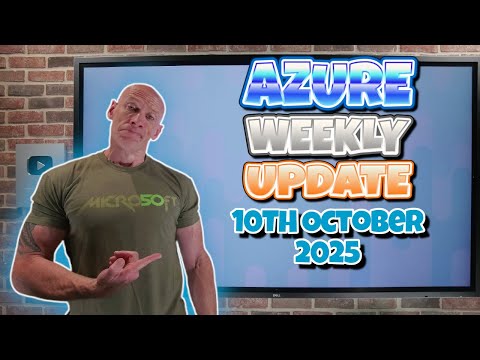
Azure Update - 10th October 2025
Principal Cloud Solutions Architect
Azure roundup AKS upgrades App Service Arc retirement Front Door signing Postgres MySQL backups GitHub Copilot modernize
Key insights
- Source note: This is a concise summary of a YouTube video titled "Azure Update - 10th October 2025" and is not an official Microsoft announcement.
Viewer claims and channel notes may reflect the creator’s perspective; verify details in official service docs before acting. - Kubernetes & compute changes: The video highlights AKS Fleet Manager adding an auto-upgrade channel and an AKS insights blade move to improve cluster management.
It also lists planned retirements and shape changes like NVv3 retirement, ADE retirement, and the App Service on Arc retirement. - Networking and delivery updates: New capabilities include App Gateway support for server-sent events and enhanced request signing for Azure Front Door (AFD signed request), aimed at improving traffic delivery and security.
- Data, storage and backups: Announcements cover vaulted backup for Azure Files Premium, a flexible service level for Azure NetApp Files (ANF), PostgreSQL discovery via Azure Migrate, updates to MySQL flexible backups, and the PostgreSQL 18 release.
- Observability, developer tools and marketplace: The update mentions Container Insights scaling improvements, the GitHub Copilot App Modernization reference, ASR support for Premium SSDv2, and a refreshed Microsoft Marketplace experience.
- How to follow and verify: Treat this video as a quick briefing and track updates via official Azure service pages and release notes for precise timelines.
Use subtitles and auto-translate in the video for quick comprehension, but confirm feature status in product documentation before making changes.
Overview
John Savill's latest video, titled Azure Update - 10th October 2025, delivers a brisk tour of recent Azure changes and practical notes for cloud professionals. The short update aims to aggregate small but meaningful platform moves, and the presenter notes that channel growth has forced him to stop reading or answering comments directly. Consequently, he encourages viewers to use broader community forums for follow-up questions and to search the channel for topic-specific content when needed.
Highlights and Feature Notes
The episode opens with several quick feature calls, including new AI tours and freshly released short-form videos that aim to help practitioners get up to speed faster. Additionally, the update spotlights management features such as the Azure Kubernetes Fleet Manager auto-upgrade channel and the relocation of the AKS insights blade, both intended to simplify lifecycle operations and observability. These changes reflect Microsoft’s continuing focus on operational automation and consolidated Monitoring.
Moreover, the video covers Compute and service lifecycle adjustments, notably the retirement plans for NVv3 instances and ADE (Azure Dedicated Hosts-related services), while also flagging the planned end of App Service on Arc. Storage and protection improvements receive attention too, with a mention of vaulted backup support for Azure Files Premium and new options for Azure NetApp Files flexible service levels. Finally, database and container updates such as PostgreSQL 18 release notes and container insights improvements for high-scale scenarios round out the list.
Retirements and Their Consequences
Retirements and deprecations create the most immediate operational implications, and the video makes that clear by naming specific items slated to be removed or redesigned. For example, ending NVv3 support and sunsetting App Service on Arc force architects to plan migrations, and they must weigh performance, cost, and compatibility when choosing replacements. Therefore, organizations should audit affected workloads now, test migrations in controlled environments, and schedule updates to avoid surprises during enforced end-of-life windows.
Operational Tradeoffs
Balancing rapid feature delivery with platform stability remains a core tradeoff highlighted by the continuous deployment model that governs Azure updates. On one hand, incremental rollouts bring early access to capabilities like auto-upgrade for Kubernetes fleets and newer database versions; on the other hand, they can increase the burden of change management, testing, and rollback planning for operations teams. Consequently, teams must invest in automation, robust staging environments, and observability to take advantage of new features without compromising reliability.
Cost and complexity also factor into decisions about adopting updates. For instance, switching to newer SKUs or managed services can reduce operational overhead but may increase monthly bills or introduce configuration differences that require retraining staff. Therefore, organizations should evaluate total cost of ownership and prepare training and documentation as part of any migration plan to balance immediate productivity gains against longer-term operational costs.
Security, Backup, and Compliance Considerations
Security and backup improvements in the update, such as vaulted backup for file storage, illustrate how defensive posture evolves alongside cloud features. These additions help protect against threats like ransomware, but they also require updated incident response plans and evidence collection processes for audits. Moreover, keeping pace with database and storage changes means reviewing backup windows, retention policies, and encryption settings to ensure that compliance and recovery objectives remain met.
Practical Guidance and Next Steps
For practitioners, the presenter advises a pragmatic approach: subscribe to official update channels, search existing video archives for quick how-tos, and use subtitling features to make content accessible in native languages. In addition, tracking aggregated sources such as platform update pages and community trackers will help teams spot changes early and prioritize testing efforts based on business impact. Ultimately, proactive planning, regular audits of deployed resources, and staged migrations will reduce risk and make it easier to adopt beneficial platform changes.
In closing, the video serves as a compact briefing rather than a comprehensive release document, and it reminds engineers that Azure’s continuous update model favors those who prepare for change. Therefore, combine automated validation, clear documentation, and periodic review cycles to manage the tradeoffs between innovation speed and operational stability effectively.

Keywords
Azure update October 2025, Azure Oct 10 2025 release, Azure release notes October 2025, Azure new features 2025, Azure security updates October 2025, Azure pricing update 2025, Azure AI services update October 2025, Azure roadmap 2025