Quick overview of the video
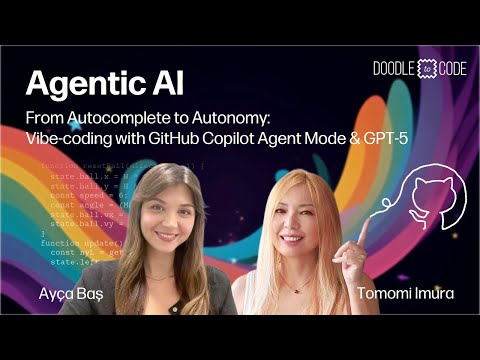
The Microsoft 365 Developer channel's video, presented by Ayça and Tomomi, explains the shift from autocomplete assistants to autonomous coding helpers in plain terms. In particular, the hosts demonstrate Agentic AI through a hands-on example of GitHub Copilot Agent Mode and a workflow they call Vibe-code. Moreover, the video mixes conceptual sketches with live demos to show how an agent can build a simple game, run git commands, open a pull request, and perform a code review with minimal human intervention. Consequently, the presentation aims to show not only new capabilities but also how developers might change their day-to-day work when agents act more independently.
What the demo shows
First, the video uses a brief doodle explanation to introduce Agentic AI, which frames agents as goal-directed systems that can act across apps. Then, the hosts switch to a practical session where Copilot in Agent Mode demonstrates asynchronous behaviors: it assigns issues, edits code in an isolated branch, and proposes a pull request while respecting repository protections. Next, the presenters show a step-by-step build of a game using what they call Vibe-code, where the agent carries forward tasks without constant human prompts. Finally, the demo closes by illustrating how the agent can run git operations and request human approval before merging changes, which emphasizes a balance between automation and developer control.
Technical foundations explained
In the video, Microsoft ties these capabilities to a broader platform approach, stressing standards and local compute options. For example, they reference the Model Context Protocol as a layer that helps models interact with apps, and the Windows AI Foundry as an option for running models on-device for performance and privacy benefits. They also describe multi-agent orchestration through tools such as Copilot Studio and customization via Copilot Tuning, which lets organizations tune agents to their own workflows and data. Therefore, viewers get a sense that Microsoft is combining cloud and local options to make agentic workflows more practical and governable.
Benefits and tradeoffs
On one hand, the video highlights clear productivity gains: agents can take repetitive tasks off developers' plates and keep work moving asynchronously, which often speeds up delivery cycles. On the other hand, the hosts point out that increased autonomy requires stronger guardrails, so systems must enforce branch protections and require explicit approval before deployment to avoid risky changes. Moreover, while local model execution promotes privacy and lower latency, it can increase device resource demands and complicate model lifecycle management for IT teams. As a result, organizations must weigh faster outputs against the cost, infrastructure complexity, and governance needed to maintain safe, reliable agents.
Challenges and practical concerns
The video does not shy away from the challenges that come with agentic systems, such as managing model reasoning limits and preventing unwanted behavior like hallucinations or unauthorized changes. Additionally, orchestrating multiple agents to work together introduces complexity in debugging, observing behavior, and attributing mistakes, which creates new operational needs for logging and approvals. Regulatory and compliance requirements also matter, since agents that access internal data or write code can trigger audit and privacy questions that organizations must plan for. Therefore, the video encourages cautious adoption with staged pilots, clear approval workflows, and tooling for monitoring and retraining agents as needed.
What to watch for next
Looking ahead, the video suggests further integration across Windows, GitHub, Azure, and Microsoft 365, which could make agentic assistants more ubiquitous in everyday tools. Yet, the broader adoption timeline will depend on improvements in model alignment, cost-effective local execution, and robust governance frameworks that earn developer trust. For now, the demo provides a practical glimpse of GPT-5-level reasoning applied to coding tasks and highlights how enterprises can start experimenting with tailored agents. In short, the video presents a balanced view: agentic AI can boost productivity, but it also raises real tradeoffs that require careful planning and oversight.