Summary of the Video
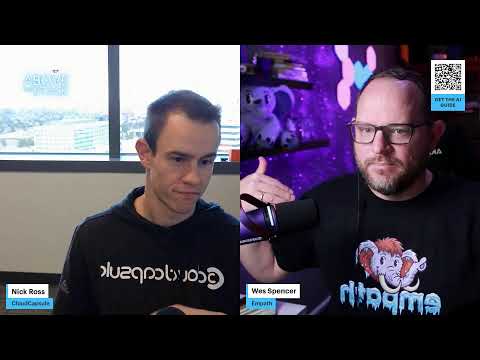
The YouTube episode titled Above the Stack Ep 7: AI is Different Than Cybersecurity, presented by Nick Ross [MVP] (T-Minus365), argues that AI security and traditional cybersecurity are related but distinct disciplines. The video explains that AI brings new threat models, vulnerabilities, and mitigation needs that organizations must address in addition to standard cyber defenses. Consequently, the discussion frames AI security not as a replacement for cybersecurity but as an evolution that integrates with existing practices.
Understanding the Core Distinction
First, the video clarifies the conceptual difference: while cybersecurity focuses on protecting systems and data from unauthorized access and manipulation, AI security must also consider model behavior, data poisoning, and misuse by agents. Moreover, AI systems can fail in ways that traditional software does not, because they often make probabilistic decisions and learn from changing inputs. Therefore, defenders must expand threat models to include harms that emerge from how models interpret and generate information.
In addition, the episode highlights that some protection strategies carry over, such as risk assessment and continuous testing, but their application requires adaptation. For example, access controls still matter, yet controlling what an AI model can learn or reveal is a different engineering challenge. Thus, organizations should treat AI security as a complementary layer that borrows from cybersecurity while adding new controls specific to models and data.
How Microsoft’s Frames AI within Security
According to the video, Microsoft’s approach embeds AI considerations into established cybersecurity frameworks rather than creating an entirely separate industry. Specifically, insights from Microsoft's AI Red Team leadership emphasize iterative, context-aware red teaming through the development lifecycle to make attacks more costly and less successful. This approach maintains continuity with familiar security processes while encouraging new checkpoints and tests tailored to AI behavior.
Furthermore, the video explains that firms should adopt a hierarchy of harms and focus resources where the potential impact is greatest. By combining model testing, monitoring, and controlled deployments, teams can reduce risk while still enabling innovation. Consequently, a practical balance emerges: reuse proven cybersecurity practices but evolve them to reflect AI-specific vulnerabilities.
Operational Implications for Security and Dev Teams
The episode explores concrete changes that security and development teams must make when AI systems enter production. For instance, organizations will need to develop new identity and lifecycle controls for AI agents, including mechanisms that assign ownership and manage permissions for autonomous actors. Moreover, teams must decide appropriate levels of autonomy and give models authority only after they prove reliability through testing and monitored use.
Because AI agents can take actions that have operational consequences, the video suggests treating them like junior analysts who earn trust over time. This progressive trust model requires strong observability, rollback capabilities, and well-defined escalation paths. In practice, these operational controls add complexity but also provide clearer governance over model behavior.
Tradeoffs and Implementation Challenges
The video does not shy away from tradeoffs: increasing model restrictions can reduce capabilities and slow innovation, while looser controls raise the risk of harm or misuse. Therefore, organizations must balance safety, performance, and speed of deployment; this often means accepting higher testing costs and longer development cycles to avoid costly failures later. In short, better safety requires investment and careful prioritization.
Another challenge explored is the scalability of red teaming and monitoring across many models and agents. While iterative red teaming helps, it consumes skilled resources and may not catch every novel attack. Consequently, firms must combine automated testing tools, human expertise, and continuous telemetry to detect emergent behaviors and adapt defenses quickly. This hybrid approach creates operational burdens but also yields a more resilient posture over time.
Looking Ahead: Practical Recommendations
Finally, the video offers pragmatic guidance: start by integrating AI-focused risk assessments into existing security programs, then layer in model-specific testing and identity controls. Teams should prioritize high-impact use cases for deeper review and adopt progressive autonomy rules that require evidence before granting critical permissions to AI agents. By doing so, organizations can enable AI benefits while limiting exposure to novel harms.
In conclusion, Nick Ross [MVP] (T-Minus365) presents a measured view that encourages blending proven cybersecurity practices with new AI-specific safeguards. Although the path requires tradeoffs in speed and cost, the proposed roadmap aims to help organizations deploy AI responsibly and with stronger defenses. Consequently, the episode serves as a useful primer for security leaders planning to scale AI safely within their operations.