Pro User
Timespan
explore our new search
Power Platform
Oct 13, 2026 12:20 PM
Power Platform: Let AI Build Your Apps?
by HubSite 365 about Nick DeCourcy (Bright Ideas Agency)
Consultant at Bright Ideas Agency | Digital Transformation | Microsoft 365 | Modern Workplace
Power Platform AI and GitHub Copilot build flows—expert view on sandboxing, responsible AI and Copilot Managed Runtime
Key insights
- Power Platform Skills enable AI coding agents like GitHub Copilot CLI and Claude Code to build, edit, run, and debug Power Automate flows and Power Apps directly in real environments.
Microsoft now supports both model-driven and canvas app generation from natural-language prompts. - Natural-language generation means users describe a business outcome and the agent proposes the data model, UI, workflows, and connectors.
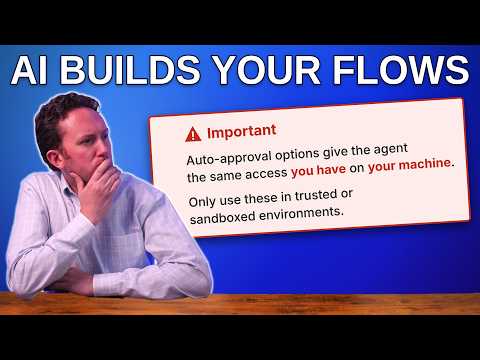
Teams must validate, refine, and test every generated solution before publishing. - Identity and reach are the central risks: agent permissions follow environment roles, connections, and co-owned flows, so an agent can gain broader access than expected.
"Sandboxed" only protects you when the agent's identity is strictly limited and given least privilege. - Governance remains essential: enforce environment permissions, connector and data policies, change approvals, and lifecycle controls.
For most business users, Microsoft’s Copilot Managed Runtime offers a safer, governed path than direct agent access to production environments. - Minimum setup checklist: restrict auto-approval, apply least-privilege roles, test generated flow definitions, and require manual sign-off before deployment.
Use monitoring tools such as Defender for Endpoint (local AI agent discovery is in preview and requires a compatible plan) to detect unexpected agent activity. - Practical recommendation: treat agent-driven app building as high-risk automation that speeds work but increases exposure.
Adopt strict governance, prefer managed runtimes, and require testing and admin review before any agent-created flow or app runs in production.
Keywords
AI Power Platform, AI for Power Apps, AI-generated Power Automate flows, Power Apps automation with AI, AI low-code development, Power Platform governance and compliance, AI-built business apps, Should AI build Power Platform apps