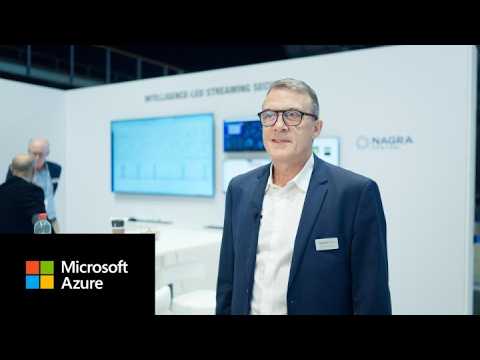
NAGRA Venturi: AI-supported media piracy detection
NAGRA Venturi is designed to connect piracy signals and help broadcasters, streamers, and rights holders prioritize investigations.
Key insights
- NAGRA Venturi is designed to combine watermark, IP, streaming, monitoring, and enforcement information.
- The system aims to connect separate piracy incidents and identify patterns across distribution networks.
- Threats are intended to be prioritized by factors such as revenue loss, rights value, and audience trust.
- The described integration uses Azure for cloud infrastructure and Microsoft Foundry for agentic AI capabilities.
- The available information describes AI-supported analysis, not fully autonomous legal enforcement.
NAGRA Venturi is designed to combine piracy signals and use AI-supported analysis to help identify and prioritize media piracy threats. The approach is intended for broadcasters, streaming providers, and rights holders managing investigations across multiple sources of information. Microsoft Azure demonstrates the partnership in a YouTube Short, while the available background describes an integration involving Azure and Microsoft Foundry.
What's new
The proposed approach shifts attention from treating each unauthorized stream as a separate incident to looking for connections among incidents and distribution networks. NAGRA Venturi, NAGRAVISION's streaming-security and anti-piracy platform, is described as bringing fragmented information together for security, enforcement, and business teams.
Inputs can include watermark data, IP and network information, streaming activity, monitoring results, analytics, enforcement activity, and device or platform-security signals. Azure provides the cloud infrastructure, while Microsoft Foundry supplies agentic-AI capabilities intended to analyze information and support decision-making. The goal is to help teams direct attention toward threats with greater commercial or operational impact.
Who it is for and what you need
The stated audience is broadcasters, streaming providers, and rights holders. The material does not specify a Microsoft license, Azure subscription requirement, technical prerequisites, or geographic availability, so organizations should not infer these details from the described architecture alone.
The research describes the Microsoft Foundry integration as planned and says demonstrations were announced at IBC. It does not establish general availability or provide a rollout schedule. It also does not give implementation instructions or identify which Venturi customers can use the integration.
How it works
The described workflow is about correlating evidence and helping teams prioritize cases, rather than automatically deciding every enforcement action. In broad terms, it works as follows:
- Collect signals from sources such as watermarks, IP addresses, streaming activity, devices, platforms, and monitoring systems.
- Correlate related events to assess whether separate incidents may be connected to one operation.
- Analyze patterns and prioritize potential threats by factors such as revenue loss, rights value, operational risk, and audience trust.
- Use the resulting intelligence to support investigation and enforcement decisions.
Human teams remain part of the process: legal, commercial, and contractual considerations can affect enforcement decisions. The material describes AI-supported analysis and prioritization, not fully autonomous legal enforcement.
Limitations and open questions
The available information does not explain how the system is configured, how its threat rankings are validated, or which data integrations are available in practice. It also does not quantify detection accuracy or response-time improvements. Treat the described capabilities as the intended approach, not a guarantee of outcomes for a particular deployment.
No alternative product, setup path, or previous workflow is detailed. The available sources also do not clarify the integration's current availability. Organizations considering it would need more information about deployment, data handling, licensing, and operational responsibilities.
Sources
Frequently asked questions
What does NAGRA Venturi do for media piracy detection?
It is described as combining piracy-related signals and helping teams identify connections among incidents, analyze threats, and prioritize cases. The material does not establish detection accuracy or guaranteed outcomes.
Does NAGRA Venturi use Microsoft Foundry?
The described planned integration uses Microsoft Foundry's agentic-AI capabilities to support analysis and decision-making. Availability and deployment details are not specified.
Is the piracy enforcement process fully automated?
No such capability is established. The material describes AI-supported prioritization and says human teams remain important for legal, commercial, and contractual decisions.
What license or Azure plan is required?
The available information does not specify a Microsoft license, Azure subscription, or other prerequisites.