- All of Microsoft
Power Platform: Why Low-Code Thrives
Certified Power Apps Consultant & Host of CitizenDeveloper365
Microsoft expert: low code lives with Power Platform, Copilot Studio and Power Automate for AI automation and consulting
Key insights
- Low-code: Low-code is not dead — it’s evolving into AI-driven app generation that makes development faster and more accessible.
Microsoft and others tie low-code to generative tools, keeping it central to digital transformation. - Power Platform: Power Apps, Power Automate, and Power BI form a unified low-code stack for building apps, automations, and analytics.
Enterprises get governance and extensibility so professional developers and citizen builders work together securely. - Microsoft Copilot Studio: Copilot Studio adds AI-assisted design, prompt-driven workflows, and agent flows that can automate complex tasks.
These tools combine human judgment with AI to handle context-aware processes and improve outcomes. - Productivity gains: AI plus low-code can cut development time from weeks to minutes and automate large volumes of routine work.
Organizations see faster time-to-market, lower costs, and higher throughput when they apply these tools sensibly. - Enterprise scale: Large organizations deploy low-code AI at scale with governance, security, and measurable ROI.
Real-world programs show significant time and cost savings when teams standardize patterns and monitor outcomes. - Citizen developers: Diverse backgrounds (like neuroscience or game design) and human-centered skills boost success in AI and automation roles.
Mix technical growth, consulting best practices, and AI tools to advance your career while avoiding burnout.
Episode Summary
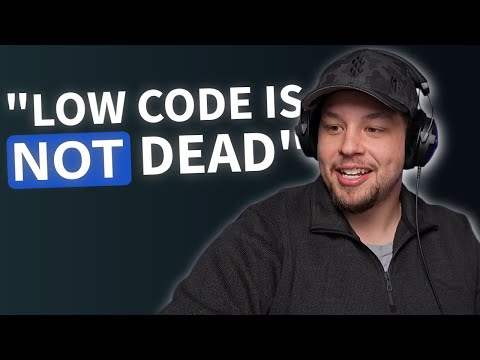
In the recent YouTube episode titled Low Code Is Not Dead. Let Me Tell You Why | #PowerTalks Ep. 80, host Griffin Lickfeldt (Citizen Developer) talks with Senior Solutions Architect Michael Heath about the current state and future of low-code development. Together they argue that low-code remains vital, especially as it fuses with AI tools and platform capabilities. Moreover, the conversation connects real product updates to practical consulting and career advice for builders at every level.
Guest Background and Human-Centered Perspective
Michael Heath brings an unusual mix of neuroscience and game design to enterprise technology, and he uses that mix to emphasize human-centered solutions. Consequently, he frames automation and AI around people’s needs rather than purely technical metrics, which shifts the design conversation toward usability and adoption. As a result, his approach highlights how diverse backgrounds can strengthen technical work and consulting practices.
Microsoft Tools and the Low-Code Revival
The episode places particular emphasis on Microsoft Copilot Studio and the broader Power Platform, describing them as key drivers of renewed interest in low-code approaches. Griffin and Michael explain that generative AI and integrated copilots accelerate app creation, reduce repetitive work, and surface context-aware recommendations, which together help teams move from prototypes to production faster.
At the same time, they stress that these tools do not eliminate the need for skilled designers and developers; instead, they change the nature of the work. For example, AI can scaffold interfaces and generate workflows, but humans must still validate decisions, manage data quality, and design secure, compliant solutions. Thus, the platform becomes more of an enabler than a replacement, and organizations benefit most when citizen developers and professional teams collaborate.
Real-World Impact and Tradeoffs
During the talk, both speakers point to real enterprise wins where low-code plus AI produces tangible savings in time and cost, such as faster automation of customer interactions and accelerated app delivery. However, they also acknowledge tradeoffs: rapid development can lead to shadow IT, inconsistent data models, and maintenance burdens if governance lags behind adoption. Therefore, organizations must balance speed with discipline to avoid short-term gains becoming long-term liabilities.
Furthermore, the episode discusses vendor lock-in and architectural constraints that can arise when teams rely heavily on platform-specific features. While the Power Platform offers strong productivity benefits, decision-makers must weigh portability and long-term maintainability. In practice, this balance often means investing early in governance, testing, and skilled oversight to keep the benefits while limiting the risks.
Challenges, Governance, and Career Advice
Griffin and Michael are candid about the human and organizational challenges that accompany rapid platform adoption, including burnout and role confusion. They recommend practical steps for consultants and teams, such as creating clear governance practices, documenting flows, and using AI to automate routine tasks while preserving human review for high-risk decisions. These steps help maintain quality and reduce the cognitive load that drives burnout.
On career growth, the guests encourage people to develop both platform fluency and domain knowledge, because employers value consultants who bridge technical and business needs. They also suggest that developers learn prompt engineering and agent design as these skills become central to building effective copilots and automated agents. Ultimately, diversifying skills and focusing on human-centered outcomes position professionals to lead in the evolving low-code landscape.
What This Means for Organizations
In closing, the episode makes a clear case that low-code is not dead but rather evolving into a more AI-integrated form that demands thoughtful adoption. Organizations that adopt Power Platform capabilities alongside governance and human oversight can accelerate projects without sacrificing security or scale. Consequently, the message for leaders is balanced optimism: embrace the efficiency of low-code and AI, but also invest in processes and people to keep solutions sustainable.
Keywords
low code, low-code platforms, low code development, Power Platform low code, low code trends, citizen developer, low code vs no code, enterprise low code adoption