- All of Microsoft
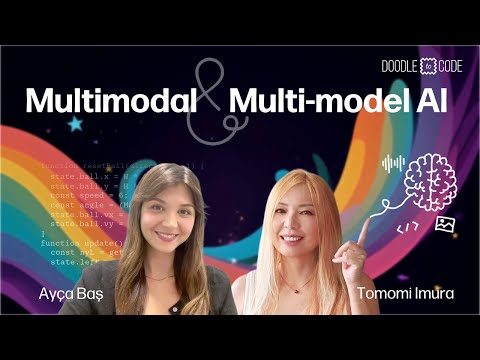
Azure AI: Multimodal & Multi-model
Microsoft expert explains multimodal vs multi-model AI with Azure AI demo extracting Japanese menus in Doodle to Code
Key insights
- Multimodality
AI that processes different data types at once (text, images, audio, video).
Tomomi uses a doodle to show how combining inputs gives richer context than treating each separately. - Multi-model
A system that runs several specialized models together, each tuned for a task, and coordinates their results.
It differs from multimodality because it composes models rather than a single model handling many input types. - Demo: menu extraction
Ayça demos an app that extracts and analyzes Japanese diner menus using OCR and parsing tools.
The demo shows practical steps for turning image menus into structured meal data. - MMCTAgent (Planner‑Critic)
Microsoft’s agent adds iterative reasoning for long-form images and video, using a Planner‑Critic loop to improve answers.
Developers can extend it with domain tools via ImageQnATools and VideoQnATools. - Accuracy and efficiency gains
Integrating specialized tools boosted GPT‑4V accuracy on MM‑Vet from 60.20% to 74.24% with MMCTAgent.
Smaller models like Phi‑3‑Vision can match larger models while lowering compute cost. - Enterprise readiness
Microsoft’s multimodal work targets scalable, secure deployments on Azure with private endpoints and Entra‑ID authentication.
This design supports production use while protecting data and access.
Overview of the Video
The YouTube video by Microsoft 365 Developer frames a clear lesson on the differences between multimodal AI and multi-model systems. In a short "Doodle to Code" episode, the team uses simple sketches to explain core concepts and follows with a hands-on demo that extracts information from a Japanese diner menu. Viewers also get a code walk-through that shows how the demo was built and how each component connects in practice.
What the Episode Explains
First, the hosts clarify that multimodal AI means a single model or system that can process varied data types such as text, images, audio, or video together. Then, they contrast that with multi-model systems where separate specialized models are orchestrated to handle different tasks and collaborate to produce a final outcome. The doodles make these ideas accessible, while the presenters emphasize how the two approaches serve different design goals and use cases.
Demo: Extracting a Japanese Diner Menu
Next, the video showcases a practical demo in which an app extracts and analyzes menu items from Japanese diner photos. The presenter, Ayça, walks through the app behavior and highlights how vision and text understanding components combine to recognize dish names and infer meal attributes. As a result, the demo provides a tangible example of when fused multimodal reasoning can speed up real-world workflows, such as menu digitization and nutritional classification.
Technical Highlights and Tools
Following the demo, the code walk-through shows how modular tools and APIs come together to form an end-to-end pipeline. The hosts reference systems like MMCTAgent for structured reasoning over images and video, and describe how toolkits such as ImageQnATools can be extended with domain-specific analyzers. They also point to results where integrating specialized vision and OCR tools boosted accuracy on a benchmark dataset from 60.20% to 74.24% on MM-Vet, illustrating measurable gains from careful tool composition.
Tradeoffs in Design Choices
Choosing between a single multimodal model and a multi-model orchestration involves several tradeoffs. On one hand, a unified multimodal model can produce cohesive reasoning across inputs which simplifies end-user interaction; however, it may require more training data that covers many combinations of modalities and use cases. On the other hand, a multi-model approach enables teams to reuse best-in-class, specialized models and swap components independently, but it can add complexity in coordination, latency, and debugging.
Challenges and Practical Considerations
In addition, the video addresses practical challenges such as aligning disparate data types, handling noisy or low-quality scans, and maintaining security in production systems. Transitioning from prototype to enterprise deployment often raises questions about scalability, cost, and governance, especially when models access sensitive documents or images. Finally, the presenters note that balancing model size, latency, and accuracy remains a core engineering challenge, and they discuss how smaller efficient models like Phi-3-Vision may reduce compute costs even while maintaining competitive performance.
Security, Scalability, and Enterprise Readiness
The conversation also touches on enterprise deployment patterns and secure-by-default design principles. For example, teams may prefer private endpoints, service-to-service authentication, and centralized identity control to reduce exposure and meet compliance requirements. Consequently, organizations must weigh these operational controls against the need for speed in iteration and the convenience of public-facing APIs.
Future Directions and Recommendations
Finally, the video suggests practical next steps for developers who want to experiment with multimodal systems. Start by defining clear performance goals and choose a modular path if you expect to swap models frequently. Conversely, consider a unified multimodal model when tight integration and holistic understanding of mixed inputs are the priority.
Conclusion
Overall, the Microsoft 365 Developer episode combines approachable doodles with a working demo and code walk-through to demystify both multimodal and multi-model approaches. Moreover, the video balances conceptual clarity with hands-on guidance, while fairly discussing tradeoffs and real-world challenges that teams face when adopting these technologies. For practitioners, the episode provides a useful starting point to choose an architecture that best fits their data, constraints, and long-term goals.
Keywords
multimodal AI, multi-model AI, multimodal learning, multi-model architectures, multimodal applications, multimodal models examples, AI model fusion, multimodal deep learning