SAFER: AI Builds Login Security Policies
Microsoft MVP | Author | Speaker | YouTuber
AI-driven Conditional Access for Microsoft Entra: autonomous policy creation, passkey campaigns, phased rollouts
Key insights
- Autonomous Security Policies
AI builds and enforces policies that block high-risk sign-ins and remediate threats automatically.
This reduces manual work and limits unnecessary user lockouts. - Conditional Access
Risk-based controls adapt in real time for users and AI agents, using signals like token risk and location to allow or block access.
Phased rollouts and agent-specific policies help apply controls safely at scale. - Identity Protection
Systems detect anomalous sign-ins (token theft, legacy auth, suspicious IPs) and record session details for investigation.
They avoid unsafe auto-remediation for MFA-risky sessions to prevent false closures. - Security Copilot
AI recommendations explain why a block occurred and suggest tuned controls such as phishing-resistant MFA or device checks.
It supports creating passkey campaigns and gradual deployments for smoother adoption. - Secure AI Framework (SAIF)
Guides Prepare, Discover, Protect, and Govern stages and applies Responsible AI principles like privacy, transparency, and accountability.
Red teaming and Defender for AI help detect model and prompt threats. - Data Governance
Data is regionally stored, double-encrypted, and can be deleted by customers, while integrations with Purview, Entra, and Defender enable monitoring and compliance.
The setup enforces least-privilege access and continuous assessments for stronger security posture.
Overview: Video Summary and Context
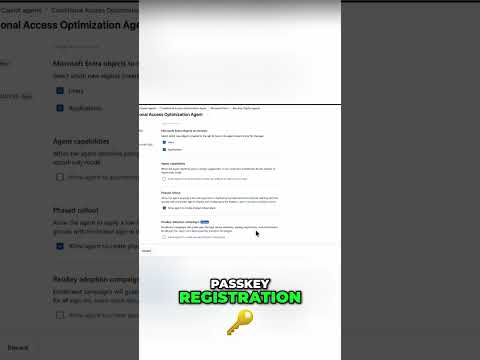
In a recent YouTube video, Peter Rising [MVP] demonstrates how Microsoft uses AI to build and tune security policies that aim to make logins safer and more resilient. He focuses on tools like the Conditional Access Optimization Agent and integrations with identity protection to autonomously detect and respond to risky sign-ins. Consequently, the video frames these capabilities as a step toward reducing manual policy work while improving threat response for enterprise environments.
Moreover, Rising highlights how these AI-driven features tie into broader Microsoft frameworks such as the Secure AI Framework (SAIF) and Zero Trust principles. He outlines phased rollouts, passkey campaigns, and the use of knowledge sources to produce smarter policy suggestions. Therefore, the video serves as both a technical walkthrough and a practical guide for IT teams considering adoption.
How the Technology Works
At its core, the system analyzes sign-in telemetry to detect anomalies like token theft, legacy protocol use, or connections from suspicious IP ranges, and then applies context-aware controls. For example, high-confidence risks can trigger blocks or require remediation steps automatically, while lower-risk events produce recommendations for administrators to review. In addition, the agent evaluates not just human users but also autonomous agents and service identities, treating them with similar risk-aware policies to prevent unauthorized access.
Furthermore, the video explains that policy creation can be automated and iteratively refined: AI proposes rules, teams run phased rollouts, and the system measures outcomes to minimize user friction. Tools such as Security Copilot help investigate why a sign-in was denied and suggest mitigations like phishing-resistant multi-factor authentication or device-based enforcement. Consequently, organizations can move from reactive incident handling toward proactive, data-driven policy design.
Key Components Highlighted
Rising walks through several integrated components, including Microsoft Entra identity protection, Conditional Access for agents, and baseline security modes built into Microsoft 365. He also discusses data governance layers such as Purview for posture assessments and Defender for active threat hunting. As noted in the video, these pieces work together to enforce least-privilege access while preserving auditability and regional data controls.
Additionally, the video stresses security engineering practices like double encryption, regional storage, and customer-controlled deletion as safeguards for sensitive telemetry. Red teaming and adversarial testing, referenced through tools similar to PyRIT, help validate system resilience. Thus, these safeguards aim to balance operational effectiveness with legal and compliance requirements.
Tradeoffs and Operational Challenges
Despite clear benefits, Rising notes important tradeoffs that IT teams must weigh, including the risk of false positives versus the need to block genuine attacks. For instance, aggressive automatic remediation can prevent breaches but may also disrupt legitimate users, which is why phased rollouts and audit modes matter. Moreover, tuning autonomous rules requires ongoing monitoring and human oversight to address edge cases and reduce unnecessary lockouts.
In addition, the video calls attention to challenges around explainability and governance: AI recommendations must be transparent enough for security teams to trust and validate. Legacy authentication methods, complex hybrid environments, and third-party agents add operational friction, and integrating passkey campaigns or agent-specific controls may demand cross-team coordination. Therefore, organizations should plan for both technical and change-management effort when adopting these features.
Practical Considerations for IT Teams
Rising recommends a staged approach: start in audit mode, review AI-suggested policies, then move to phased enforcement while tracking user impact and security outcomes. He also suggests leveraging knowledge sources and built-in recommendations to accelerate policy creation, yet insists on human review for sensitive or high-impact rules. Consequently, teams can gain efficiency while retaining final control over enforcement decisions.
Finally, the video emphasizes governance and compliance: incorporate these AI-driven controls into established security processes, document decisions, and ensure data residency and privacy requirements are met. By balancing automation with oversight, organizations can reduce risk and improve resilience without sacrificing user productivity. Overall, Peter Rising’s walkthrough offers a practical roadmap for teams that want to adopt autonomous policy generation responsibly and effectively.

Keywords
AI security policies, safer logins, autonomous security policy generation, passwordless authentication, AI-driven login protection, zero trust authentication, identity and access management, YouTube Shorts cybersecurity tips