Microsoft Copilot Studio
Apr 18, 2025 10:39 AM
AI Action-Driven Success: Why Taking Initiative Wins Big
by HubSite 365 about Daniel Anderson [MVP]
A Microsoft MVP 𝗁𝖾𝗅𝗉𝗂𝗇𝗀 develop careers, scale and 𝗀𝗋𝗈𝗐 businesses 𝖻𝗒 𝖾𝗆𝗉𝗈𝗐𝖾𝗋𝗂𝗇𝗀 everyone 𝗍𝗈 𝖺𝖼𝗁𝗂𝖾𝗏𝖾 𝗆𝗈𝗋𝖾 𝗐𝗂𝗍𝗁 𝖬𝗂𝖼𝗋𝗈𝗌𝗈𝖿𝗍 𝟥𝟨𝟧
AI era thrives with a doer mindset for success; explore AI adoption insights and Microsofts role in AI innovation.
Key insights
- Doer Mindset: This concept highlights the importance of taking initiative, acting decisively, and learning by doing, especially as AI becomes more integrated into work and life. People with a doer mindset act instead of waiting for perfect conditions.
- Executive Leadership in AI Adoption: Strong leadership is key to driving AI implementation. Leaders who encourage action help their teams quickly adapt to new technologies and avoid being slowed down by over-planning.
- Action Over Perfection: Waiting for flawless AI implementation plans can slow progress. The podcast stresses that practical steps and hands-on experimentation are more effective than aiming for perfection before starting.
- Cultural Readiness for Innovation: Building a workplace culture that supports quick decision-making and embraces change is necessary for successful AI adoption. This helps organizations stay competitive as technology evolves.
- Balancing Governance and Speed: Organizations need to find the right balance between managing risks (governance) and moving fast enough to benefit from new AI capabilities.
- Future of AI Agents: The discussion previews advances such as improved AI agents, which are becoming more effective entry points compared to traditional chat-based experiences, offering smarter ways to interact with technology at work.
The Doer Mindset: How AI Rewards Action-Takers – Insights from Daniel Anderson [MVP] and Abram Jackson
Introduction: The Rise of the Doer Mindset in the AI Era
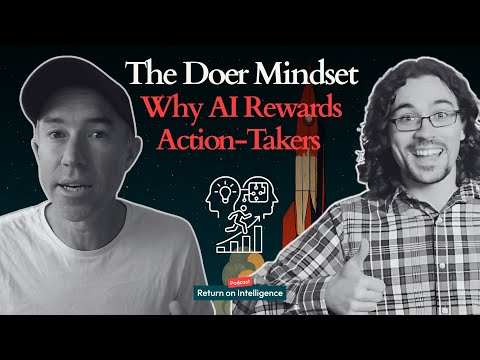
In a recent episode of the Return on Intelligence podcast, Daniel Anderson [MVP] and Abram Jackson from Microsoft delve into a topic that is increasingly relevant as artificial intelligence continues to transform industries: the importance of the doer mindset. As organizations and individuals navigate the rapid changes brought by AI technologies, the discussion highlights why being proactive and taking decisive action is more critical than ever. The podcast, titled "The Doer Mindset – Why AI Rewards Action-Takers," explores how this approach can help leaders and teams drive successful AI adoption, overcome common barriers to progress, and prepare for the future of work. The conversation is particularly timely in 2025, as the pace of AI innovation accelerates and the need for adaptability and quick learning becomes a defining factor for success. By examining real-world examples, such as the leaked letter from Shopify’s CEO regarding AI adoption, and drawing on Microsoft’s internal strategies, Anderson and Jackson offer a nuanced perspective on how to thrive in an AI-powered world. This article summarizes the key insights from their discussion, breaking down the core concepts and practical implications for today’s professionals.Understanding the Doer Mindset: Taking Initiative in a Fast-Moving World
The doer mindset is more than just an attitude—it is a way of operating that prioritizes action, experimentation, and continuous learning. Unlike traditional approaches that may emphasize careful planning and risk avoidance, the doer mindset encourages individuals and organizations to move forward even when all variables are not fully known. According to Daniel Anderson and Abram Jackson, this proactive stance is essential in the context of AI, where technologies and best practices are evolving at breakneck speed. Instead of waiting for perfect conditions or flawless implementation plans, those with a doer mindset embrace uncertainty and use it as an opportunity to learn. They are quick to test new AI tools, integrate them into workflows, and iterate based on real-world feedback. This approach is supported by the idea that action generates valuable data, which in turn can be leveraged by AI systems to drive further improvements. As Anderson and Jackson point out, this creates a virtuous cycle: the more action you take, the more you learn, and the better positioned you are to harness AI’s capabilities. However, developing a doer mindset is not without its challenges. It requires a willingness to accept mistakes as part of the process and a culture that rewards initiative rather than punishing failure. The podcast emphasizes that while process, frameworks, and data are important, they are not sufficient on their own. Action is what ultimately turns potential into progress.AI Adoption: The Leadership Challenge and Organizational Culture
One of the central themes in the discussion is the role of executive leadership in driving AI adoption. Drawing on the example of Shopify’s CEO and insights from Microsoft’s own journey, Anderson and Jackson highlight that top-down support is critical for fostering a culture where the doer mindset can flourish. Leaders set the tone by encouraging experimentation, supporting risk-taking, and providing the resources needed to implement AI solutions. Yet, this is easier said than done. Many organizations fall into what the podcast refers to as "inaction traps," where the fear of making mistakes or the pursuit of a perfect plan leads to paralysis. In the AI era, this cautious approach can be particularly costly, as competitors who are willing to move quickly gain a significant advantage. The challenge for leaders, then, is to balance the need for governance and oversight with the imperative for speed and flexibility. Anderson and Jackson discuss the tradeoffs involved in this balancing act. On one hand, strong governance is necessary to ensure ethical AI use, data privacy, and compliance with regulations. On the other, excessive bureaucracy can stifle innovation and slow down implementation. The most successful organizations, they argue, are those that find ways to empower teams to act while maintaining appropriate safeguards. Additionally, building a culture that is ready for AI innovation involves more than just technology. It requires investing in upskilling employees, encouraging cross-functional collaboration, and creating feedback loops that allow lessons learned from early experiments to inform broader strategy. This cultural transformation is often the hardest part of AI adoption, but it is also the most rewarding.Why Waiting for Perfection is a Mistake: The Case for Imperfect Action
A recurring message throughout the podcast is that waiting for perfect AI implementation is not only unrealistic but also counterproductive. In the fast-moving world of artificial intelligence, the landscape can shift dramatically in a short period of time. Those who wait for all the pieces to fall into place may find themselves left behind by more agile competitors. The doer mindset advocates for "learning by doing"—taking small, manageable steps, gathering data from real-world use, and iterating rapidly. This aligns with the principle that practical results matter more than theoretical plans. As Anderson and Jackson note, action creates the feedback necessary for improvement, allowing teams to adapt quickly to new information and changing circumstances. However, this approach does involve tradeoffs. Moving quickly can mean accepting a higher level of uncertainty and risk, especially in the early stages of AI deployment. There may be missteps or unintended consequences, but these are often outweighed by the benefits of being first to market or gaining early insights. The key is to strike a balance between speed and caution, using governance frameworks to guide decision-making without becoming a bottleneck. Moreover, the podcast explores how AI’s memory features and agent capabilities are poised to further accelerate this cycle of action and learning. By capturing and analyzing data from every interaction, AI can provide even more targeted recommendations, making it easier for organizations to refine their strategies and achieve better outcomes over time.The Future of AI: Agents, Memory, and New Entry Points
Looking ahead, Anderson and Jackson preview upcoming developments in AI technology, particularly around the concept of AI agents and enhanced memory features. They argue that AI agents—autonomous systems capable of performing complex tasks—are becoming more effective entry points for users than traditional chat-based experiences. These agents can proactively assist with workflow automation, decision support, and knowledge management, freeing up human talent for more strategic work. This shift has significant implications for both individuals and organizations. For professionals, mastering the use of AI agents will be a key differentiator in the job market. For businesses, integrating these capabilities can drive productivity gains and open up new opportunities for innovation. However, the transition is not without obstacles. Ensuring that AI agents operate ethically, transparently, and in alignment with organizational goals will require ongoing attention and investment. Furthermore, the conversation touches on the importance of building systems that balance speed with governance. As AI becomes more deeply embedded in daily operations, the need for robust oversight grows. Yet, organizations must avoid falling into the trap of excessive caution, which can hinder progress. The future belongs to those who can move decisively while maintaining a clear sense of purpose and responsibility.Conclusion: Embracing the Doer Mindset for Lasting Success
In summary, the Return on Intelligence podcast episode featuring Daniel Anderson [MVP] and Abram Jackson offers a compelling argument for why the doer mindset is essential in the age of AI. By emphasizing action over perfection, encouraging experimentation, and fostering a culture of continuous learning, individuals and organizations can unlock the full potential of artificial intelligence. The tradeoffs involved in balancing speed, governance, and innovation are real, but the risks of inaction are even greater. As AI technologies continue to evolve, those who are willing to act decisively and learn from experience will be best positioned to thrive. The message is clear: in the AI era, fortune favors the doers.

Keywords
Doer Mindset AI Action-Takers AI and Productivity Taking Action with AI Benefits of Doer Mindset AI Success Strategies Motivated by AI
HubSite 365 Apps