Personal AI Needs More Than Conversation
Artificial Intelligence (AI), Open Source, Generative Art, AI Art, Futurism, ChatGPT, Large Language Models (LLM), Machine Learning, Technology, Coding, Tutorials, AI News, and more
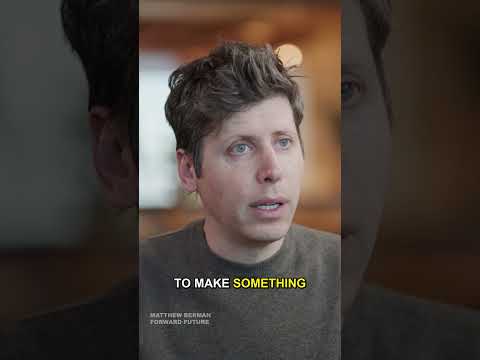
Matthew Berman’s Short frames Sam Altman’s view of personal AI, a shift from prompt-by-prompt chats toward assistants that retain context and act.
Key insights
- The Short is titled “Sam Altman on What Personal AI Still Needs.”
- The accompanying research describes personal AI as an assistant that understands a user's context over time.
- Persistent memory is presented as a key step beyond isolated prompt-and-response interactions.
- Trust, control over data and reliable actions remain open requirements for personal AI.
Matthew Berman published a 37-second YouTube Short titled “Sam Altman on What Personal AI Still Needs.” The supplied video description contains no transcript, so the Short’s precise spoken points cannot be confirmed from the available material. The accompanying research frames the subject as a move from conversational assistants toward AI that can retain useful context and carry out tasks.
What's new
The material presents personal AI as more than a chatbot that answers isolated prompts. It describes an assistant that could understand a person’s goals, preferences, work patterns and previous interactions over time. Persistent memory—the ability to retain relevant information between interactions—is identified in the research notes as a key part of that direction.
The notes also distinguish an agent from a conventional assistant: an agent may receive a goal, make decisions and use software to complete work with limited supervision. These are concepts discussed in the background material, not capabilities demonstrated or verified in the Short itself.
Why it matters
For users, longer-term context could reduce the need to repeat preferences or explain recurring work. The research offers examples such as preparing a meeting brief, summarizing unresolved correspondence and reminding someone about a deadline. It does not establish that a product shown in the Short can perform those tasks.
For IT administrators and organizations, the research highlights the governance questions that come with access to work files and applications. It says personal assistance would need to respect boundaries around personal content, company data and confidential information. The material gives no product-specific licensing, rollout or tenant availability details.
How it works
The research describes a possible progression from observation to action: an AI system could summarize relevant context, recommend a step, prepare it, seek approval and, within defined limits, execute it. This graduated approach is a framework in the notes, not a workflow demonstrated in the 37-second video.
Memory and action are separate requirements. Retaining useful context could make responses more relevant, while using applications to complete tasks raises questions about permissions and oversight. The notes call for controls over what the system can access, what it remembers and which actions require approval.
Limitations and open questions
The supplied Short description has no transcript, and its brief runtime limits what can be established about Altman’s full argument. We cannot verify which specific requirements he names in the clip, or whether it contains a product demonstration. The research notes describe broader concepts and needs, rather than confirming current product behavior.
Important questions remain about accuracy, memory inspection and deletion, and how an AI should show its sources or reverse an action. The supplied material does not resolve them or specify implementation details, licensing or availability.
Sources
Frequently asked questions
What does the Short say personal AI still needs?
The supplied video description includes no transcript, so its precise spoken points cannot be confirmed. The accompanying research highlights persistent memory, user control and reliability as broader requirements.
Does the Short demonstrate a personal AI product?
The available material does not establish that it includes a product demonstration. The research discusses general concepts rather than verifying product capabilities.
Does the material give licensing or availability details?
No. It does not specify licensing, rollout stage or product availability.