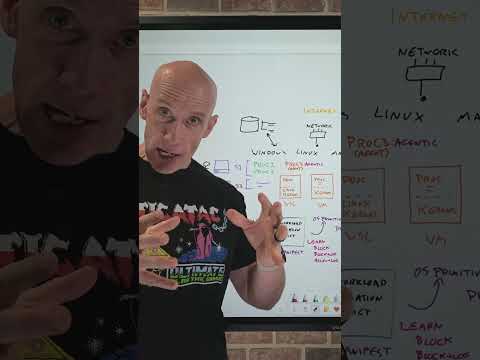
Microsoft Execution Containers: isolate AI agents
Principal Cloud Solutions Architect
Microsoft Execution Containers let developers define and enforce what an AI agent can access while it runs on Windows.
Key insights
- MXC policies can restrict an agent's access to files, network destinations and system resources.
- The operating system enforces the access boundary rather than relying on the AI model to follow instructions.
- MXC can use process, session, container or virtual-machine isolation, depending on workload needs.
- Windows 11 management through Intune is described as planned, not fully available.
Microsoft Execution Containers (MXC) provide a policy-driven way to restrict what an AI agent can access while it runs, with controls enforced by the operating system. The approach is relevant to developers building agents and to IT and security teams evaluating agent access to organizational resources. John Savill's [MVP] published a short overview of MXC, but the available transcript does not provide a step-by-step demonstration.
What it does
AI agents may read files, run commands, use tools and change system state. MXC lets developers describe the files, network destinations and system resources an agent needs, then applies restrictions outside the agent’s own reasoning process. That separation means the agent cannot simply ignore its policy by generating a different response.
MXC is described as an abstraction over several isolation mechanisms. Rather than choosing and configuring only one technology for every workload, developers specify access requirements and MXC can map them to a suitable available control. The material describes support across Windows, macOS and Linux, with the broadest integration and containment options on Windows.
Who it is for and what you need
MXC is aimed at developers building AI agents and organizations that need to constrain agent activity. The research notes describe general availability for Windows 11 in October 2026, including containment capabilities and an SDK. They also say Microsoft announced support for Windows 365 for Agents.
The material does not specify a required Windows edition, licence, region, or exact SDK installation prerequisites. It describes Intune policies for governing MXC process containers on Windows 11 as planned, so administrators should not assume that management capability is already available.
How it works
The policy describes the resources a workload requires; MXC then selects an isolation mechanism based on the workload and platform. The available options named in the research include process and session isolation, Windows Subsystem for Linux containers, virtual machines, microVM-based isolation and Windows 365 for Agents environments.
A unified JSON configuration schema and a multi-language SDK are described for specifying permissions. The notes say MXC can contain an entire agent or particular components such as generated code, plugins, external tools, orchestration components, processes or sessions. The supplied material does not give a setup path, command, or example policy, so there are no verified configuration steps to reproduce here.
Limitations and open questions
MXC provides a way to define and enforce boundaries; it does not decide which access an agent should receive. Organizations still need to determine the necessary files and network destinations, choose an appropriate isolation level, manage agent identities and monitor activity.
The material does not establish the exact availability of every integration or management feature. In particular, it describes some Intune governance capabilities as forthcoming. No official Microsoft documentation link was supplied with the research notes, so current deployment details and licensing should be verified before planning a rollout.
Sources
Frequently asked questions
What does Microsoft Execution Containers do?
MXC lets developers define what an AI agent can access and applies restrictions through operating-system-enforced isolation controls.
Is MXC available for Windows 11?
The research notes describe MXC as generally available for Windows 11 in October 2026. The supplied material does not specify editions, regions, or licence requirements.
Does MXC require a virtual machine?
No single isolation method is specified as mandatory. The material lists process and session isolation, WSL containers, virtual machines, microVMs, and Windows 365 for Agents environments.
Can administrators manage MXC with Intune?
The notes say Intune policies for governing MXC process containers on Windows 11 are planned. They do not establish that this capability is currently available.