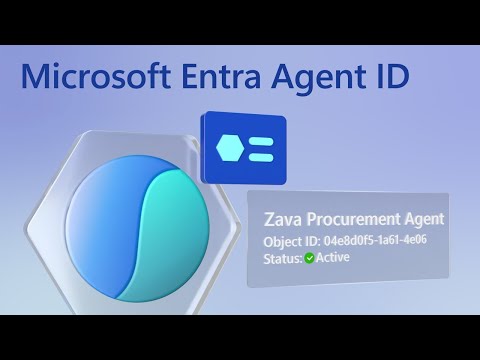
Microsoft Entra Agent ID: Quick Guide
Software Development Redmond, Washington
Secure AI agents with Microsoft Entra Agent ID: unify identities, enforce Conditional Access, stop agent sprawl
Key insights
- Microsoft Entra Agent ID: Treats AI agents as first-class identities in your directory so every agent has a tracked, immutable identity record.
This gives teams one place to see agents, their access, and their lifecycle for clearer accountability. - access tokens: Agents use tokens issued by Entra to call Microsoft services, third-party APIs, or accept incoming requests securely.
Tokens enable both autonomous actions by agents and delegated actions on behalf of users with controlled permissions. - agent blueprint: Blueprints standardize how agent identities are created and how hosting services authenticate agents at runtime.
They use OAuth credentials (secrets, certificates, or managed identities) so identity creation and token requests stay auditable and consistent. - least privilege: Enforce right-sized permissions for agents with Azure RBAC, app roles, and directory roles to avoid excessive access.
Designs prevent agents from inheriting critical security roles and reduce risk by limiting what agents can do. - Conditional Access: Apply agent-specific Conditional Access policies in real time to block risky behavior and scope agent access.
This lets you require controls, automatically block compromised agents, and protect sponsor or service accounts from misuse. - agent sprawl: Detect and stop uncontrolled growth and ownerless agents with built-in visibility, risk flags, and mandatory owner assignment.
Automatically track, review, and revoke agent identities as people change roles or leave to keep the environment secure and predictable.
Overview of the video
The video from Microsoft introduces Microsoft Entra Agent ID, a system that treats AI agents as first-class identities. In the presentation, Leandro Iwase, a Senior Product Manager on the Entra team, explains how the feature brings agents into the same governance tools used for people and applications. Consequently, organizations can see agents in one place, understand their access, and apply controls consistently across the environment.
The episode outlines practical capabilities such as stopping agent sprawl, enforcing least privilege through blueprints, and applying agent-specific Conditional Access policies in real time. Overall, the video frames these features as extensions of existing Microsoft Entra workflows rather than entirely new governance models. This makes the solution easier to adopt while aligning agent controls with established identity practices.
How Agent ID works in practice
At its core, Agent ID assigns each AI agent an immutable identity record that acts like a service principal. During creation, a blueprint or a host service authenticates to Entra, and then the blueprint issues identity credentials that the agent uses at runtime. Thus, agents can acquire tokens, authenticate to services, and present those tokens to obtain the rights they need for specific tasks.
Furthermore, the blueprint model separates the authority that creates agent identities from the runtime credentials the agent uses. This separation enables auditing of identity creation and tight control over which hosts can spin up agent identities. Also, the architecture supports delegated access so agents can act on behalf of users when appropriate, while preserving user control over delegation.
This structure integrates with existing Microsoft Entra constructs, such as directory roles, Azure RBAC, and app permissions. Therefore, organizations can assign rights to agents using familiar controls and extend monitoring and conditional policies to these non-human identities. In practice, this reduces surprises when agents interact with services across the cloud estate.
Security benefits and visibility
One key advantage is the ability to distinguish agent activity from human or workload activity, which improves security analysis and incident response. By giving agents distinct identities, teams can track actions, attribute changes, and enforce policies tailored to an agent’s purpose. As a result, security teams gain clearer audits and can quickly spot anomalous behavior from automated actors.
Another benefit is enforcing least privilege at scale through agent blueprints and scoped permissions. The video shows how organizations can restrict agents from accessing critical administrative roles and apply targeted access for each agent’s intended tasks. Consequently, this approach reduces the risk of runaway access while still enabling agents to perform required operations.
Finally, Entra Agent ID supports agent-specific Conditional Access, risk signals, and owner assignment so every agent has a responsible person. These capabilities help detect and block risky agent actions in real time and prevent ownerless agents from persisting unnoticed after people change roles or leave. Thus, the solution connects lifecycle governance to operational protections.
Tradeoffs and operational challenges
The video also implicitly highlights tradeoffs between automation and governance. Automating identity creation makes agent deployment fast, but it can raise the chance of agent sprawl if controls are weak. Therefore, teams must balance Developer velocity with guardrails that limit unnecessary identity proliferation.
Another challenge lies in policy complexity and operational overhead. Applying fine-grained conditional controls and maintaining owner assignments adds work for identity and security teams. Yet, this cost is often necessary to prevent over-permissioned agents from introducing systemic risk; organizations must decide how much operational effort they will accept for tighter security.
Lastly, integrating agent identities into existing workflows requires careful coordination across Development, cloud ops, and security. Teams need to update deployment pipelines, monitoring rules, and incident processes to treat agents like other identities. Although this integration takes time, doing so reduces long-term risk and increases predictability in automated systems.
Practical guidance and next steps
The presenter recommends starting with clear blueprints and least-privilege templates to scope agent access from day one. By defining what an agent needs and then enforcing that scope, teams can limit exposure while preserving functionality. Also, assigning an owner during provisioning ensures accountability as roles and personnel change.
Monitoring and alerting for agent-specific risk signals helps detect problematic behavior early, which mitigates the chance of damage from compromised or misconfigured agents. Teams should build these signals into their existing security operations playbooks so response steps are consistent. Additionally, reviewing agent inventories regularly prevents forgotten or unused identities from becoming liabilities.
In conclusion, the video frames Microsoft Entra Agent ID as a practical way to bring AI agents under enterprise identity controls. While adopting it introduces some operational work, the tradeoff favors stronger security and clearer accountability for automated actors. For organizations deploying many agents, the approach promises greater visibility, reduced sprawl, and tighter enforcement of least privilege across the agent lifecycle.

Keywords
Microsoft Entra Agent ID, Entra Agent ID tutorial, Entra Agent authentication, Microsoft Entra Agent setup, Entra Agent deployment guide, Entra Agent security best practices, Entra Agent troubleshooting, Entra identity agent explained