Microsoft AI: June 2026 New Features
Principal Cloud Solutions Architect
Microsoft AI update June: Azure hosts Claude, Anthropic in Foundry, Copilot and GitHub Copilot upgrades, Foundry IQ, Scout
Key insights
- Agentic computing: Microsoft frames a major shift from app-centric work to agents that execute multi-step tasks and workflows on behalf of users.
These agents act proactively, reason over long contexts, and reduce routine manual work to free people for higher-value activities. - Microsoft Scout: A new desktop personal agent that gathers emails, messages, and relevant files to propose actions and summaries.
Scout operates with user approval and ties into Microsoft 365 memory to deliver context-aware assistance. - MAI-Thinking-1 and model lineup: Microsoft introduced a new reasoning model, MAI-Thinking-1, focused on long-context reasoning and complex instruction handling.
The update also highlights Anthropic models on Azure, Claude Sonnet 5, and Kimi K2.7 in Copilot, expanding the model ecosystem for diverse workloads. - Microsoft IQ (Work IQ, Web IQ, Foundry IQ): A context and grounding layer that links world knowledge with enterprise data to make agents more accurate and relevant.
Work IQ and Web IQ provide APIs for developers; Foundry adds agent tooling, evaluations, tracing, memory, and new security/license controls for production use. - Project Solara & MDEP: Microsoft announced a new device category and the Microsoft Developer Edge Platform (MDEP) built to run agentic workloads with low latency and efficient resource use.
This hardware focus aims to improve real-time agent performance on dedicated devices. - Developer and product tools: Copilot Studio now includes improved agent evaluation, a toolbox, memory features, and orchestration updates for safer deployments.
Microsoft also highlighted Copilot Cowork, GitHub Copilot desktop and SDK, sandboxes, Frontier tuning, and other tools to help developers build, test, and govern agents.
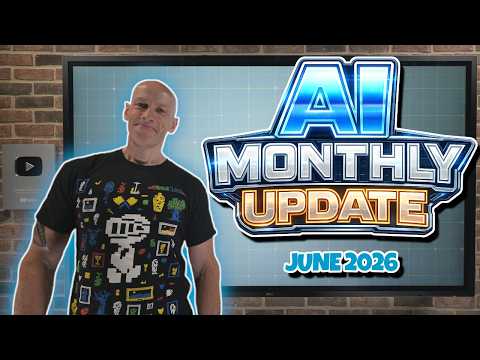
John Savill's [MVP] recent YouTube video on the June 2026 Microsoft AI update summarizes a broad set of new capabilities and products that together signal a shift toward more autonomous, agent-driven computing. In the video, Savill walks through the announcements and demonstrates how Microsoft is bridging models, platforms, and hardware to support the new wave of AI agents. Consequently, the update covers everything from foundation models and reasoning engines to developer tooling and security changes for enterprise customers.
Overview of the June 2026 Update
The video frames the release as a move from traditional application-centric workflows to what Savill calls agentic computing, where software agents perform multi-step tasks and continuously reason over context. He highlights several flagship pieces, including a desktop personal agent and a new reasoning model, and explains how these elements fit into a single vision for smarter, more proactive assistants. Furthermore, Savill uses chaptered segments to organize the material so viewers can quickly locate discussions about models, tooling, and hardware.
Moreover, the update bundles services that work across cloud and endpoint, with an intelligence layer that Microsoft calls Microsoft IQ to ground agents in organizational data. This grounding is accessible through APIs such as Work IQ and Web IQ, which Savill notes will let developers integrate enterprise context into agent behaviors. As a result, organizations can expect agents that better understand documents, meetings, and processes rather than simply responding to ad‑hoc prompts.
New Models and Hardware
Savill details multiple model announcements in the video, pointing to the arrival of Microsoft’s reasoning model MAI-Thinking-1 and the appearance of Anthropic’s and other vendors’ models on Azure. He underscores that these models aim to handle long-context reasoning, complex code generation, and multi-step instruction execution more reliably. Consequently, Microsoft positions itself to compete in higher-end reasoning capabilities while also enabling mixed-model deployments in enterprise environments.
In tandem with models, Savill highlights Project Solara, a hardware initiative designed specifically for agent workloads, and the Microsoft Developer Edge Platform that optimizes device-side agent performance. While this hardware promises lower latency and local processing advantages, Savill warns that deploying specialized devices introduces cost and management tradeoffs for IT departments. Therefore, organizations must weigh the benefits of improved responsiveness against procurement, support, and lifecycle concerns.
Agent Platforms, Tooling, and Developer Experience
The video devotes considerable time to tooling updates such as enhancements to Copilot Studio, the introduction of evaluation and tracing tools for agents, and the release of sandboxing and SDK features for GitHub Copilot. Savill explains that these additions aim to give developers more control over agent behavior, testing, and auditing, which matters for production use. Additionally, features like agent memory, the Foundry Toolbox, and orchestration improvements are intended to make agents more consistent and explainable.
However, Savill emphasizes that improved tooling also raises expectations: teams must invest in evaluation pipelines and monitoring to ensure agents act safely and predictably. He notes that while the new diagnostics and tracing help, they do not eliminate the need for human oversight, especially for high-risk tasks. Consequently, developer and ops teams will need to adopt new processes for agent validation and governance.
Security, Compliance, and Governance
Savill flags license and security changes for Foundry agents and discusses enterprise features to trace and evaluate agent decisions. He stresses that organizations will need to reconcile agent autonomy with regulatory and compliance requirements, because agents can access sensitive documents and communications. Thus, the update includes tracing, memory controls, and permissions features, which Savill says are essential but not sufficient on their own.
Furthermore, the video highlights the tension between convenience and control; making agents more capable often increases data exposure and risk. Savill explains that administrators must balance usability and security by configuring policies, limiting scopes, and employing the new auditing features. In short, governance will require active planning, cross-team coordination, and continued investment in monitoring tools.
Tradeoffs and Practical Challenges
Savill’s presentation does not shy away from tradeoffs. He points out that while agentic systems can save time and reduce repetitive work, they also amplify errors if models hallucinate or misunderstand goals. Therefore, organizations should combine automated agents with human-in-the-loop checkpoints for critical decisions. Additionally, the cost of running high-capability models and specialized hardware may be prohibitive for some teams, which forces them to choose between cloud-only, hybrid, or device-accelerated approaches.
Finally, Savill notes operational challenges such as evaluation complexity, the need for example-driven instruction tuning, and integration with existing enterprise workflows. He recommends that teams pilot agents on well-scoped problems, measure outcomes, and iterate on governance before scaling broadly. Consequently, the path to effective agent deployment requires technical, organizational, and cultural adjustments.
Conclusion and What to Watch Next
Overall, John Savill's video paints a comprehensive picture of Microsoft’s June 2026 AI roadmap, from new reasoning models and agent tooling to hardware for agent workloads and enterprise-grade grounding through Microsoft IQ. He presents both the promise of more capable, context-aware assistants and the hard questions around cost, security, and operational readiness. As organizations test these technologies, Savill suggests they proceed cautiously, prioritize governance, and focus on clear productivity wins before wider rollouts.
This summary reflects the content of the YouTube video by John Savill's [MVP], and it synthesizes the key announcements and tradeoffs he discussed for editorial use.

Keywords
Microsoft AI update June 2026, Bing AI June 2026, Microsoft Copilot June 2026, Microsoft 365 AI updates June 2026, Azure AI announcements June 2026, Windows AI features June 2026, Microsoft generative AI June 2026, Microsoft AI roadmap 2026