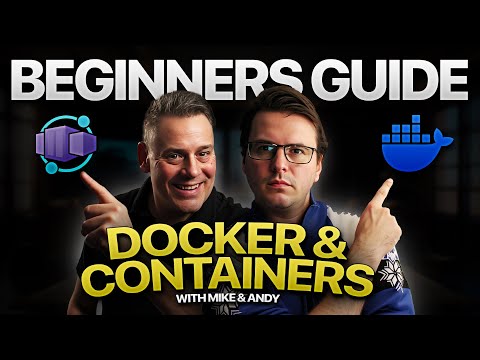
Docker and Containers with Microsoft Azrue
Microsoft 365 Expert, Author, YouTuber, Speaker & Senior Technology Instructor (MCT)
Azure, Docker, Containers, Storage, Networking
Key insights
- Docker is an open-source platform that lets developers package applications and their dependencies into containers, ensuring consistent performance across different environments.
- Containers are lightweight, isolated units that run applications reliably on any system, using fewer resources than traditional virtual machines by sharing the host's kernel.
- Docker Images are templates with all the code and files needed to create a running container, while a Dockerfile contains the instructions for building these images.
- The Docker Engine manages containers' lifecycles, and tools like Docker Compose make it easy to handle multiple containers in complex projects using simple configuration files.
- Main advantages of Docker include consistency, efficient resource use, rapid deployment, and easy scaling with orchestration tools such as Kubernetes or Docker Swarm.
- This beginner guide covers getting started with containers, comparing them to virtual machines, understanding storage and networking basics in Docker, and highlights how Docker simplifies app development and deployment.
Introduction to Docker and Containers
In a recent YouTube video, technology expert Andy Malone [MVP] teams up with fellow Microsoft Certified Trainer Michael Whitehouse to offer an accessible introduction to Docker and containers. The session, aimed at beginners, marks the first part of a two-part series. Malone and Whitehouse break down what containers are, how they differ from traditional virtual machines, and why they have become essential tools for developers. Their conversation sets the stage for viewers who want to understand the basics before exploring more advanced topics in future episodes.
This episode is designed for those who may be new to containerization, providing a clear pathway from foundational concepts to practical application. The presenters emphasize that while containers can seem complex at first, grasping the core principles opens up significant opportunities in software development and deployment.
Understanding Containers Versus Virtual Machines
A central focus of the video is the distinction between containers and virtual machines. Malone and Whitehouse explain that containers package applications and their dependencies into a single, lightweight unit. This contrasts with virtual machines, which require a full operating system for each instance, leading to higher resource consumption. The presenters highlight that containers use the host system's kernel, making them faster to start and more efficient in their use of hardware.
However, this efficiency comes with certain tradeoffs. While containers offer speed and lower overhead, virtual machines provide stronger isolation since each has its own OS. The challenge for IT professionals lies in balancing the need for security and isolation with the desire for agility and resource optimization.
Getting Started: Building Your First Container
The tutorial moves step-by-step through the process of creating a simple container using Docker. Viewers learn how to write a Dockerfile, build an image, and run a containerized application. Malone and Whitehouse stress the importance of understanding how images encapsulate everything an application needs, ensuring it runs identically on any system.
For beginners, this hands-on approach demystifies the technology. Yet, the presenters acknowledge that initial setup can be challenging, especially when configuring networking or persistent storage. They suggest starting with small, well-documented projects to build confidence and gradually tackling more complex scenarios.
Cost Considerations and Resource Management
Another key topic discussed is the cost implications of adopting containers. The presenters point out that while containers can reduce infrastructure expenses due to their lightweight nature, there are hidden costs in terms of management, monitoring, and security. Efficient use of resources is balanced against the need for robust oversight, especially in production environments.
Moreover, the discussion addresses the differences between hardware virtualization and application virtualization. Containers streamline development workflows but require new skills and tools for effective orchestration and scaling, particularly as deployments grow.
Storage, Networking, and Beyond
Malone and Whitehouse also introduce viewers to essential elements like storage and networking within the container ecosystem. They explain how containers handle data persistence and interact with other services, both locally and in the cloud. The video hints at more advanced topics, such as integrating containers with Azure and leveraging cloud-native features, which will be explored in the next episode.
The presenters caution that while containers make it easier to move applications across environments, managing stateful data and complex networks can introduce new challenges. Deciding on the best storage and networking strategies requires careful planning and often depends on the specific needs of each project.
Conclusion and Next Steps
The first part of Malone and Whitehouse’s guide offers a thorough foundation for anyone looking to master Docker and containers. By clearly explaining the benefits and challenges, the video provides viewers with the knowledge needed to begin experimenting with containerization in their own work. As the field evolves, keeping up with new tools and best practices will remain essential.
With promises of deeper dives into Azure integration and advanced development practices in the next episode, the series aims to equip both newcomers and seasoned professionals with practical insights for a rapidly changing technology landscape.
Keywords
Master Docker tutorial beginner guide containerization basics learn Docker step-by-step Docker for beginners container management system