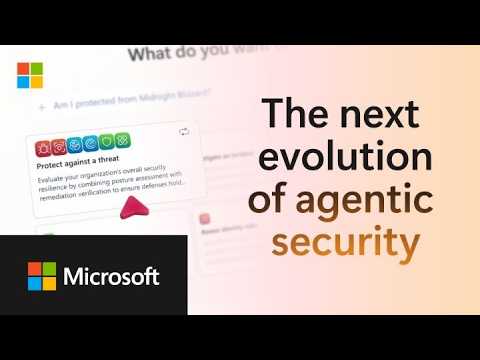
Microsoft Perception coordinates AI security agents
Software Development Redmond, Washington
Microsoft Perception brings red-, blue- and green-team AI agents together to find risks, investigate threats and support remediation.
Key insights
- Project Perception is presented as a preview security system.
- Red-team agents look for weaknesses and possible attack paths.
- Blue-team agents investigate suspicious activity and connect security signals.
- Green-team agents help plan remediation and can take corrective actions where authorized.
- The system is designed to include human approvals and auditable agent activity.
Microsoft Perception is a multi-agent security system designed to connect exposure discovery, threat investigation and remediation in a coordinated workflow. It is aimed at organizations and security teams that want agents to work across security data and tasks, while people retain oversight of consequential actions. Microsoft demonstrates the concept in a YouTube Short.
What it does
Project Perception brings together specialized red-, blue- and green-team agents. Rather than treating a vulnerability finding, an alert and a proposed fix as separate tasks, the system is designed to pass context between agents and coordinate work through playbooks.
Red-team agents look for weaknesses, including possible attack paths. Blue-team agents focus on suspicious activity, alert triage and investigation. Green-team agents help turn findings into defensive changes and validate whether remediation addressed the issue.
The intended workflow is a continuing cycle: discover risks, investigate activity, prioritize findings, recommend or perform a response, and check the result. Microsoft describes Perception as a way to coordinate security work rather than rely on isolated AI assistants.
Who it is for and what you need
The intended audience is organizational security teams responsible for exposure management, threat detection, incident response and remediation. The research describes Project Perception as available in preview.
Microsoft’s approach emphasizes keeping people in control. Role-based permissions, least-privilege access, policy guardrails and approval requirements are described as ways to limit what agents can access or do. Agent activity is also designed to be logged and auditable.
How it works
Playbooks define an objective and coordinate the agents involved. They can govern the information agents use, the actions they may take and when a person must approve a step. An orchestration layer lets agents share context so one agent’s finding can inform another agent’s investigation or response.
- A red-team agent identifies a potential weakness or attack path.
- Blue-team agents investigate related signals and assess the activity.
- A green-team agent recommends or performs an authorized defensive change.
- The system checks the outcome, with human review where required.
The system is described as using agent-ready security context, sensors and actuators, coordinated playbooks and specialized models, including the MAI-Cyber family. These elements are intended to help agents reason across security information and workflows rather than process alerts in isolation.
Limitations and alternatives
Project Perception is presented as a preview, so teams should treat it as an emerging approach rather than assume it is a generally available replacement for existing security operations. Its practical value depends on the security context available to the agents and on how permissions, policies and approval points are configured.
Human oversight remains part of the design for high-impact actions. The approach differs from periodic assessments or separate alert-handling processes by aiming for coordinated, ongoing discovery and response; it does not remove the need for security professionals to govern decisions.
Sources
Frequently asked questions
What is Microsoft Perception?
Project Perception is a multi-agent security system designed to coordinate risk discovery, threat investigation and remediation using specialized AI agents.
What do the red, blue and green agents do?
Red agents look for weaknesses, blue agents investigate suspicious activity, and green agents help remediate findings and improve security.
Is Microsoft Perception available?
Project Perception is presented as being available in preview.
Does Microsoft Perception require human approval?
The design includes human approval requirements for critical actions, along with permissions, policy guardrails and auditable activity.