Microsoft Fabric: Ignite data and AI announcements
Founder | CEO @ RADACAD | Coach | Power BI Consultant | Author | Speaker | Regional Director | MVP
Fabric professionals can track new database, semantic model, app and OneLake capabilities, with availability ranging from preview to general availability.
Key insights
- Fabric HorizonDB brings serverless PostgreSQL into Fabric; Database Hub provides a single place for database estates.
- Power BI Desktop for Apps and semantic views were announced in public preview.
- Fabric apps and Rayfin were listed as generally available.
- OneLake catalog federation, Azure Databricks native storage, and Iceberg read and write were listed as generally available.
- Fabric IQ is expanding to Copilot, ChatGPT, Claude, Excel, GitHub Copilot and an MCP server.
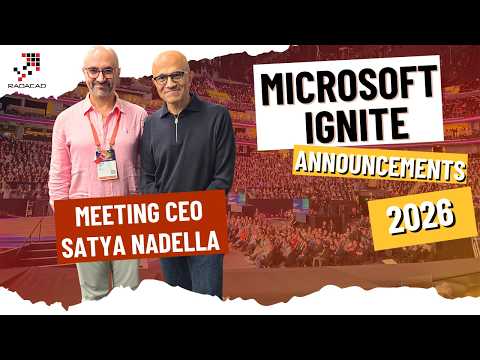
Microsoft Fabric's Ignite announcements add database, app-building, semantic-model and OneLake capabilities, giving data teams several changes to evaluate rather than one single upgrade. The announcements matter most to Fabric and Power BI professionals, data architects, and teams deciding how to connect analytics with applications and AI agents. Reza Rad (RADACAD) [MVP] reviews the announcements and their stated availability in a YouTube video.
What's new
The Fabric announcements span several parts of the data platform. HorizonDB brings PostgreSQL into Fabric, while Database Hub is described as a single place to work with a database estate. Semantic views offer a governed way to define metrics once in OneLake, and Power BI Desktop for Apps introduces an agent-assisted way to create an app from a published semantic model.
Availability differs by capability. The published announcement summary identifies Power BI Desktop for Apps and semantic views as public preview, and Fabric apps and Rayfin as generally available. OneLake catalog federation, native storage for Azure Databricks, and Iceberg read and write are also listed as generally available. Treating all of these items as equally ready would blur important differences for planning.
Fabric IQ is another strand of the update. It is described as extending to Microsoft Copilot, ChatGPT, Claude, Excel, GitHub Copilot and a Fabric IQ MCP server, alongside ontology updates, IQ sharing and data agents. Foundry IQ is also described as supporting unstructured data and using semantic models and OneLake items. These announcements connect Fabric data and business context with a wider set of tools.
Who it is for and what you need
These updates are relevant to Fabric administrators and architects evaluating database, governance and data-sharing changes, as well as Power BI developers working with semantic models and apps. Teams building agent-based experiences may also want to assess the Fabric IQ and MCP-related announcements. The starting point is to identify which of these workloads your organization already uses and which proposed capabilities map to an active project.
For Power BI Desktop for Apps, the described flow starts with a published semantic model. Semantic views are framed around metrics defined in OneLake. HorizonDB is relevant where PostgreSQL and Fabric are part of the architecture, while OneLake federation and Iceberg matter to teams connecting data platforms. The stated preview and general-availability labels are useful planning signals; they do not mean that every feature has the same maturity or purpose.
Use the Microsoft Fabric topic hub to explore related coverage. Before prioritizing an announcement, map it to a concrete requirement: app creation, shared metric definitions, PostgreSQL workloads, data catalog federation, or agent access to governed data. That scoping helps teams avoid treating a broad conference announcement as a deployment instruction.
How it works
The announcements describe a few distinct patterns rather than a single setup procedure. Power BI Desktop for Apps is the clearest user flow: select a published semantic model, describe the app, and have an agent build and iterate on it. This is an announced public preview capability, not a general instruction to replace existing app development processes.
- For the app-building flow, start with a published semantic model.
- Describe the app you want the agent to build.
- Review the generated app and iterate with the agent.
- For semantic views, define governed metrics once in OneLake, as described in the announcement.
HorizonDB follows a different architectural pattern. The announcement describes serverless PostgreSQL in Fabric, with mirroring into OneLake and analytical data alongside enriched data in a warehouse. It also describes translytical queries joining these sources. The core implication is that an application or agent can work with PostgreSQL while Fabric supplies an analytical data path; the details here do not constitute a configuration walkthrough.
OneLake updates are integration-oriented. Catalog federation, Azure Databricks native storage, and Iceberg read and write are presented as available capabilities. The Salesforce Data 360 announcement describes a two-way Zero Copy connection with Fabric and no extra pipelines. This is a data connection announcement, not a universal guarantee that every organization can connect every dataset without setup or governance work.
Limitations and alternatives
The main practical distinction is rollout status. Public preview features should be evaluated as preview capabilities, while the announcements marked generally available are at a different stage. Keep those labels attached to each item in project plans; a public preview announcement should not be treated as a production commitment or as proof that a feature is enabled in a particular environment.
The described Power BI Desktop for Apps workflow depends on a published semantic model as its starting point. Teams without an appropriate model do not have that input ready for the announced flow. Semantic views and HorizonDB address different needs, too: one concerns governed metric definitions, while the other brings PostgreSQL into Fabric. Neither description implies that one replaces the other.
OneLake catalog and Purview naming also deserve careful attention. The announcement summary describes OneLake catalog as Microsoft's data governance product and says Purview Data Governance is to be retired, while Purview Data Security and Compliance is not affected. Organizations should distinguish those specific products and workloads rather than interpret the change as retirement of all Purview capabilities.
For teams already using conventional app development, semantic models, or separate database and analytics services, these announcements are options to assess against existing architecture. The descriptions give direction and status, but they do not set out tenant prerequisites, licensing, migration steps, or deployment dates. Validate those operational details before changing production designs.
Sources
Frequently asked questions
Is Power BI Desktop for Apps generally available?
It was announced as a public preview. The described flow starts from a published semantic model and uses an agent to build and iterate on an app.
What does Fabric HorizonDB add?
HorizonDB brings serverless PostgreSQL into Fabric. The announced design describes mirroring data into OneLake and joining analytical and enriched data for translytical queries.
Which OneLake capabilities were listed as generally available?
The announcements list catalog federation, Azure Databricks native storage, and Iceberg read and write as generally available.
Is Microsoft retiring all Purview capabilities?
No. The announcement distinguishes Purview Data Governance, which is to be retired, from Purview Data Security and Compliance, which is not affected.