GPT-5: Deep Dive & Key Insights
Artificial Intelligence (AI), Open Source, Generative Art, AI Art, Futurism, ChatGPT, Large Language Models (LLM), Machine Learning, Technology, Coding, Tutorials, AI News, and more
GPT-5 insights, AI tools, prompts; Join newsletter for updates. Use Microsoft Word, Excel, Teams for optimal productivity.
Key insights
- GPT-5 Overview: Released in August 2025, GPT-5 marks a significant advancement in generative AI, offering smarter, faster, and safer capabilities compared to its predecessor GPT-4. It is available to both free and paid ChatGPT users.
- Key Features: GPT-5 introduces improvements such as enhanced speed and accuracy, reduced hallucinations, and a new "safe completions" training approach that ensures helpful answers within safety boundaries.
- Advanced Capabilities: The model combines traditional language understanding with advanced reasoning to approximate intelligence levels close to artificial general intelligence (AGI), providing expert-level knowledge across various subjects including coding and health advisory.
- User Experience Enhancements: Real-time model routing automatically selects the best approach for queries, while custom personalities allow users to choose from four preset ChatGPT tones for more natural interactions.
- Technical Evolution: GPT-5's architecture optimizations enhance reasoning capabilities and multi-step problem-solving, supporting diverse applications like chatbots and educational tools with increased reliability.
- Differentiators from Previous Versions: The shift from refusal-based safety to safe completions allows nuanced handling of sensitive topics. Automatic tool routing simplifies user experience by internally determining optimal strategies for tasks.
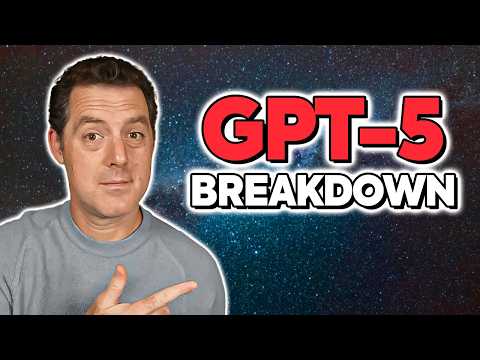
In a new YouTube video, creator Matthew Berman delivers a clear breakdown of GPT-5, which he describes as faster, smarter, and safer than prior models. He frames the release as a practical step toward broader, everyday AI use rather than an abstract leap to full AGI. Moreover, the video notes that GPT-5 is available to both free and paid ChatGPT users, with limits for free tiers. While the framing is upbeat, Berman also acknowledges the tradeoffs behind speed, safety, and access.
Overview of Berman’s Video
Berman positions GPT-5 as a next-generation model that blends strong language skills with improved reasoning. According to the video, this combination aims to deliver expert-like answers across topics, including coding and basic health guidance. He emphasizes reduced errors and a more helpful approach to safety. Consequently, GPT-5 is portrayed as a tool designed for real tasks, not just demos.
At the same time, Berman says the upgrade seeks to keep responses understandable and grounded. The video argues that GPT-5’s design favors practical accuracy over flashy novelties. It also highlights integrations for apps and assistants where reliability matters. Therefore, the message is that GPT-5 is meant to be both capable and usable.
Core Innovations and Capabilities
The video underscores speed and precision as core improvements. Berman reports that GPT-5 returns answers faster than GPT-4 and does so with better context awareness. He also stresses fewer hallucinations, a frequent criticism of earlier models. As a result, he frames GPT-5 as more dependable for complex questions.
Additionally, Berman points to multi-step reasoning as a standout. He notes that GPT-5 can follow longer chains of logic with less drift, which matters for coding, planning, and analysis. Yet he cautions that no model is perfect, so users should still verify high-stakes outputs. In practice, better reasoning does not replace expert review.
Safety Model and Responsible Use
A key change described in the video is safe completions. Instead of defaulting to hard refusals, GPT-5 aims to steer toward helpful, safer answers and explain boundaries when needed. Berman presents this as a user-friendly shift that reduces dead ends. However, it also raises the bar for careful design and oversight.
There is a tradeoff here. More nuanced answers can be more useful, but they must still avoid harmful content and poor advice. Berman argues that clear explanations and safer alternatives improve trust. Even so, he advises caution for medical, legal, and financial decisions, where human experts remain essential.
Performance, Routing, and Personalization
Berman highlights real-time model routing, which lets GPT-5 choose between speed and deeper reasoning automatically. This removes the need for users to pick a special mode. In his view, this change simplifies workflows and reduces friction. Yet it also means users must rely on the system’s internal choices.
The video also introduces custom personalities such as cynic, robot, listener, and nerd. Berman says these presets make tone control easier and conversations more natural. Still, he notes a balance: personality can improve engagement, but consistency and clarity must come first. Personalization should never blur facts or alter core intent.
Access, Use Cases, and Remaining Tradeoffs
According to Berman, GPT-5 reaches free users with guardrails, while paid and enterprise users get broader limits and power. This tiered model widens access but creates differences in capability. He suggests this structure helps scale capacity without sacrificing performance. Nonetheless, teams must plan for variable behavior across plans.
Looking ahead, the video frames GPT-5 as a solid foundation for chatbots, coding aides, and education tools. Berman’s assessment stresses practical value and safer guidance, even as open questions remain about transparency and control. Ultimately, he presents GPT-5 as a measured advance that balances speed, accuracy, and safety. Yet he reminds viewers that responsible use and human judgment still matter most.
Keywords
GPT-5 release date, GPT-5 features, GPT-5 vs GPT-4, GPT-5 capabilities, GPT-5 improvements, GPT-5 benchmarks, GPT-5 risks and ethics, GPT-5 use cases