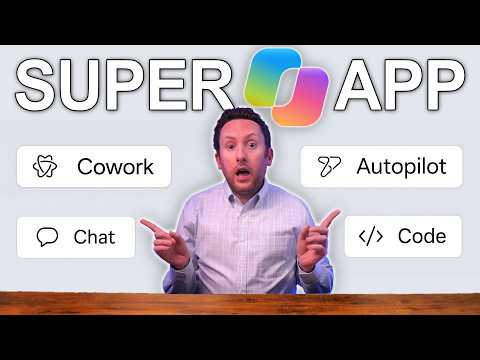
Copilot Super App: What to Expect
Consultant at Bright Ideas Agency | Digital Transformation | Microsoft 365 | Modern Workplace
Microsoft expert: Copilot Super App unifies Copilot, Scout and Studio; prepare for adoption and governance
Key insights
- Copilot Super App: Microsoft is consolidating personal and work Copilot experiences into a single, unified app called the Microsoft Copilot app.
Expect one entry point that replaces separate consumer and enterprise Copilot surfaces. - Core features combined: The app will bring together chat, GitHub Copilot coding, Copilot Cowork collaboration, and Autopilots/Scout agentic workflows into one interface.
This moves Copilot from a set of tools to a single platform experience. - Rollout status and timing: Microsoft has started a staged migration for a small group of users, with mobile/webWindows/MacWider availability is expected during 2026 as the rollout expands.
- Product changes and consolidation: Microsoft is simplifying features and consolidating portals as part of the merge, which may remove some consumer-only functions and duplicate entry points.
Plan for feature shifts as the company streamlines the experience. - Governance, security, and billing impacts: The super app appears to tie into enterprise controls like Agent 365, IT Ops, SecOps, and FinOps, so governance and billing models may change.
Admins should monitor policy, access, and cost reporting updates closely. - Actionable steps for businesses: Inventory Copilot integrations, run a pilot, update security and usage policies, and train staff on the unified app.
Prepare license mappings and test critical workflows before broad deployment.
Overview of the YouTube report
The YouTube video by Nick DeCourcy (Bright Ideas Agency) outlines Microsoft’s plan for a unified Copilot experience and what it means for users and organizations. The video summarizes recent signals from Microsoft leadership and product updates that point to a consolidated app often described as the Copilot Super App. Consequently, viewers get a practical walkthrough of features, rollout signs, and potential business impacts.
Furthermore, the report stresses that this consolidation follows several updates to the Microsoft 365 Copilot app and related services. In addition, the author highlights how the company is testing migration steps for a subset of users on Web and Mobile before broader distribution. Therefore, the video serves as both a news brief and a planning prompt for IT and business leaders.
Origins and current rollout signals
DeCourcy traces the evolution from separate assistants to a single branded surface, noting that Microsoft recently rebranded the Microsoft 365 Copilot app as the Microsoft Copilot app. He reports that Microsoft began merging experiences and removing duplicate entry points, actions that suggest a staged migration. As a result, early adopters on mobile and web already see changes, while Windows and Mac updates are expected later.
The video also cites internal names and new agentic tooling that Microsoft has been developing, signaling a move beyond simple chat. For example, components such as Autopilots and tools like Scout appear to be part of the road map. Thus, the rollout is both a branding shift and a technical integration of long-running, autonomous workflows into a single surface.
What the Super App aims to unify
According to the video, Microsoft’s goal is to bring together chat, coding assistance, collaboration features, and agentic workflows into one app. Specifically, that includes traditional Copilot chat, GitHub coding features, and collaboration tools branded as Copilot Cowork. Consequently, users would access a broader mix of capabilities from one interface rather than jumping between separate apps.
Moreover, the video explains that the new app appears to be more agent-centric, meaning it will support autonomous processes that can run longer and interact with systems. This approach ties into governance and operations systems referenced in the coverage, such as Agent 365, IT Ops, SecOps, and FinOps. Therefore, the Super App is not just a front-end merge but a platform-level integration with enterprise controls in mind.
Tradeoffs and governance challenges
DeCourcy outlines the tradeoffs between unification and the need to keep work and personal contexts separate. On one hand, a single app could reduce fragmentation and improve discoverability. On the other hand, mixing personal and corporate capabilities raises governance questions about data separation, access controls, and auditing.
Furthermore, the video highlights the challenge of balancing agent autonomy with organizational controls. While autonomous features can automate routine workflows, they also require tight policy enforcement to prevent costly mistakes or security lapses. Consequently, businesses must examine how existing governance frameworks will adapt to new agentic behaviors and longer-running processes.
Business impact and billing implications
DeCourcy points out that consolidation may change how Microsoft structures billing and entitlements for Copilot features. For example, including consumer and enterprise features in one app could complicate license checks and usage reporting. Therefore, finance and procurement teams should prepare for potential adjustments in billing models or meter changes tied to autonomous agent usage.
In addition, the video warns that removing or changing familiar consumer features may cause user friction. Features such as simplified research tools or casual modes might be reduced as the company streamlines the interface. As a result, IT leaders will need to manage change and communicate clearly to avoid disruption and preserve end-user productivity.
How businesses should prepare
Finally, DeCourcy recommends that organizations take a proactive stance by auditing current Copilot use, reviewing governance policies, and preparing training materials for employees. In particular, companies should inventory where Copilot interacts with sensitive systems and align policy with anticipated agentic workflows. Consequently, a risk-based rollout plan helps balance innovation with control.
Moreover, the video urges teams to monitor Microsoft’s staged rollout and to pilot the new environment with a representative group of users. By doing so, organizations can uncover practical issues around billing, permissions, and user experience before wide deployment. In short, the YouTube report by Nick DeCourcy offers a clear, practical briefing that helps newsrooms and business leaders plan for the coming Copilot Super App transition.

Keywords
Copilot Super App, Microsoft Copilot release date, Copilot Super App features, Copilot AI productivity app, Copilot integration with Microsoft 365, Copilot app for Windows and mobile, How to use Copilot Super App, Copilot privacy and security