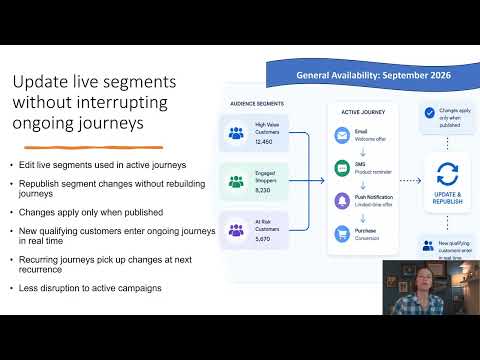
Overview: Video Summary and Context
The newsroom reviewed a YouTube video by Heidi Neuhauser [MVP] that walks through the 2026 Release Wave 1 changes to Dynamics 365 Customer Insights - Journeys. In the video, Neuhauser frames the updates as a move from a traditional marketing tool toward a broader system of action that ties marketing, sales, and service more closely together. Consequently, viewers get a practical tour of new orchestration tiles, UI changes, and AI integrations that Microsoft plans to roll out from April through September 2026.
The video combines demonstration clips with narration and highlights the most consequential capabilities for practitioners. It positions the release as less about small feature tweaks and more about enabling journeys to trigger real CRM records and activities. Therefore, the takeaways are relevant for marketers, CRM admins, and IT leaders who design cross-team processes.
Major Feature Highlights
Neuhauser emphasizes several headline changes, starting with the new ability to create records and activities directly from a journey tile. This enhancement lets journeys generate Leads, Opportunities, Tasks, and even custom entities, which reduces manual handoffs and speeds up pipeline actions.
The video also covers improved branding controls, such as replacing long tracking links with custom domains and introducing dynamic content blocks that update globally across emails. In addition, Neuhauser shows the new message expiration feature and a Copilot-powered texting capability that supports conversational SMS while respecting consent and quiet times.
Integration, AI and Data Considerations
According to the presentation, the release tightens the connection between Journeys and Customer Insights - Data, using behavioral signals and scoring to pivot journeys in real time. Neuhauser demonstrates how churn risk or lifetime value metrics can trigger different paths and how external customer context—such as rewards balances—can inform journey logic without full data migration.
Furthermore, the video explains that Copilot will provide quick summaries of audience segments and journey performance, helping marketers save time on manual analysis. While these AI features promise faster insights, Neuhauser also notes that accurate models depend on high-quality data and clear governance of which signals are trusted for automated decisions.
Tradeoffs and Operational Challenges
Neuhauser does not shy away from discussing tradeoffs. For instance, enabling direct record creation from journeys accelerates workflows, but it also raises questions about data governance, duplicate records, and the need for well-defined validation rules to maintain CRM hygiene.
Similarly, branded links and dynamic blocks improve customer trust and consistency, yet they require central management and careful version control to prevent unintended content propagation. The video stresses that teams must balance agility with control, and that organizations should plan update processes and rollback strategies.
Adoption, Timeline and Practical Advice
The video maps the rollout: public preview in March 2026, general availability beginning in April 2026, and full deployment by September 2026. Neuhauser encourages teams to pilot the new orchestration actions and Copilot summaries early, so they can refine data models and consent workflows before the GA date.
Finally, Neuhauser offers practical tips for cross-functional adoption, advising marketers to work closely with sales and service counterparts to define business rules, and urging IT to set governance on external data ingestion and AI-driven triggers. Consequently, organizations that align people, processes, and platform settings will realize the biggest value, while those that rush without controls may face operational risk.