Microsoft Fabric
Aug 1, 2026 8:39 PM
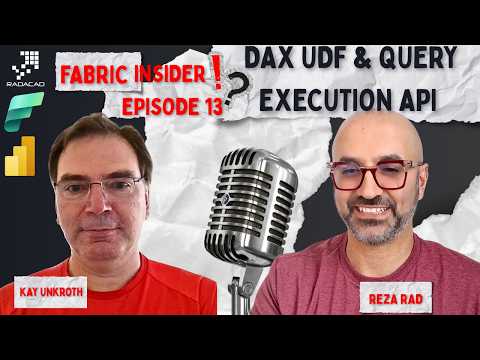
Fabric: DAX UDFs, Query API & Security
by HubSite 365 about Reza Rad (RADACAD) [MVP]
Founder | CEO @ RADACAD | Coach | Power BI Consultant | Author | Speaker | Regional Director | MVP
Microsoft expert on DAX UDFs, Query REST API and Outbound Access Protection for Power BI semantic models in Fabric
Key insights
- DAX User-Defined Functions (UDFs): Microsoft declared DAX UDFs generally available in 2026, letting authors package reusable DAX logic once and call it from measures, calculated columns, visuals, or other UDFs.
They introduce a FUNCTION keyword and function-style definitions to improve reuse and consistency. - Optional parameters & type helpers: UDFs support optional parameters and type-checking helpers to make functions safer and more flexible.
These features reduce duplicated expressions and simplify model maintenance. - Where you define UDFs: Define functions in the DAX Query View or TMDL view inside the semantic model.
Once defined, models can call the UDFs anywhere the engine supports them, improving standardization across reports. - Query REST API: Fabric introduced a REST API to execute DAX queries programmatically, enabling automation, testing, CI/CD, and server-side query scenarios.
Teams can use this API to run queries from scripts and external tools without manual interaction. - Outbound Access Protection (OAP): OAP adds a model-level security layer that limits outbound connections and external calls from semantic models.
This feature strengthens data protection and reduces the risk of unintended data exfiltration from models. - Roadmap highlights & admin updates: The semantic model settings page now exposes more configurable options, and Microsoft plans time intelligence with custom calendars on the roadmap.
Admins and modelers should review new settings and watch for upcoming calendar/time-intelligence features.
Keywords
DAX UDFs, DAX user-defined functions, Fabric Query REST API, Microsoft Fabric REST API, Outbound Access Protection, Microsoft Fabric security, Power BI DAX UDFs, Fabric Insider Ep 13