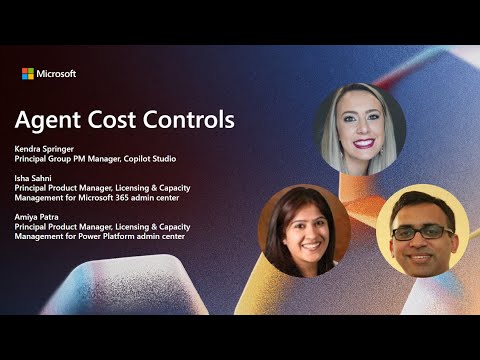
Copilot Agent Cost Controls: Get the Overview
Software Development Redmond, Washington
Agent Cost Controls, Microsoft Copilot licensing, billing models, usage tracking, Power Platform, Microsoft 365 admin center
Key insights
- Agent Cost Controls help IT administrators manage and monitor the financial impact of AI agents in Microsoft 365 Copilot and Power Platform. They focus on tracking usage and controlling costs for agent-driven workflows, which use a consumption-based billing model instead of traditional flat-rate licensing.
- Cost Monitoring and Transparency: Administrators can see detailed usage patterns and expenses for each agent. This helps organizations predict costs more accurately and avoid unexpected charges.
- Management Features: The system allows departmental billing, internal cost allocation, and spending limits. These tools help enforce budgets and prevent overspending on AI agents.
- Capacity Planning Tools: Solutions like the Copilot Studio Agent Usage Estimator enable admins to estimate future costs based on projected usage. This supports better budgeting and financial planning.
- Unified Administration: Cost controls are available in both the Microsoft 365 admin center and the Power Platform admin center. This centralizes management across different platforms for easier oversight.
- Integration with Dataverse & Third-Party Platforms: The controls work with data sources like Dataverse, support generative AI models, and allow integration with third-party platforms. This ensures scalability, improved automation, and operational efficiency as enterprises grow their use of AI agents.
Introduction to Agent Cost Controls in Microsoft Copilot
Microsoft has recently introduced a comprehensive approach to managing the costs associated with AI agents, highlighted in a detailed YouTube video session presented by Kendra Springer, Isha Sahni, and Amiya Patra. The session breaks down the evolving landscape of Microsoft Copilot licensing, focusing on the shift from traditional flat-rate user licenses to a consumptive, usage-based billing model for agent-driven workflows. This move marks a significant step for organizations looking to adopt AI at scale while maintaining financial oversight and operational efficiency.
With Microsoft's Copilot Studio and Power Platform at the forefront, Agent Cost Controls offer IT administrators the ability to monitor, forecast, and control expenses related to AI agent usage. The video provides practical insights into how these controls are integrated into Microsoft 365 and Power Platform admin centers, supporting organizations at every stage of their AI journey—from initial experimentation to enterprise-wide deployment.
Understanding the Shift to Consumption-Based Billing
Traditionally, Microsoft 365 Copilot operated on a predictable, per-user licensing model. However, as organizations embrace more complex, automated workflows powered by AI agents, a new billing challenge has emerged. Unlike human users, agents interact with systems autonomously, often processing large volumes of data and executing numerous tasks. As a result, Microsoft has adopted a consumption-based billing approach for agent workflows, where charges are determined by the actual usage, such as the number of messages processed or actions performed by the AI.
This transition offers organizations greater flexibility and scalability, but it also introduces new tradeoffs. While consumption-based billing aligns costs with actual value derived, it can make budgeting more complex, especially in environments with fluctuating or unpredictable workloads. Therefore, robust cost controls and clear visibility into usage patterns become essential to prevent unexpected overages and ensure sustainable AI adoption.
Tools and Features for Effective Cost Management
Agent Cost Controls equip administrators with several powerful tools to address these challenges. Through the Microsoft 365 and Power Platform admin centers, admins gain access to real-time cost monitoring dashboards, enabling them to track usage by individual agent, department, or workflow. This granular visibility supports accurate forecasting and departmental chargebacks, aligning technology spending with business objectives.
Moreover, features like spending limits and automated alerts help prevent budget overruns, while the Copilot Studio Agent Usage Estimator allows for proactive capacity planning. These tools not only facilitate effective governance but also empower organizations to optimize their AI investments by identifying high-value workflows and reallocating resources as needed.
Integration Across Platforms and New Innovations
One of the standout aspects of Microsoft’s approach is the seamless integration of cost controls across multiple platforms. Whether agents are running in Copilot Studio, Power Automate, or leveraging data from Microsoft Dataverse, administrators can manage costs through a unified interface. This integration simplifies management for organizations operating in hybrid or multi-cloud environments and supports the conversion of classic Power Automate flows to agent-based models for enhanced efficiency.
Additionally, Microsoft continues to expand the capabilities of Agent Cost Controls by incorporating advanced features such as knowledge integration from external sources and support for generative and agentic AI models. Third-party innovations, like those from Akka, are further enhancing operational efficiency by introducing inline cost management solutions compatible with shared compute models, illustrating the broader industry momentum behind scalable AI governance.
Balancing Innovation with Financial Stewardship
Adopting agent-based AI workflows offers significant opportunities for automation and intelligence, but it also brings new challenges in cost predictability and control. Microsoft’s Agent Cost Controls aim to strike a balance between enabling innovation and ensuring financial stewardship. By providing transparent usage tracking, flexible management options, and advanced forecasting tools, these controls help organizations navigate the complexities of modern AI deployments.
Nevertheless, the dynamic nature of AI workloads means that continuous monitoring and adjustment are necessary. Organizations must weigh the benefits of increased automation against the risks of variable costs, making informed decisions about where and how to deploy agent-driven solutions for maximum impact.
Conclusion
In summary, Microsoft’s Agent Cost Controls represent a significant advancement in the management of AI agent expenses within enterprise environments. The tools and strategies showcased in the YouTube video provide organizations with the clarity and confidence needed to scale AI initiatives responsibly. By combining integration, transparency, and proactive management, Microsoft empowers businesses to harness the full potential of AI while maintaining control over their financial commitments.
As AI adoption accelerates across industries, such frameworks will be essential for balancing innovation with cost-effective operations, ensuring that organizations can drive transformation without compromising on governance or budgetary discipline.

Keywords
agent cost controls cost management agent expense reduction agent budgeting financial control in agencies agency cost optimization operational cost savings agent spending analysis