- All of Microsoft
Copilot Studio: Agent to Azure SQL
IT Program Manager @ Caterpillar Inc. | Power Platform Solution Architect | Microsoft Copilot | Project Manager for Power Platform CoE | PMI Citizen Developer Business Architect | Adjunct Professor
Connect Copilot Studio agent to Azure SQL with SQL MCP Server for natural language queries, no custom APIs
Key insights
-
The video demonstrates how the SQL MCP Server lets a Copilot Studio agent query an Azure SQL database without direct database connections.
It uses the MCP protocol as a secure intermediary so agents call tools instead of raw DB endpoints. -
Architecture is a simple client-server model: the Copilot agent acts as an MCP client and the MCP server runs as an HTTPS service that exposes discoverable tools.
This model supports dynamic tool discovery, invocation, and standardized responses. -
Setup steps covered in the video: install required tools, configure Data API builder, create the .env connection string, add tables to the config, build a Dockerfile, deploy to Azure Container Apps, test the public endpoint, then connect to Copilot Studio.
The presenter walks through each step and shows commands and config examples. -
Key capabilities: agents can run natural language queries, receive auto-generated T-SQL, and perform secure CRUD operations while admins keep control over allowed actions.
This reduces the need for custom APIs or Power Automate flows. -
Security and production readiness: the MCP layer reduces the attack surface, enforces permission controls, and enables audit trails for operations.
You can host the server in containers or Azure Function Apps to meet enterprise deployment needs. -
Troubleshooting and testing advice from the video: start with local testing, verify the public endpoint, and check service logs when errors appear.
The presenter documents common errors and fixes to help avoid deployment pitfalls.
Introduction: Video and Purpose
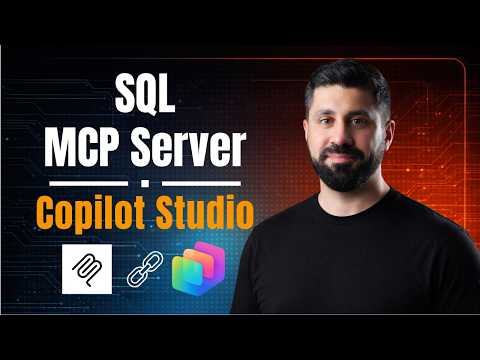
In a recent YouTube video, Rafsan Huseynov demonstrates how to connect a Copilot agent to a live Azure SQL Database using the SQL MCP Server. The video promises a streamlined approach with no custom APIs, no Power Automate flows, and no connector code, relying instead on one configuration file to enable natural language queries. Rafsan walks viewers through the entire process from installation to deployment, and he intentionally highlights the errors he encountered so others can avoid the same pitfalls. This article summarizes his approach, key tradeoffs, and the practical challenges he documents.
Overview of the Technology
The core idea centers on the SQL MCP Server, an intermediary that exposes secure database operations via the MCP protocol to Copilot agents. By acting as a controlled layer between the agent and the database, it lets agents discover and invoke tools without direct database connections. Rafsan frames the MCP server as a safe, standardized way to translate natural language into database operations while maintaining permissions and auditability. Consequently, organizations can enable conversational data access without exposing raw credentials or full SQL endpoints.
Step-by-Step Setup Walkthrough
Rafsan organizes the tutorial with a clear timeline: he starts with tool installation, then configures the Data API builder, tests locally, creates a Dockerfile, deploys to Azure Container Apps, and finally connects the agent to Copilot Studio. He shows how to create the .env connection string file and how to add database tables to the MCP config so agents can reason about available data. During the demo segment he runs simple queries through the agent and inspects the generated T-SQL to show how natural language maps to database actions. This sequence helps viewers follow along and replicate the environment step by step.
Connecting to Copilot Studio and Demo Insights
Once the server runs and the public endpoint is live, Rafsan connects it to Copilot Studio and demonstrates the agent performing CRUD actions against the Azure database. He emphasizes that the agent discovers available tools at runtime, so you do not hard-code schemas into the agent logic. The demo highlights how agents can return human-friendly explanations alongside actual SQL queries, which helps developers validate intent. Moreover, the video shows how testing locally before deployment reduces configuration surprises in cloud environments.
Security, Tradeoffs, and Operational Considerations
Rafsan points out important tradeoffs between ease and control: the MCP layer simplifies access but adds an operational component to maintain. On the one hand, you gain safer, audited access and can impose fine-grained permissions; on the other hand, you inherit the complexity of deploying and securing an additional service. Performance and latency also matter, since the extra hop can affect response times in high-frequency scenarios, so teams must balance responsiveness against the security benefits. Ultimately, adopting the SQL MCP Server works best when organizations prioritize controlled conversational access over raw, direct connections.
Common Challenges and Troubleshooting
One of the most valuable parts of Rafsan’s video is his troubleshooting walkthrough, where he documents the errors he encountered and how he fixed them. Many issues stem from misconfigured environment variables, incomplete table mappings in the config, or Dockerfile problems that surface only during containerization. He also covers deployment-specific pitfalls in Azure Container Apps, such as networking and public endpoint testing, and shows how to verify the MCP server once connected to Copilot Studio. Those debugging steps shorten the learning curve for viewers and reduce trial-and-error time.
Best Practices and Recommendations
Rafsan recommends validating the local setup thoroughly before cloud deployment, keeping configuration changes minimal during first runs, and using clear logging to track agent requests. He also advises implementing strict role-based permissions in the MCP config to limit what agents can query or modify. For production use, monitoring and automated tests become critical to detect drift between the agent’s expectations and the underlying schema. These practices help teams manage the tradeoff between rapid prototyping and long-term stability.
Conclusion: Practical Value and Limitations
Overall, the video by Rafsan Huseynov offers a practical, hands-on guide to connecting a Copilot agent to an Azure SQL Database using the SQL MCP Server. It balances demonstration with candid troubleshooting and helps viewers weigh the benefits of conversational data access against deployment and operational costs. While the approach simplifies agent integration, teams must still plan for security, latency, and maintenance overhead. Nevertheless, for organizations seeking conversational access to SQL data with controlled exposure, the MCP-based approach provides a compelling option.
Keywords
SQL MCP Server, Copilot Studio, Connect Agent to Azure SQL, Azure SQL integration, Copilot for SQL, Azure SQL Agent integration, SQL server AI assistant, Azure Copilot Studio setup