Azure Enclave: isolate workloads, control connections
Principal Cloud Solutions Architect
Azure Enclave gives Azure teams a managed way to isolate sensitive workloads and approve specific network connections.
Key insights
- A community can span Azure regions and subscriptions, but all its resources must be in the same Microsoft Entra tenant.
- Each enclave is limited to one subscription and one region and receives its virtual network address space from the community.
- Community endpoints define permitted outbound destinations; enclave endpoints and connections control inbound and inter-enclave access.
- Microsoft announced general availability in Azure and Azure for US Government on October 13, 2026.
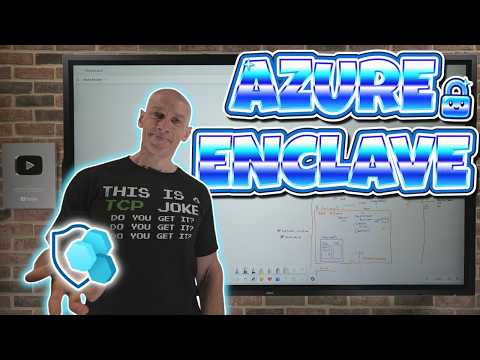
Azure Enclave provides a managed way to isolate sensitive Azure workloads and control which network connections are allowed. It is aimed at cloud architects, security teams, and administrators who need governed network boundaries for workloads with shared isolation requirements. John Savill's [MVP] demonstrates the service’s community, enclave, policy, and endpoint model in a YouTube walkthrough.
What's new
Azure Enclave packages network isolation and governance into a service model rather than requiring teams to assemble every component and connection themselves. Its main building blocks are communities, enclaves, and workloads. A community is the higher-level governance and networking boundary; it can contain multiple enclaves, each of which holds workloads with a specific isolation posture.
A workload consists of one or more resource groups linked to an enclave. Resources deployed in those groups inherit the applicable policies. The design starts with restricted connectivity: administrators deliberately configure the exceptions and paths that workloads need, instead of treating network access as open by default.
The service is built around Azure networking and policy capabilities. At the community level, Azure Virtual WAN and regional secured hubs provide transit and Azure Firewall inspection. Azure Policy initiatives apply guardrails, while logging and approval controls support governance. Azure Enclave’s value is the managed arrangement of these pieces and the controls for configuring them.
Who it is for and what you need
Azure Enclave is intended for organizations that need to run sensitive workloads with strong network separation and explicit connectivity. Examples include research data, health records, government programs, and isolated testing workloads. It is most relevant to teams responsible for network architecture, policy, and workload security.
Microsoft announced general availability in Azure and Azure for US Government on October 13, 2026. A community can span regions and subscriptions, but all of them must be in the same Microsoft Entra tenant. Each enclave, by contrast, belongs to one subscription and one region.
Plan the community’s IP address space before creating enclaves. The service uses that address pool to assign space to enclave virtual networks. The chosen range must not overlap with networks the organization plans to connect, including cloud or on-premises networks. Workloads are added through resource groups linked to the enclave.
How it works
Create a community. Set its IP range and governance configuration. The range can be between /8 and /16, and the address pool is used for networking across the community. The community also has policy settings and a Log Analytics workspace for logging.
Configure shared network and policy controls. Azure Virtual WAN and secured hubs support the community’s network transit, with a secured hub deployed for each region used. Community policy establishes a baseline; enclave policy can add stricter controls where permitted.
Set approvals and community endpoints. Approval settings can require designated reviewers for actions such as enclave creation. Community endpoints specify permitted external destinations, using rules such as IP addresses, fully qualified domain names, domain-name tags, service tags, or defined private networks.
Create an enclave. Select its subscription and region, allocate its virtual network address space from the community pool, and define subnets. Network security groups are configured for the subnets. Azure Bastion is optional, and an enclave can be associated with a suitable hub.
Define access into the enclave. Enclave endpoints describe what can connect to resources inside the enclave, using an IP range, port, and protocol. Enclave connections then wire an endpoint to another enclave or to an allowed community endpoint.
Deploy workloads. Link an empty existing resource group or create a new one, then deploy resources into it. Those resources are governed by the enclave’s applicable policies and connect through the enclave’s subnets.
This separation also makes endpoint changes easier to manage. For example, if an endpoint represents services hosted in an enclave and its target addresses change, the endpoint can be updated without changing each connection that uses it when automatic updates are configured. Cross-community connectivity is possible with appropriate role-based access in both communities.
Limitations and alternatives
Azure Enclave’s isolation model adds configuration work of its own: teams must define the permitted destinations and the connections needed by each workload. An enclave cannot span subscriptions or regions, so workloads that need to cross either boundary require an architecture that accounts for separate enclaves and controlled connectivity.
The community address range must also be checked against other networks before deployment. Dedicated hubs are optional; they can be assigned to selected enclaves when teams want dedicated throughput, and the walkthrough recommends pre-deploying them for that purpose. Where an organization already builds these controls itself, the alternative is to manage the underlying network and policy components directly; Azure Enclave provides an orchestrated model for that work.
Policy set at the community level is protected from deletion by enclave owners through a deny assignment. Authorized users can configure exceptions when their roles permit it, with auditability and compliance visibility. Treat these controls as a security foundation, not as a substitute for workload-specific review: administrators still need to confirm that the policy and allowed connections meet the workload’s requirements.
Sources
- Microsoft Learn: What is Azure Enclave?
- John Savill's [MVP] Azure Enclave walkthrough
- Azure Enclave architecture whiteboard

Frequently asked questions
Is Azure Enclave generally available?
Microsoft announced general availability in Azure and Azure for US Government on October 13, 2026.
Can an Azure Enclave span subscriptions or regions?
No. An enclave is in one subscription and one region. A community can span subscriptions and regions, provided they are all in the same Microsoft Entra tenant.
How does Azure Enclave control connectivity?
Community endpoints define permitted external destinations. Enclave endpoints define access to resources inside an enclave, and enclave connections wire those endpoints to other enclaves or community endpoints.
What is the difference between a community and an enclave?
A community is the broader networking and governance boundary and can contain multiple enclaves. An enclave is a regional, single-subscription network boundary for workloads.