- All of Microsoft
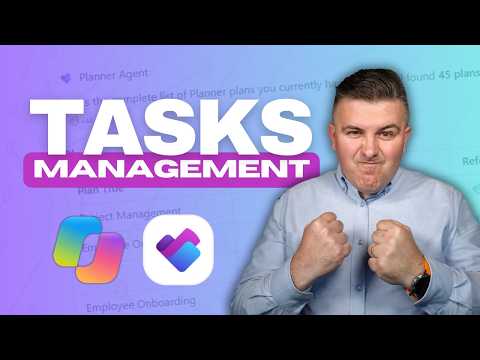
Planner Agent: Manage Tasks with AI
Microsoft 365 atWork; Senior Digital Advisor at Predica Group
As a Microsoft expert, learn how Planner Agent and Copilot streamline task management across Outlook and Teams with AI
Key insights
- Planner Agent is a built-in AI assistant in Microsoft 365 Copilot (general availability June 2026) that creates, updates and organizes tasks and plans for teams.
- Microsoft 365 sources—including Planner, Teams, Outlook, emails, chats, files and meeting notes—feed the agent so it finds, links and updates tasks across tools.
- Natural language task creation lets you write simple prompts to generate or change tasks (name, status, dates, priority, assignees) without switching apps.
- Goals bucket helps turn high-level goals into concrete plans and task lists, connecting strategy to day-to-day work and tracking progress in one place.
- Interactive task cards let users view and edit task details inline (change owner, dates, status) inside Copilot Chat, Outlook or Teams for faster updates.
- Centralized work view reduces manual effort by highlighting overdue, blocked or at-risk tasks and by generating quick status reports and progress summaries for teams.
The following summarizes a YouTube video by Szymon Bochniak (365 atWork) that demonstrates how Microsoft’s new task assistant works in practice. In the clip, the presenter walks through real scenarios using Planner Agent inside Microsoft 365 Copilot, showing how it creates, updates and surfaces tasks without forcing users to switch apps. Importantly, the video notes that the tool moved from a preview in March to general availability in June 2026, and that the GA release introduced a plan picker, a draft mode for AI-generated tasks and a Goals bucket. Overall, the walkthrough aims to highlight practical value for teams that struggle to turn conversations into tracked work.
What the Planner Agent is and why it matters
The video describes Planner Agent as a conversational task manager that connects Planner tasks with emails, meetings and chats. Consequently, it helps avoid the common problem where action items get lost between a chat thread and the official task board. The host explains that the agent can answer questions about plans, generate task lists from goals and prepare draft tasks for review.
Furthermore, the presenter emphasizes that the agent taps multiple Microsoft 365 sources so users can ask natural-language questions like which tasks are overdue or which items to prioritize today. In practice, this reduces the manual work of copying follow-ups into Planner and gives a single entry point for task management. Therefore, organizations can expect faster capture of actions that emerge from everyday collaboration.
How it operates across apps
The video demonstrates three common entry points: Copilot Chat, Outlook and Microsoft Teams, showing that the agent follows the user rather than staying confined to one app. For example, the presenter converts a meeting note and an email into draft tasks and then refines them in chat, illustrating a seamless workflow between apps. As a result, teams can move from an inbox or a meeting to an assigned Planner task in a few steps.
In addition, the walkthrough highlights the convenience of interactive task cards that let users edit attributes such as assignee, due date and priority without leaving the Copilot interface. This design reduces friction and helps maintain context while you edit tasks. However, the video also shows that some edits still require human confirmation, which balances automation with control.
Key features demonstrated
Among the features shown, the plan picker helps place tasks into the right plan and bucket, while draft mode allows teams to review AI-created tasks before they become active. The presenter also demonstrates how a Goals area can turn higher-level objectives into concrete task lists, linking strategy to daily work. Moreover, the agent can summarize the status of a plan and flag blocked or overdue items to accelerate follow-ups.
Interactive cards surfaced by the agent let users change status, reassign work and update dates inline, which speeds routine adjustments. The video stresses that the agent draws from Planner tasks, chats, emails and meeting content to create a consolidated view. Consequently, teams get both synthesis and action in one place, rather than scattered signals across apps.
Tradeoffs and practical challenges
Despite the clear benefits, the presenter also points out tradeoffs that organizations must weigh before relying heavily on the agent. For instance, greater automation speeds task capture but raises the risk of incorrect assumptions if context is incomplete, so human review remains necessary. Furthermore, combining data from multiple sources improves visibility but can produce noisy results when permissions, duplicates or conflicting information exist.
Privacy and access control also pose challenges because the agent leverages content across Microsoft 365; therefore, administrators must balance productivity gains with governance and compliance needs. In addition, complex projects with granular dependencies may still require manual planning and oversight because AI-generated lists can miss nuanced sequencing. Thus, teams should consider the right mix of automation and manual control for their workflows.
Adoption tips and next steps
The video recommends starting small by enabling the agent for pilot teams and using draft mode to build trust before broad rollout. By contrast, flipping automation fully on too soon risks user pushback if the AI creates inaccurate tasks or duplicates work, so phased adoption helps calibrate rules and permissions. Trainers should also emphasize how to review and edit AI drafts to keep accountability clear.
Additionally, the presenter suggests that project leads use the Goals capability to connect strategy to day-to-day tasks, which helps teams see how their work contributes to larger objectives. Finally, monitoring how the agent surfaces blocked or overdue items can improve responsiveness, while feedback loops will help the AI suggestions become more relevant over time.
In conclusion, Szymon Bochniak’s video offers a practical look at how Planner Agent extends Microsoft 365 collaboration by turning conversations into tracked work. While the tool promises faster task capture and a consolidated view across apps, the video makes clear that organizations must manage tradeoffs around accuracy, governance and adoption. Ultimately, teams that pair the agent with clear review practices and staged rollouts are best placed to reap benefits while limiting risks.
Keywords
AI task management, Microsoft Planner Agent, Planner Agent tutorial, AI-powered task planning, automated task management, task automation with AI, Planner Agent for Teams, manage tasks with AI