- All of Microsoft
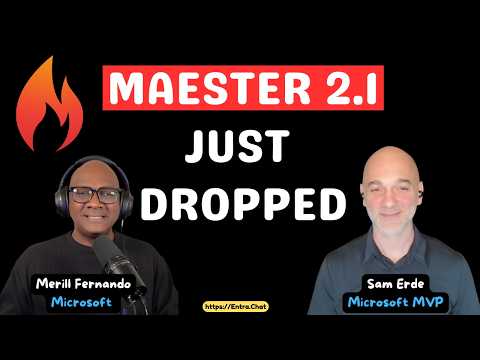
Maester 2.1: Secure Copilot & Defender
Product Manager @ Microsoft 👉 Sign up to Entra.News my weekly newsletter on all things Microsoft Entra | Creator of cmd.ms & idPowerToys.com
Microsoft expert breakdown: Maester secures Copilot, Azure DevOps, Defender for Endpoint, Entra ID and Microsoft cloud
Key insights
- Maester 2.1 is a major community-driven release that adds many practical security tests and features.
It reflects heavy collaboration and maintenance work led by Sam Erde and the wider community-driven team. - The new Create a Test AI skill instantly generates production-ready Maester tests to remove writer's block.
It lets admins produce usable checks fast and adapt them to real environments. - Copilot Studio Agents gain 10 targeted security checks, covering risky sharing, orphaned ownership, missing auth, and dormant agents.
These checks follow Microsoft guidance and help secure agent-driven workflows. - Maester adds 37+ new Azure DevOps tests for PATs, OAuth, external guests, and collection admin risks.
The Defender for Endpoint suite was fully refactored into 24+ clean, consistent tests for faster, reliable assessments. - Multi-tenant reporting lets teams merge results across dev/test/prod tenants or MSP clients with one command and a dropdown UI.
Organizations can now run consolidated scans and share clear results across teams. - Key roadmap items include updated CIS benchmarks, linked-identity checks, deeper Zero Trust assessments, database-backed testing for large tenants, trending reports, and a future hosted service.
These changes aim to scale Maester for enterprises, MSPs, and solo admins alike.
Introduction
In a recent YouTube episode of Entra Chat, host Merill Fernando sat down with Microsoft MVP and Maester core maintainer Sam Erde to unpack the release of Maester 2.1. The video serves as a practical walkthrough of features that matter to administrators, MSPs, and security teams. Viewers can quickly grasp improvements for securing Copilot Agents, Azure DevOps, and Defender for Endpoint. Consequently, the episode balances demos with explanations to help teams adopt the release faster.
Release Highlights and Practical Impact
Maester 2.1 brings a wave of community-driven updates that address real-world security gaps. For example, the new AI-powered "Create a Test" skill aims to eliminate the blank-screen problem by generating production-ready tests on demand. In addition, the release adds ten Copilot Studio and agent security checks aligned to Microsoft recommendations, which focus on risky sharing, orphaned ownership, missing authentication, and dormant agents. These additions speed up assessments while aligning with platform best practices.
The update also introduces more than 37 Azure DevOps checks that cover PAT policies, OAuth configurations, external guests, and collection admin risks. These tests play a critical role in supply-chain protection by catching misconfigurations before they reach production. Meanwhile, the Defender for Endpoint suite was fully refactored into 24+ clean and consistent checks after months of stalled work. As a result, teams will find clearer outputs and fewer false positives when running endpoint scans.
AI Automation and the New “Create a Test” Skill
The video highlights the promise and limits of using AI for test generation. On one hand, the Create a Test skill offers immediate productivity gains by scaffolding tests that administrators can run or refine, which reduces setup time dramatically. Additionally, it helps newcomers and small teams overcome the barrier of writing security checks from scratch.
However, the hosts warn that automated tests require careful review to avoid blind trust. While AI can speed creation, reviewers must validate context, scope, and false-positive patterns before deploying tests in production. Therefore, the balanced approach combines AI-generated drafts with human oversight to ensure accuracy and operational safety.
DevOps, Defender, and Multi-Tenant Reporting
In Azure DevOps, the expanded test set integrates into CI/CD pipelines to detect risky tokens and configuration issues early. The Maester checks generate machine-readable outputs that teams can incorporate into policy gates and pipeline breaks, improving shift-left security. Meanwhile, the Defender refactor addressed long-standing complexity, yielding consistent, maintainable checks that integrate better with other tooling.
Another major improvement is the introduction of multi-tenant reporting, which merges results from development, test, and production tenants or across MSP client estates with a single command and a dropdown UI. This feature streamlines comparative analysis and reduces the administrative burden of aggregating findings manually. Nevertheless, it raises privacy and access-control considerations that teams must configure carefully.
Community Momentum and Governance
The episode emphasizes that Maester 2.1 is a community-driven milestone, noting hundreds of commits and dozens of contributors since December. In this context, community contributions accelerated features such as CIS benchmark updates and linked-identity checks for privileged accounts. This collaborative model helps the project scale its coverage quickly while fostering real-world validation.
Yet, community-driven projects must balance agility and stability. While fast iteration delivers useful tests and rapid fixes, organizations should vet community changes against internal governance policies. Consequently, enterprises often maintain staging tenants or test harnesses to validate updates before rolling them into production environments.
Tradeoffs and Operational Challenges
Adopting Maester 2.1 involves tradeoffs between automation, control, and scale. Automation reduces repetitive work and speeds coverage, but it can generate noise and require tuning to avoid alert fatigue. Furthermore, while AI-assisted test creation accelerates adoption, it also increases the responsibility on security operators to verify logic and scope.
Scalability poses another challenge: database-backed testing and trending reports planned for the future will help massive tenants, yet they demand careful design for performance and data governance. Multi-tenant reporting simplifies visibility for MSPs, but it necessitates strict role-based access controls and tenant isolation to prevent data leakage. Thus, teams must weigh operational complexity against the benefits of centralized reporting and automation.
Looking Ahead
Merill and Sam close the discussion by outlining future priorities, including deeper Zero Trust assessments, database-backed testing for large tenants, and trending reports for longitudinal analysis. They also mention the potential for a hosted service that would lower adoption friction for smaller teams, albeit at the cost of introducing external dependencies. Overall, the roadmap promises to make Maester more enterprise-ready while preserving its open-source roots.
For now, Maester 2.1 represents a pragmatic step forward: it boosts automated coverage, tightens integrations with Microsoft tooling, and demonstrates how community effort can quickly mature a security framework. Security teams should approach the release with a plan that combines AI and automation with governance, testing, and human review to get the best outcomes. In sum, the video offers actionable guidance for organizations serious about strengthening their Microsoft 365 and Entra ID posture.

Keywords
secure Copilot agents, Maester 2.1 security guide, Azure DevOps security, Microsoft Defender integration Maester, secure Azure pipelines, Copilot agent hardening, Maester full breakdown, DevOps security best practices