Kimi K3.1 Benchmark Claim Lacks Verification
Artificial Intelligence (AI), Open Source, Generative Art, AI Art, Futurism, ChatGPT, Large Language Models (LLM), Machine Learning, Technology, Coding, Tutorials, AI News, and more
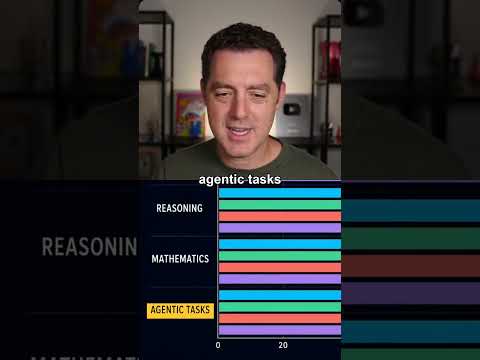
Matthew Berman’s Short questions Kimi benchmark scores, but the available material does not verify its headline claim or show how the scores were produced.
Key insights
- The Short’s published description contains no transcript or details about the benchmark claim.
- The research notes attribute Kimi K3.1 Pro’s published performance figures mainly to Moonshot AI.
- The available material does not verify that Microsoft created or endorsed the scores.
- The notes caution that some results are vendor-reported or based on internal benchmarks.
Matthew Berman published a 22-second YouTube Short titled “Kimi K3.1 Invented the Benchmark Scores.” The supplied Short description has no transcript, so it does not establish what evidence Berman presents or what he means by “invented.” The central takeaway from the available material is narrower: it does not verify that Microsoft created or endorsed Kimi benchmark scores.
What's new
The Short’s title raises a claim about Kimi and benchmark scores, but the supplied content does not explain the claim. Background notes identify Kimi K3.1 Pro as a model from Moonshot AI and say its published performance figures primarily come from Moonshot announcements and internal evaluations. They do not attribute the scores to Microsoft.
The notes list reported results across coding, agent workflows, financial research, and other tasks. For example, they cite a Terminal-Bench 4.0 result of 65.7% and an OfficeQA Pro v2 result of 64.4%. These are background figures, not details confirmed by the Short’s supplied transcript, which is absent.
Why it matters
For IT teams and developers comparing AI models, a benchmark score can influence which systems they test or adopt. The source material does not provide enough detail to assess the Short’s argument, or to establish the test setup behind any particular score. That makes it important to separate a social-media headline from verified information about who produced a result.
The research notes say some reported results are vendor-reported or based on internal benchmarks, and caution against treating them as independently validated rankings. This is relevant to anyone evaluating model performance: the benchmark name and number alone do not establish how a test was run or whether results were independently checked. No Microsoft product, license, rollout, or integration is established in the provided material.
How it works
Benchmark results are presented as numerical measurements of performance on named evaluations. In the material supplied here, Moonshot is associated with Kimi’s claims, while the Short title frames those scores as “invented.” The transcript does not show the steps, evidence, or explanation behind that wording.
To interpret the figures responsibly, readers would need the original benchmark reports and details about the evaluation method. The available notes do not supply those details for every result, and they do not provide independent verification of the headline claim.
Limitations and open questions
The Short is only 22 seconds, and no transcript or substantive video description was supplied. We therefore cannot verify what Berman says beyond the title, whether he offers evidence, or whether “invented” is literal or rhetorical. The background notes explicitly say there is no verified evidence in the available information that Microsoft created or officially endorsed the scores.
The notes refer to Kimi K3.1 Pro, while the Short title says Kimi K3.1. The supplied material does not explain that naming difference. Readers should treat the model details and benchmark figures as background claims, not as independently confirmed findings from the Short.
Sources
- Matthew Berman’s YouTube Short
- Short page listed as the original article
- Matthew Berman’s YouTube channel
Frequently asked questions
Did Microsoft create the Kimi benchmark scores?
The available research notes say there is no verified evidence that Microsoft created or officially endorsed them. They associate the published figures mainly with Moonshot AI.
Does the Short explain why the scores are called invented?
The supplied Short description has no transcript, so its reasoning and evidence cannot be confirmed from the material provided.
Are the reported benchmark results independently validated?
The notes say some results are vendor-reported or based on internal benchmarks, and should not automatically be treated as independently validated rankings.