- All of Microsoft
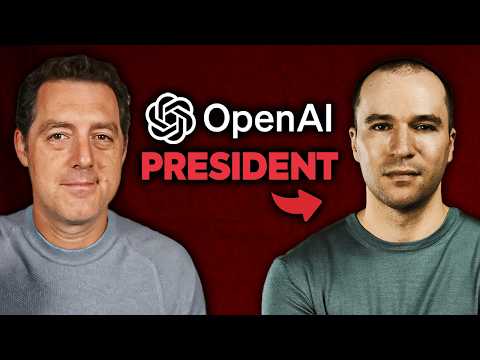
Sora 2: Brockman on AGI, Bottlenecks
Artificial Intelligence (AI), Open Source, Generative Art, AI Art, Futurism, ChatGPT, Large Language Models (LLM), Machine Learning, Technology, Coding, Tutorials, AI News, and more
Microsoft expert on AGI, Sora two, bottlenecks and proactive AI with Azure OpenAI, Azure ML and GitHub Copilot insights
Key insights
- Sora 2: A new generation of the Sora family focused on scale and specialized training.
It stays transformer-based but uses tailored training steps and compute allocation to boost performance at large scales. - AGI progress: True artificial general intelligence remains unconfirmed and distant.
Industry leaders stress the difficulty and caution against premature claims about reaching AGI. - Bottlenecks: Key limits are compute availability, dataset quality, and training efficiency.
Teams must prioritize investments that remove these bottlenecks to make models more useful in production. - Proactive AI: Systems that anticipate needs and act without explicit prompts are gaining priority.
Proactive, agentic AI aims to boost productivity by suggesting actions and automating routine decisions. - White-collar impact: AI is set to automate higher-level knowledge work and also augment many roles.
Workers and businesses should prepare for role changes and focus on skills that complement AI. - Microsoft–OpenAI collaboration: Microsoft has increased investment and integration with leading AI teams and tech.
This partnership accelerates productization of advanced models and brings more AI features into mainstream software.
Video overview and key themes
The newsroom reviewed a recent YouTube video by Matthew Berman that features an extended conversation with Greg Brockman. In the talk, Brockman addressed multiple topics, including the new Sora 2 model, progress toward AGI, system bottlenecks, and the rise of what he calls Proactive AI. Moreover, the discussion framed these technical advances in the context of industry shifts, especially around Microsoft and its growing role in AI development.
Overall, the video mixes technical detail with strategic perspective, and it highlights practical tradeoffs for companies and developers. Consequently, the story matters to readers who follow AI policy, product teams, and white-collar work trends. Importantly, the presentation balances excitement about capability gains with caution about limitations and risks.
Sora 2 and the scaling debate
Brockman described Sora 2 as a next-step model in a family that still relies on transformer foundations, yet it adapts training methods and compute allocation to new use cases. For example, he mentioned diffusion-related techniques and careful forward/backward pass scheduling to get more from existing hardware. Thus, the emphasis is on squeezing performance from scale while managing cost and complexity.
However, scaling introduces tradeoffs: larger models can improve generalization but they raise training cost, energy use, and deployment complexity. Therefore, teams must weigh the benefits of raw scale against the need for efficient model variants and optimization. In practice, this balancing act influences where engineers focus effort—on architectures, data quality, or specialized hardware.
Progress toward AGI and internal challenges
On the subject of AGI, Brockman resisted definitive timelines and stressed the difficulty of declaring an achievement of that magnitude. He noted that the internal path to major breakthroughs often involves setbacks and high human costs, indicating that progress is incremental and uncertain. Consequently, public expectations should be tempered by the reality of complex engineering and evaluation challenges.
Moreover, measuring AGI remains an open problem, as no single benchmark captures the breadth of human-like intelligence. In addition, organizations must manage governance, safety testing, and ethical review while pursuing capability gains. These practical constraints slow claims of definitive AGI even when technical milestones advance rapidly.
Bottlenecks and where to invest
Brockman pointed to several clear bottlenecks: raw compute availability, data quality, and training efficiency. In turn, deciding where to invest becomes a strategic choice between buying more hardware, improving software and algorithms, or curating better data. Each option has pros and cons: hardware buys yield short-term power, while algorithmic work can unlock long-term efficiency but requires deep research talent.
Furthermore, specialized hardware—such as certain CPUs and accelerators—can shift the equation, yet they demand engineering time and supply-chain planning. As a result, organizations must weigh capital expense, talent constraints, and deployment speed when forming investment priorities. Ultimately, a blended approach tends to be most robust under uncertainty.
Proactive AI, automation, and white-collar work
Brockman emphasized a move from reactive assistants to what he called Proactive AI, systems that anticipate needs and take initiative. This shift promises productivity gains, particularly in knowledge work, but it also raises tradeoffs around privacy, user control, and error handling. Consequently, firms must design safeguards and clear opt-in mechanisms as they make these systems more assertive.
Regarding jobs, he acknowledged that AI will automate many cognitive tasks, reshaping roles rather than simply eliminating them overnight. Therefore, organizations face the challenge of balancing automation benefits with retraining, role redesign, and social impacts. In short, deploying proactive systems requires technical rigor and thoughtful workforce planning to manage transitions responsibly.
Microsoft, partnerships, and the road ahead
The video situates much of the conversation within a broader industry shift in which Microsoft plays a major role through partnerships and internal investment. Brockman suggested that building on existing platforms and services allows faster productization of research, yet it also introduces coordination challenges across teams and partners. Thus, aligning long-term research goals with near-term product needs remains a persistent organizational tradeoff.
Looking forward, the interview paints 2026 and beyond as a period of acceleration, but with persistent technical and governance hurdles. Therefore, stakeholders should prepare for rapid capability gains while also strengthening evaluation, safety, and workforce strategies. In other words, the path to advanced AI will require both engineering breakthroughs and careful stewardship.

Keywords
Greg Brockman interview, AGI development, Sora 2 AI model, AI bottlenecks and limitations, white collar automation, proactive AI systems, AI safety and governance, future of work with AI