- All of Microsoft
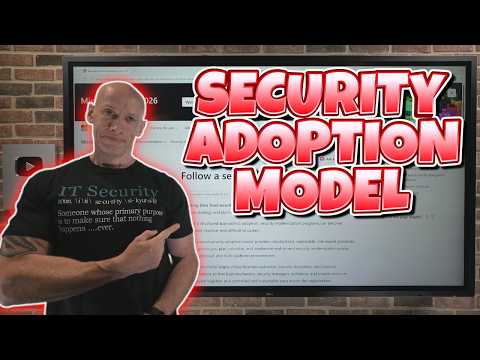
Microsoft Security Adoption Model Guide
Principal Cloud Solutions Architect
Microsoft expert: new Security Adoption Model guides your Zero Trust journey with Azure MS Learn PowerShell and DevOps
Key insights
- Security Adoption Model: Microsoft released a unified, role-aware framework that groups decades of security guidance into one practical roadmap.
It helps teams plan and modernize security across hybrid, multicloud, and multi-platform environments. - Core components: The model centers on Business Scenarios, Security Disciplines, and Technology Pillars to connect goals, teams, and assets.
These components show what to protect, how teams should operate, and which business outcomes security must enable. - Zero Trust foundation: The model builds on "never trust, always verify" and enforces least-privilege access as default practice.
Teams should verify every access request, reduce implicit trust, and monitor continuously for anomalies. - Three-phase lifecycle: Follow Plan, Implement, and Monitor to move from strategy to operations.
Plan defines scenarios and gaps, Implement applies controls across environments, and Monitor uses telemetry to improve posture continuously. - Practical benefits: Organizations gain consistent guidance, clearer business alignment, role-aware tasks, and proactive threat detection.
The model also supports measurable progress through templates, ownership assignment, and coverage tracking tools. - How to start: Use the model's templates and checklists to assign owners, prioritize controls, and track coverage across environments.
Begin with a focused scenario, measure results, and iterate to scale security improvements over time.
Overview of the Video
In a recent YouTube presentation, John Savill's [MVP] introduces Microsoft’s new Security Adoption Model and walks viewers through its structure and purpose. He lays out the video in clear chapters, beginning with an introduction and moving through an overview, the adoption journey, security disciplines, and a concise summary. Consequently, the video serves as a compact primer for security leaders and practitioners who want a single framework to unify fragmented guidance across hybrid and multicloud environments.
Moreover, Savill stresses that this model is a strategic framework rather than a standalone product, and he emphasizes how it consolidates prior guidance from multiple sources. He highlights Microsoft’s intent to align security work with business outcomes and to offer practical artifacts such as Visio grids and workbooks to track progress. Therefore, the presentation aims to help teams move from intent to implementation in a repeatable way.
Core Components Explained
First, the video breaks the model into three foundational components: business scenarios, security disciplines, and technology pillars. Savill explains that business scenarios define the outcomes organizations must protect, while security disciplines map how teams plan and operate, and technology pillars identify the assets to secure such as identity, devices, and data. As a result, audiences can see how each layer connects strategic intent to on-the-ground actions in a way that different roles can adopt.
In addition, the speaker illustrates how the model embraces Zero Trust principles by default, advocating explicit verification and least-privilege access across the lifecycle. He notes that the model merges product-agnostic recommendations with implementation guidance that references Microsoft tooling when appropriate. Therefore, teams get a flexible approach that can apply to diverse environments without locking them into a single solution set.
Practical Benefits and Use Cases
Savill outlines clear advantages for organizations that adopt the framework, such as unified guidance, role-aware planning, and measurable progress tracking. He points out that aligning security work with business outcomes makes it easier for decision-makers to justify investments and for teams to prioritize tasks. Consequently, organizations can reduce duplication, improve coordination, and move toward proactive security posture management rather than relying solely on reactive incident response.
Furthermore, the video highlights artifacts the model provides to help teams operationalize security, including downloadable grids and progress workbooks. These tools enable teams to assign owners, track coverage, and measure maturity against prioritized recommendations. Therefore, the framework supports both executive oversight and technical execution, which can help close common coordination gaps between leadership, architects, and practitioners.
Tradeoffs and Implementation Challenges
While the model promises many benefits, Savill candidly discusses tradeoffs that organizations must consider when adopting it. For example, shifting to a unified adoption model often requires upfront investment in planning and governance, and organizations must balance immediate operational needs with longer-term modernization goals. Moreover, teams face resource constraints and competing priorities, so leaders should expect gradual progress rather than instant transformation.
Another challenge the video addresses is the difficulty of applying a single framework across varied environments, including legacy on-prem systems and diverse cloud providers. Savill suggests pragmatic adaptation and prioritization; organizations should tailor the model to their context while preserving core principles like least privilege and continuous monitoring. Therefore, the path forward usually involves iterative improvements and careful tradeoffs between speed, cost, and comprehensiveness.
Next Steps and Recommendations
In his closing remarks, Savill recommends that teams begin by defining clear business scenarios and mapping those scenarios to prioritized security actions. He encourages organizations to use the model’s artifacts to assign ownership and measure progress, and to adopt continuous monitoring to validate improvements over time. Consequently, teams can steadily raise their security posture while maintaining alignment with business priorities.
Finally, Savill emphasizes ongoing learning and practical experimentation as keys to success, suggesting teams start small, measure outcomes, and iterate. He stresses that adopting the model does not remove the need for skilled practitioners; instead, it frames their work so it creates clearer value and more consistent outcomes. Therefore, organizations that combine the model with disciplined execution can make meaningful progress toward a modern, resilient security posture.
Keywords
security adoption model, security adoption framework, security adoption resources, enterprise security adoption, cloud security adoption model, zero trust adoption guide, security adoption roadmap, security adoption best practices