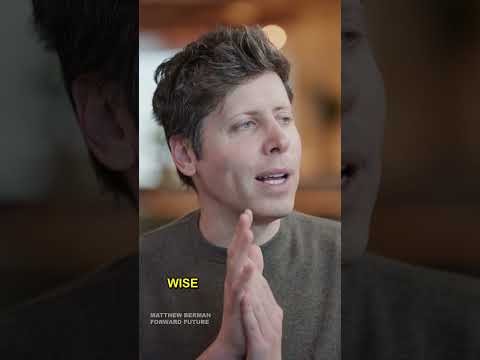
Sam Altman on Choosing Whose Advice to Trust
Artificial Intelligence (AI), Open Source, Generative Art, AI Art, Futurism, ChatGPT, Large Language Models (LLM), Machine Learning, Technology, Coding, Tutorials, AI News, and more
Matthew Berman’s Short centers on advice from people, while the supplied notes frame the principle around firsthand experience and trust.
Key insights
- The Short is titled “Sam Altman on Why Your Most Important Advice Should Come From People.”
- The supplied research notes emphasize firsthand understanding, relevant experience, and trust when choosing whom to ask.
- For AI projects, the notes point to practitioners familiar with comparable workloads and organizational constraints.
- The supplied transcript contains no substantive spoken content to verify the video's specific wording or examples.
Matthew Berman published a 55-second YouTube Short titled “Sam Altman on Why Your Most Important Advice Should Come From People.” The supplied transcript contains only a generic video label, so it does not establish what Altman says in the clip or when particular points appear. The accompanying research notes describe the central idea as seeking guidance from people with relevant experience, firsthand knowledge, and a genuine interest in the outcome.
What's new
This is a short commentary item, not a Microsoft product announcement. Its subject is how to choose whose advice to rely on: the notes contrast practical experience and trust with status or popularity. They suggest that someone who has handled a similar problem may offer more actionable guidance than a prominent person without direct knowledge of the situation.
That framing is provided in the research notes, not confirmed by a full transcript in the supplied material. The notes also connect the principle to AI implementation, where organizations face different operational, data, and regulatory constraints. Those examples provide context, but they are not evidence that the Short itself discusses Microsoft services or enterprise deployments.
Why it matters
For administrators, consultants, and AI project leads, the practical takeaway is to match the adviser to the decision. A person who has implemented a comparable workload may know where integrations, governance reviews, or adoption efforts become difficult. Internal users can also describe whether a proposed tool fits their everyday work.
The research notes name Azure architects, security and compliance specialists, comparable customer organizations, and employees as possible sources of relevant perspective. That is general guidance in the notes, not a list attributed to Altman in the video. No Microsoft licensing, rollout stage, or product change is reported in the available material.
How it works
The notes offer a simple way to apply the idea when evaluating an AI project. First, identify the specific decision and constraints, rather than asking for broad predictions about AI. Then look for people who have worked through a similar problem and understand the organization or industry involved.
- Seek experience with the particular workload or implementation question.
- Include people who understand security, compliance, and operational constraints where relevant.
- Ask users and managers whether the proposed scenario addresses a real workflow need.
- Consider whether an adviser has an incentive that could shape their recommendation.
These steps summarize the supplied research notes; the Short transcript does not provide a process or demonstrate these steps. They should be read as a decision-making framework, not as verified instructions from Altman.
Limitations and open questions
The main limitation is the lack of a substantive transcript: the supplied content does not let us verify Altman’s exact words, examples, or the argument’s full context. The research notes include an attribution to an article, but the available material does not provide enough detail to independently confirm how that article relates to the Short. We also cannot verify from these materials any specific Microsoft product advice, implementation outcome, or licensing detail.
Sources
Frequently asked questions
What does the Short say about advice?
Its title says the most important advice should come from people. The supplied transcript does not include enough spoken content to verify the specific argument or wording.
How could this idea apply to an AI project?
The research notes recommend seeking people with relevant implementation experience and knowledge of the organization’s constraints, including security and compliance needs.
Does the Short announce a Microsoft product or licensing change?
No such announcement appears in the supplied material. It provides no Microsoft licensing or rollout information.