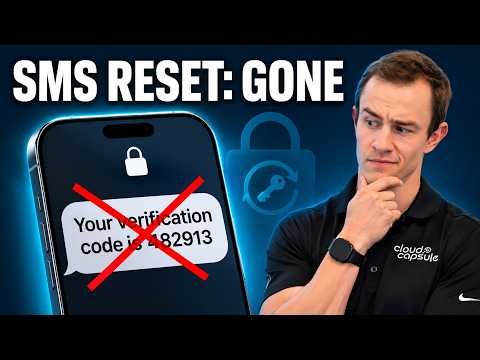
Microsoft Entra retires SMS password reset
Microsoft Entra will retire its SMS and voice codes for sign-in and password resets, so admins should prepare users to register other methods.
Key insights
- Microsoft-provided SMS and voice authentication retires for most users starting February 1, 2027.
- The retirement also affects self-service password reset; text and call verification ends about 50 days after the change reaches a tenant.
- Global administrators and guests have a later retirement date: July 1, 2027.
- Users who rely only on SMS or voice may be required to register a passkey to continue signing in.
- Microsoft says organizations can continue SMS or voice verification through third-party providers.
Microsoft Entra is retiring Microsoft-provided SMS and voice codes for sign-in and self-service password reset, requiring affected users to switch to another verification method. The change matters to identity administrators and help desks whose users still depend on text messages or phone calls to sign in or recover accounts. Nick Ross [MVP] (T-Minus365) demonstrates the change and its timing in a YouTube update covering Microsoft 365 announcements.
What's new
The retirement applies to Microsoft’s own SMS and voice verification for Microsoft Entra accounts. For most users, the change starts February 1, 2027; Global Administrators and guests have a later date of July 1, 2027. Users who rely only on these methods may be stopped during sign-in and prompted to set up a passkey or another method.
Password recovery is part of the change, not a separate exception. Self-service password reset (SSPR) will also lose Microsoft-provided text and voice verification. In the update, Ross says SMS and voice reset options end about 50 days after the change reaches an organization, so the timing can differ from the main retirement date.
Microsoft is moving away from its own text and call codes rather than eliminating every possible use of telephone verification. Organizations can continue using SMS or voice through a third-party telephony provider. The research describes passkeys as the primary replacement, alongside Microsoft Authenticator, time-based one-time passwords (TOTP) and FIDO2 security keys.
Who it is for and what you need
Identity administrators should review users and policies that allow SMS or voice for multifactor authentication or password resets. Help desks should also account for employees who use those methods as their only way to verify their identity. The later July 1, 2027 deadline applies to Global Administrators and guests.
A passkey is a sign-in credential associated with a device or security key and protected by a method such as a biometric check or PIN. Unlike a code sent by text, it does not arrive over the mobile phone network. Microsoft’s transition may prompt users who rely on SMS or voice to register a passkey as they sign in.
Other alternatives described for organizations include Microsoft Authenticator, TOTP and FIDO2 security keys. TOTP remains supported after February 1, 2027, subject to organizational policies. If a business still requires phone-based verification, the third-party telephony route is an option to assess.
How it works
Administrators can approach the change as an authentication and recovery readiness task. The aim is to find users who will lose a method, offer them a replacement, and make sure they can still complete sign-in and password recovery. These checks help avoid leaving users dependent on a code that is being retired.
- Identify users and authentication policies that still rely on Microsoft-provided SMS or voice codes.
- Review the verification methods used for SSPR, including whether users depend on text or phone calls to reset a forgotten password.
- Choose and communicate replacement methods, such as passkeys, Authenticator, TOTP or FIDO2 security keys, in line with your organization’s policies.
- Test sign-in and password-reset workflows before the applicable retirement date, and update user instructions and help-desk guidance.
- Review guest and Global Administrator accounts separately because their retirement date is July 1, 2027.
Users who have another suitable method can use that instead of SMS or voice. Users whose only applicable method is a text or call may be required to register a passkey before continuing. Planning the change ahead of that sign-in prompt gives administrators a chance to guide users and check recovery processes in advance.
Limitations and alternatives
The dates differ by user group, and SSPR has an additional timing detail: its SMS and voice options end about 50 days after the change reaches the tenant. Administrators should therefore check the transition as it applies to their organization rather than treating the February 1 date as the only relevant checkpoint.
Users can encounter problems if they have not registered an alternative method when SMS or voice is no longer available. For phone-based verification that remains an operational requirement, Microsoft’s third-party provider option may be relevant, but it is distinct from Microsoft delivering the codes itself. The research also notes that passkeys reduce reliance on the phone network and are designed to resist phishing.
Keep account recovery in scope alongside MFA. Replacing the sign-in method alone does not address users who still depend on text-message verification for password resets. Review both processes, communicate the change, and make the appropriate alternatives available before users need them.
Sources
Frequently asked questions
When does Microsoft Entra stop using SMS codes?
Microsoft-provided SMS and voice authentication retires for most users starting February 1, 2027. Global Administrators and guests have a July 1, 2027 deadline.
Will SMS still work for Microsoft Entra password resets?
Microsoft-provided SMS and voice verification for self-service password reset is also being retired. Those reset options end about 50 days after the change reaches the organization.
What can users use instead of SMS for Microsoft Entra?
Options include passkeys, Microsoft Authenticator, TOTP and FIDO2 security keys, subject to organizational policies. Organizations can use a third-party telephony provider if they need SMS or voice verification.