- All of Microsoft
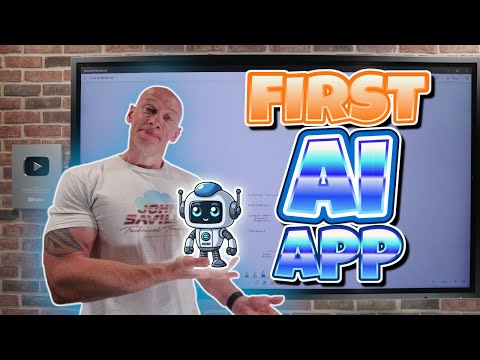
Choosing Your First AI App: A Smart Starter Guide
Principal Cloud Solutions Architect
AI adoption with Azure, focus on business value, ethics & feasibility, explore DevOps & PowerShell Master Classes.
Key insights
- AI Applications help organizations improve efficiency, customer engagement, and innovation by using technologies like Generative AI, Machine Learning (ML), and Natural Language Processing (NLP).
- Benefits of AI include increased efficiency and scalability, better decision-making through real-time data analysis, and the ability to drive innovation with new ideas or solutions.
- To choose your first AI project, you should define clear goals, prepare high-quality data, and select the right tools that match your needs—such as chatbots for customer service or image generators for creative tasks.
- Recent advancements have made AI more accessible through improved models like ChatGPT and Gemini, user-friendly platforms that require no coding skills, and easier integration with existing business systems.
- New strategies involve using generative AI for content creation, combining multiple AI technologies in hybrid models, and considering important ethical factors like privacy and fairness during development.
- Understanding these concepts helps organizations successfully adopt their first AI application, leading to growth opportunities and innovative solutions.
Introduction: Navigating the First AI Application Decision
Selecting an organization's first AI application is a pivotal moment that can shape future innovation and efficiency. In a recent YouTube video by John Savill's [MVP], the complexities and considerations involved in this process are thoroughly explored. As artificial intelligence becomes increasingly embedded in business operations, understanding how to approach this initial decision is essential for leaders and IT professionals alike.
Savill emphasizes that while the potential of AI is vast, the journey begins with careful planning and a clear understanding of both organizational goals and technological options. This article summarizes his key insights, highlighting the tradeoffs, challenges, and best practices for choosing a first AI workload.
Understanding the AI Landscape: Technologies and Use Cases
According to Savill, the AI landscape consists of several core technologies, each offering unique capabilities. For example, Generative AI excels at creating new content—such as text, images, or videos—while Machine Learning (ML) is designed for predictive tasks like forecasting or classification. Additionally, Natural Language Processing (NLP) enables machines to comprehend and generate human language, proving invaluable for chatbots and sentiment analysis.
Organizations must first identify which type of AI aligns with their business objectives. While generative AI might best serve creative industries, ML can drive efficiency in sectors focused on prediction or data analysis. This initial alignment is crucial, as the right choice can amplify value and streamline adoption.
Balancing Value, Feasibility, and Data Readiness
One of the core messages from the video is the need to balance business value with technical feasibility. Savill stresses that organizations should define clear goals for their AI application, whether it’s improving customer service, automating repetitive tasks, or generating new content. However, even the most promising idea must be weighed against practical constraints such as data quality and availability.
Data preparation is often cited as a significant hurdle. High-quality, relevant data is a prerequisite for effective AI, and the process of collecting, cleaning, and labeling data can be resource-intensive. Consequently, organizations may need to invest time and effort upfront to ensure their chosen AI application can deliver meaningful results.
Evaluating Ethical Implications and Scalability
Savill’s video also highlights the growing importance of ethics in AI deployment. As organizations adopt these technologies, they must consider potential risks such as bias, privacy concerns, and unintended consequences. Minimizing ethical implications is not only a matter of compliance but also of maintaining trust with customers and stakeholders.
Furthermore, scalability and return on investment (ROI) are key factors. An AI application should be able to deliver value at scale without incurring prohibitive costs. This means considering both the immediate benefits and the long-term sustainability of the solution, especially as organizational needs evolve.
New Developments and Approaches in AI Selection
Recent advancements have made AI more accessible than ever. Savill points out that improved models like ChatGPT, Claude, and Gemini now offer advanced language and reasoning capabilities. Meanwhile, no-code platforms and seamless integrations have lowered the technical barriers, allowing a broader range of users to experiment with AI.
Another trend is the rise of hybrid approaches, where organizations combine multiple AI technologies—such as blending NLP with ML—to address more complex challenges. This strategy can enhance flexibility and performance but may also introduce additional integration and management challenges.
Conclusion: Minimizing Risk and Maximizing Opportunity
In summary, John Savill’s video provides a practical roadmap for organizations embarking on their first AI project. By carefully balancing business needs, technical feasibility, ethical considerations, and scalability, leaders can minimize risk and maximize the impact of their investment.
Staying informed on the latest developments and adopting a strategic, goal-driven approach will help organizations unlock the full potential of AI while navigating the challenges that come with innovation. As Savill concludes, the intersection of value, feasibility, and ethics is where the best opportunities for AI adoption lie.

Keywords
choosing first AI application best AI apps for beginners how to select AI software beginner AI tools guide top AI applications 2025 AI app selection tips starting with artificial intelligence