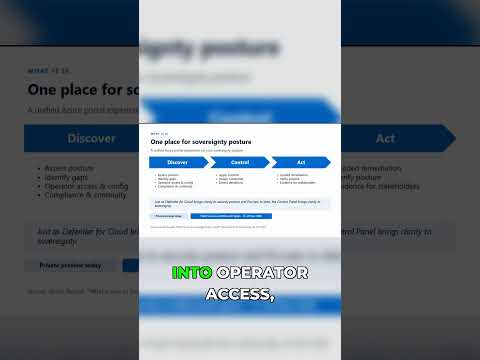
Sovereign Control Panel maps Azure sovereignty controls
Microsoft MVP | Author | Speaker | YouTuber
Peter Rising’s Short introduces Microsoft’s Azure-based Sovereign Control Panel, designed to bring sovereignty signals, controls and evidence into one view.
Key insights
- The Sovereign Control Panel is described as an Azure-based central interface for digital sovereignty.
- Its model is Discover, Control, Act: assess the environment, set controls and respond to gaps.
- The planned public preview is a future step; the research notes say the panel is currently in private preview.
- The panel is intended to assess data residency, confidentiality, operational sovereignty and continuity.
Peter Rising [MVP] published a 43-second YouTube Short titled “Sovereign Control Panel: Discover, Control, Act!” The Short introduces Microsoft’s Sovereign Control Panel, an Azure-based experience for bringing sovereignty information and controls together. The key point for administrators is the proposed workflow: assess the current state, define requirements and act on identified gaps.
What's new
The Sovereign Control Panel is described as a central Azure portal experience that aggregates sovereignty signals across Azure environments. The research notes say its view is intended to cover tenants, management groups, subscriptions and resources. That could help teams who currently have to assemble relevant information from multiple services, policies and administrative areas.
The scope extends beyond where data is stored. The four areas named in the notes are data residency, confidentiality, operational sovereignty and continuity. Together, these concern where data is stored and processed, how it is protected, who can access systems and whether workloads can handle disruption or a change in operating environment.
Why it matters
For administrators and governance teams, a consolidated view could make it easier to identify where an environment does not meet an organization’s sovereignty requirements. The notes describe evidence-based status information, explanations of contributing causes and visibility into workload dependencies and portability. Those details would help teams investigate a finding rather than just see a status indicator.
The proposed Control and Act stages extend the idea beyond reporting. Organizations are expected to be able to define controls and responsibilities, monitor deviations, prioritize risks and take guided remediation steps. The notes also describe checking whether a corrective action improved the sovereignty position. No licensing requirements or tenant eligibility details are provided in the material.
How it works
The named framework is “Discover, Control, Act.” In Discover, the panel is intended to provide a read-only view of current sovereignty status and related evidence. Control is for selecting or configuring controls, including organization-specific requirements, and monitoring whether the environment deviates from them.
- Discover the current status and evidence across the Azure environment.
- Define the required controls and assign responsibilities.
- Identify and prioritize gaps or risks.
- Take corrective action and check whether the status improved.
This sequence is presented as an ongoing governance cycle, rather than a one-time assessment. The short’s title names the three stages, while the research notes supply the fuller description of their intended roles.
Limitations and open questions
The research notes say the panel is in private preview and that Microsoft plans to move it to public preview during Microsoft Ignite; schedules may change. The source material does not provide a date, detailed interface walkthrough, licensing information or a definitive list of supported controls. We could not verify those implementation details from the Short’s supplied transcript, which contains no substantive transcript text.
The concept is relevant to organizations that need evidence and ongoing oversight of cloud sovereignty, but the material does not establish which specific requirements the panel will cover or how remediation actions will be applied. Treat the described capabilities as planned or preview-stage context, not as confirmation of general availability.
Sources
Frequently asked questions
What is the Sovereign Control Panel?
It is described as an Azure-based central interface for sovereignty information, controls and evidence across Azure environments.
What does Discover, Control, Act mean?
Discover assesses the current state; Control sets requirements and monitors deviations; Act supports responding to identified gaps and checking results.
Is it publicly available?
The research notes say it is in private preview and that Microsoft plans a public preview during Microsoft Ignite. They also caution that schedules can change.
Which licenses or tenants can use it?
The supplied material does not specify licensing requirements or tenant eligibility.