- All of Microsoft
Power Apps 2025 Wave 2: Game-Changing Features Unveiled
Software Development Redmond, Washington
Power Apps 2025 features Dynamics 365 Power Platform Community Blog Release Highlights Learning Resources
Key insights
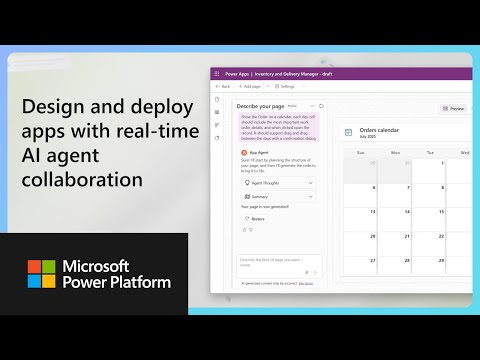
- Plan Designer with AI Agent Collaboration: Users describe business problems, and a team of AI agents helps design complete Power Platform solutions. This allows faster, easier creation of complex apps without deep coding knowledge.
- Agent Apps for Human-Agent Collaboration: New features like agent feeds let supervisors track AI agent work. Built-in agents automate repetitive tasks such as data entry and summarization, boosting efficiency and accuracy.
- Copilot Integration: Enhanced Copilot tools allow users to fill forms, create apps, and visualize data using natural language or images. This reduces manual effort and speeds up development.
- Offline Data Sync Control in Canvas Apps: Users can set Dataverse offline sync to Wi-Fi only, helping minimize mobile data use. This is especially useful in areas with limited or expensive connectivity.
- Model-driven Apps UI Update: The user interface has a new simplified header and navigation layout, making apps easier to use and improving the overall experience.
- Extensibility and Scalability: Agents can be customized or created from existing apps, allowing organizations to scale automation based on their unique needs.
Introduction to Power Apps 2025 Release Wave 2
Microsoft has unveiled its latest advancements with the release of Power Apps 2025 Release Wave 2, as highlighted in a recent YouTube video. This update, rolling out from October 2025 through March 2026, showcases a substantial leap in how organizations and individuals can create, manage, and optimize business applications. By focusing on intelligent automation, low-code/no-code productivity, and a more empowered developer experience, this release aims to make software development more accessible and efficient for a broad audience.
The new features are designed to help both business users and developers translate complex business challenges into effective digital solutions. With enhanced AI capabilities and improved user experience, Power Apps 2025 Release Wave 2 marks a pivotal moment in the evolution of the Power Platform ecosystem.
Key Innovations and Features
One of the most significant changes is the introduction of the Plan Designer with AI agent collaboration. In this environment, users simply describe their business problems, and a team of AI agents assists in designing integrated solutions. These solutions often combine apps, AI agents, and Power BI reports, dramatically reducing the need for extensive coding and manual configuration.
Additionally, Agent Apps bring human-agent collaboration to the forefront. Features such as agent feeds allow supervisors to oversee AI agent activity, while built-in agents automate tasks like data entry, exploration, and summarization. This close integration of AI and human workflows not only optimizes efficiency but also increases accuracy across processes. Furthermore, the Copilot Integration enhances productivity by allowing users to fill forms, visualize data, and create apps with natural language or image-based inputs, drastically cutting down manual workload.
Another crucial feature is the new offline data sync control for Canvas Apps, which lets users limit Dataverse offline sync to Wi-Fi connections only. This is particularly valuable for those in areas with limited or expensive mobile data, helping organizations manage costs and connectivity challenges more effectively.
Advantages and Tradeoffs
The AI-powered advancements in this release offer several advantages. For instance, the Plan Designer and intelligent agents enable faster solution development by automating repetitive tasks and providing smart suggestions. This reduces the traditional development lifecycle and helps teams respond to business needs more quickly.
Moreover, the integration of AI agents with human oversight fosters improved collaboration. By monitoring progress and troubleshooting in real-time, teams can achieve seamless synergy between human input and AI assistance. The focus on offline data sync control also addresses concerns about data usage, allowing organizations to balance connectivity needs with cost constraints.
However, there are tradeoffs to consider. Relying on AI agents means organizations must trust automated systems with critical tasks, which could introduce new challenges in oversight and exception handling. Additionally, while low-code/no-code tools are more accessible, they may not always provide the depth of customization that advanced developers require for highly specialized solutions.
Challenges and Considerations
While the promise of AI-driven automation is compelling, organizations must address several challenges when implementing these new features. Ensuring robust oversight of AI agents is essential to maintain accuracy and reliability. As AI takes on more complex tasks, human supervisors need effective tools, like agent feeds, to monitor and intervene when necessary.
Another challenge lies in balancing the ease of low-code/no-code tools with the need for extensibility. While these tools empower a wider audience to build applications, they may sometimes limit advanced customization. Organizations must weigh the benefits of rapid development against the potential need for deeper technical intervention.
Furthermore, managing data synchronization in diverse connectivity environments remains a critical concern. The ability to restrict offline sync to Wi-Fi helps, but teams must still plan for scenarios where connectivity is inconsistent or unavailable.
Conclusion: A New Era for Power Apps
In summary, the Power Apps 2025 Release Wave 2 introduces transformative changes that position Microsoft’s Power Platform as a leader in AI-driven business application development. By combining enhanced AI agent collaboration, improved offline data management, and a streamlined user interface, this release addresses many of the challenges organizations face today.
As with any technological shift, the key to success lies in balancing automation with human oversight, and rapid development with the flexibility to meet unique business needs. The coming months will reveal how organizations adapt to these innovations and leverage them to drive value in an increasingly digital landscape.

Keywords
Power Apps 2025 Release Wave 2 Power Apps 2025 update Power Apps new features 2025 Power Apps release highlights Power Platform 2025 updates Microsoft Power Apps improvements Wave 2 features Power Apps latest version