- All of Microsoft
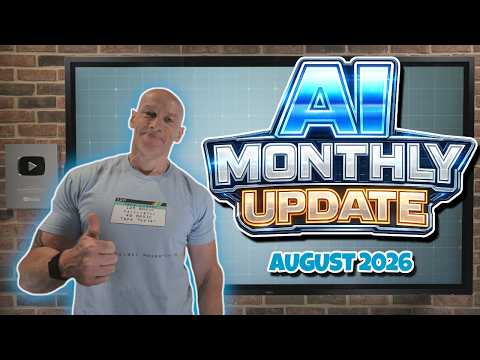
Microsoft AI: Whats New Aug 2026
Principal Cloud Solutions Architect
Microsoft AI August update: Azure hosted models, Copilot, GitHub Copilot, SharePoint, automations and enterprise controls
Key insights
- Model releases: The video lists many new and updated models, including MAI-Code-1.1-Flash, MAI-Image-2.6, MAI-Thinking-1, MAI-Transcribe-2, Gemini 3.7 Flash, Kimi K3, Grok 4.6, Fable 5.1, GPT-6 Astra, and NVIDIA Nemotron 3.5 Lightning.
These releases target code, image, speech, reasoning, and multi-modal use cases to improve speed and accuracy. - Platform hosting and routing: Microsoft highlighted hosting improvements and a model router update that directs workloads to the best model for a task.
Azure hosting and global model enablement policies aim to make new models available across enterprise environments. - Copilot and developer tooling: The update covers GitHub Copilot harness use, Copilot Notebook improvements, and new ways to trigger Copilot automations (including from comments).
App and CLI session updates make it easier for developers to run, test, and automate workflows with Copilot agents. - Content understanding and search: Content understanding enhancements and preview features like Scout and DeepSeek aim to improve semantic search and context-aware responses.
Chat response selection as context helps models use user-selected replies to guide follow-up answers. - Enterprise controls and governance: The video explains enterprise-focused features such as SharePoint authoritative sites, expanded enterprise MCP control, cost visibility improvements, and reporting updates.
These tools give admins more control over model access, usage, and compliance. - Practical impact for users: Expect faster, more capable models for transcription, image tasks, coding, and reasoning, plus better automation and reporting for teams.
Many features are rolling into preview or broader availability, so organizations should plan tests, governance, and cost monitoring before wide deployment.
Introduction: Video Snapshot and Context
In a recent YouTube presentation titled Microsoft AI Update August 2026, John Savill's [MVP] walked viewers through a broad set of model releases and platform changes from Microsoft and partner ecosystems. The video serves as a compact roundup, timestamping each segment so viewers can jump to subjects such as new models, platform features, and enterprise controls. Consequently, the piece acts as both a reference and a launchpad for teams planning upgrades or pilots within the coming months.
Major Model Releases and Capabilities
First, the presenter highlighted a series of new and updated models, including MAI-Code-1.1-Flash, MAI-Image-2.6, MAI-Thinking-1, and MAI-Transcribe-2, alongside external competitors such as Gemini 3.7 Flash and Grok 4.6. These releases emphasize speed and specialized capability; for example, code and image-oriented models aim to reduce iteration time while improving domain accuracy. Moreover, large foundation models like GPT-6 Astra and storytelling engines such as Fable 5.1 reflect the continuing trend toward mixing reasoning with creative generation.
However, these advances carry tradeoffs. While flash-tier models prioritize latency and cost-efficiency, they may offer narrower context windows or reduced exploratory reasoning compared with larger variants. Therefore, organizations must weigh throughput and price against fidelity when selecting models for production tasks, especially in regulated or safety-sensitive settings.
Platform Features and Integration Updates
Next, the video moved beyond models to platform-level updates, including model router enhancements and a refreshed content understanding capability designed to improve relevance and moderation. In addition, hosting improvements for third-party models on Azure and expanded integrations with assets like GitHub Copilot were discussed, emphasizing smoother developer flows. These changes aim to reduce friction for teams deploying multi-model pipelines and for those who need hybrid hosting options.
Despite these benefits, tradeoffs remain between centralizing model hosting and distributing processing to edge or partner services. Centralized hosting can simplify governance and monitoring, yet it may increase latency for edge scenarios and concentrate compliance risk. Conversely, decentralizing can improve local responsiveness but complicate auditing and cost management.
Enterprise Governance and Control
Savill paid particular attention to enterprise controls, such as SharePoint authoritative site updates, customizable coworking features, and an expanded global model enablement policy. Also notable were updates around Enterprise MCP control and cloud agent reasoning policies, which provide admins with more granular enablement and audit capabilities. These tools respond to the growing demand for governance that balances innovation with legal, security, and privacy constraints.
Nevertheless, implementing tight governance brings its own challenges. Tight policies can slow adoption and frustrate developers, while lax controls increase exposure to data leakage and compliance violations. As a result, IT leaders must strike a balance, aligning policy with risk tolerance and operational needs while establishing clear guardrails and observability.
Developer Tools, Automation, and Operational Tradeoffs
The presentation also covered practical developer features, including updated Copilot Notebook functionality, more robust automation triggers for comments and app events, and expanded code review effort levels. In addition, previews like Scout and enhanced app/CLI session updates demonstrate a push to improve developer productivity and monitoring. These changes can accelerate delivery cycles by embedding AI into everyday workflows.
However, increased automation creates complexity in testing, debugging, and change control. Teams must invest in validation, observability, and rollback plans to handle unexpected model behavior. In other words, automation improves throughput but requires stronger operational practices to manage risk and maintain quality.
Implications and Practical Recommendations
Overall, the update signals that Microsoft and partners continue to push both capability and manageability for enterprise AI. For practitioners, the immediate implication is to audit current workloads, classify risk, and pilot the most relevant upgraded models in controlled environments. Doing so helps teams compare cost, latency, and accuracy tradeoffs before wider rollout.
Finally, organizations should pair technical pilots with governance workstreams to define acceptable use, monitoring, and incident response. In the short term, that balanced approach lets teams adopt new capabilities like Azure Copilot agents and advanced model routing while containing operational and compliance risks.

Keywords
Microsoft AI Update August 2026, Microsoft AI August 2026, Microsoft Copilot August 2026, Azure AI updates August 2026, Microsoft 365 Copilot August 2026, Windows AI features August 2026, Edge AI update August 2026, Microsoft AI roadmap August 2026