- All of Microsoft
Live Stream AI Show: Boost Viewer Growth
M365 Adoption Lead | 2X Microsoft MVP |Copilot | SharePoint Online | Microsoft Teams |Microsoft 365| at CloudEdge
Microsoft expert tips for live streaming with StreamYard with discount, integrating Microsoft Teams, Stream and Azure AI
Key insights
- AI Show Live: A Microsoft Learn livestream and on-demand video series that highlights Microsoft’s latest AI work and practical demos for developers.
It showcases product updates and linked hands-on resources you can use right away. - Format: The show combines live broadcasts with on-demand episodes on Microsoft Learn and Learn TV.
Content focuses on live coding, demos, and clear walkthroughs for developers and technical teams. - Seth Juarez: The series is primarily hosted by Seth Juarez with guest experts and collaborators.
Historically the show ran on a regular cadence, often every other Friday, but schedules can vary. - Azure AI Foundry: Recent episodes emphasize Microsoft’s current AI platform branding, especially Azure AI Foundry.
This shift signals the show follows Microsoft’s latest product direction and integrations. - Practical focus: Episodes aim for fast learning and immediate application by pointing viewers to code, samples, and other hands-on assets.
That makes the show useful for developers who want short, actionable updates on Microsoft AI. - Topics covered: Common subjects include accessibility and inclusion, image generation, translation, and intelligent video/ML scenarios (for example, integrations like NVIDIA DeepStream).
Search results indicate the series is the best match for a “live stream AI” show on Microsoft Learn, not a separate product named “Live Stream AI Show.”
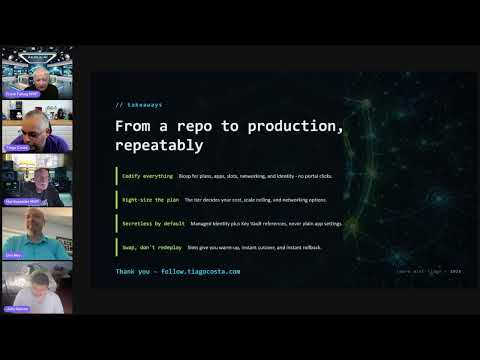
Ami Diamond [MVP] recently published a YouTube video that examines Microsoft’s developer-focused livestream known as AI Show Live. In the video, he walks viewers through the show’s purpose, formats, and the recent emphasis on the Azure AI Foundry brand. Accordingly, his presentation aims to help developers decide whether to follow the series for hands-on learning and product updates.
Video overview and context
First, Ami places AI Show Live in context by explaining that it is a Microsoft Learn livestream and on-demand series focused on practical AI demos and developer resources. He notes that the show is often associated with host Seth Juarez and a rotating set of experts who present short, focused sessions. As a result, viewers can quickly learn about new features and then move to linked hands-on assets.
Next, Ami clarifies that the content is primarily targeted at developers and technical users who want immediate, actionable examples rather than long theoretical talks. He emphasizes that the show’s cadence and format—live demos followed by on-demand segments—make it suitable for regular viewers who want periodic updates. Therefore, the video frames the livestream as a practical learning channel rather than a promotional broadcast.
Key takeaways from the episode
In the central portion of his video, Ami highlights several takeaways about the show’s current direction, beginning with the shift toward the Azure AI Foundry language and branding. He explains that this signals Microsoft’s effort to consolidate AI tooling and services under a clearer, contemporary umbrella, and that the show tracks those updates closely. Consequently, developers can use episodes as a quick window into Microsoft’s evolving AI platform choices.
Furthermore, Ami underscores the show’s practical orientation by pointing out examples such as accessibility-focused demos, image generation workflows, and integrations for intelligent video processing. He argues that these topics show Microsoft’s dual focus on foundational models and applied scenarios. Thus, viewers gain both conceptual understanding and concrete code samples or links to repos that aid implementation.
Technical focus and demonstrations
Then, Ami digs into the technical side, describing how episodes commonly include live coding and step-by-step walkthroughs that are easy to follow. He mentions that typical demos touch on model usage, integration with cloud services, and real-world pipelines, so developers see end-to-end examples rather than isolated snippets. In addition, he points out that the show’s on-demand nature allows viewers to pause and replay complex parts for better comprehension.
Moreover, the video highlights that the show sometimes presents integrations with third-party stacks and hardware accelerators for video and inference workloads, signaling Microsoft’s interest in ecosystem partnerships. Ami cautions, however, that these varied demos can demand different levels of setup and cloud costs, so viewers should weigh time and resource commitments before reproducing full demos. Consequently, he recommends starting with smaller, contained examples before scaling up.
Tradeoffs and challenges in following the series
Ami also discusses important tradeoffs developers face when using livestream content as a primary learning source. On one hand, the fast-paced format offers quick exposure to many features; on the other hand, it may not replace comprehensive documentation or longer-form training for production-ready designs. Therefore, viewers must balance speed of learning against the depth needed for reliable, secure implementations.
Additionally, he explores challenges related to reproducibility and platform changes: Microsoft may update APIs, branding, or service limits, which can make older recordings partially outdated. He recommends that developers pair episodes with the latest official docs and sample repos to mitigate this risk. Thus, Ami stresses a mixed approach that blends livestream insights with more stable learning resources.
Practical advice and final assessment
Finally, Ami offers concrete advice for viewers who plan to follow AI Show Live: treat each episode as a springboard to hands-on experimentation, and prioritize topics that match your project needs. He suggests subscribing to on-demand archives, saving linked assets, and testing demos in low-cost or local environments first. In this way, developers can extract practical value without incurring unnecessary complexity.
In conclusion, Ami Diamond’s video provides a clear, practical lens on Microsoft’s livestream series and its renewed focus under the Azure AI Foundry banner. While he remains objective about tradeoffs and evolving APIs, his guidance helps developers decide when episodes are worth watching and how to pair them with deeper study. Consequently, the video is a useful entry point for engineers seeking quick, applied updates on Microsoft’s AI offerings.
Related resources

Keywords
AI live stream, live AI demos, AI streaming show, real-time AI showcase, AI talk show live, live AI tutorials, AI live Q&A, interactive AI livestream