Microsoft Purview: Easy Data Governance
Master Microsoft Purview for data governance, data catalog, data map, lineage and compliance with Microsoft Fabric
Key insights
- Microsoft Purview is a unified, AI-enhanced data governance platform updated for 2025 that helps teams find, organize, protect, and manage data across cloud and hybrid estates.
It now emphasizes AI-enhanced governance and a Unified Catalogue to simplify discovery and metadata analytics. - Start with the Purview portal to log in, explore the estate, and learn the two main views: the Data Catalog for item-level discovery and the Data Map for an estate-wide topology.
Use the Catalog to see schemas and assets, and the Map to understand how sources and scans connect across domains. - Purview organizes metadata into Collections, Sources, Scans, and Assets, plus domain and collection hierarchies for delegation and visibility.
Set regular scans to keep inventory current and use hierarchy to assign responsibilities and limit access. - Key workspace tools include searchable filters, a Business glossary for shared terms, data sharing controls, and integration with pipelines for lineage tracing.
These features speed discovery, improve consistency, and help teams trust the data they use. - Data protection and compliance are core: Purview supports sensitivity labels, DLP policies, AI-aware controls, and centralized auditing.
Modern eDiscovery capabilities and integrations with security tooling help protect sensitive content and support legal or compliance requests. - Governance works best when started early: assign clear Ownership, run scans, monitor source health, and define simple policies first.
Next learning steps include classifications, lineage, policy automation, and AI governance to enforce controls across Copilot and AI services.
Overview
The newsroom reviewed a recent YouTube video from Pragmatic Works that serves as an introduction to Microsoft Purview and basic data governance tasks. In the video, presenter Nick Lee walks viewers through the platform, demonstrating how to find and inspect data across an estate. Moreover, the piece frames governance as a practical necessity rather than a bureaucratic burden, and it sets up a series of follow-up videos for deeper coverage. Consequently, the episode acts as a gateway for teams that are just starting to ask “Where is our data?” and “Who is accountable?”.
What the Video Demonstrates
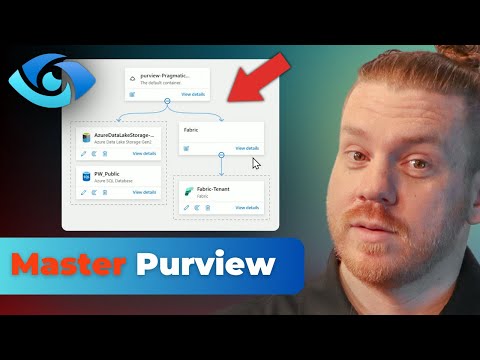
First, the presenter logs into the Purview portal and gives a clear tour of the interface, which helps new users orient themselves quickly. He then contrasts the Data Catalog with the Data Map, explaining that one focuses on searchable business metadata while the other provides a structural view of scanned sources. Next, the walkthrough highlights collections, sources, scans, and assets, showing how these pieces relate in a real data estate. As a result, viewers gain a practical sense of how objects appear and link together in the platform.
Additionally, the video drills into specific examples like Fabric objects and pipelines, and it shows how filters and the business glossary improve discoverability. The presenter also demonstrates scan monitoring and basic health checks for sources, which illustrates how to keep an inventory current. Importantly, the episode emphasizes governance fundamentals such as ownership and visibility early in the lifecycle, because these foundations determine downstream trust and usability. Finally, the host teases future videos focused on classification, lineage, policies, and compliance workflows to expand on these basics.
Key Features and Recent Updates
The discussion situates the product in a 2025 context where Microsoft Purview has evolved into a more AI-powered governance platform with a unified approach to catalogs and compliance. In particular, the newer Unified Catalogue and AI integrations aim to give teams a single source of truth while automating metadata and protection tasks. Moreover, the platform now extends governance to AI use-cases, helping teams detect and block sensitive content in AI prompts and audit model interactions. These enhancements reflect how governance must now span both traditional data and AI workflows.
At the same time, the video highlights practical controls like sensitivity labels, DLP enforcement, and modern eDiscovery features, which together support legal and security needs. It also notes developer-friendly APIs for integration and policy enforcement to help operational teams connect governance to apps. Hence, the product balances visibility, protection, and automation, making it easier for organizations to scale governance across hybrid and cloud environments. Nevertheless, adopting these features involves tradeoffs that teams must weigh carefully.
Tradeoffs and Challenges
While Purview simplifies discovery and labeling, teams must balance breadth of scanning with performance and cost constraints, because more frequent scans raise compute and storage needs. Moreover, automated classification improves speed but can mislabel items, so organizations must invest in tuning classifiers and human validation to maintain accuracy. Consequently, governance programs often face a choice between rapid automation and slower, higher-confidence manual curation, and both approaches carry resource implications.
Another key challenge is assigning ownership and accountability across distributed teams, which the video addresses as a cultural and operational hurdle rather than a technical one. Furthermore, extending governance to AI introduces fresh complexity: teams must define what constitutes sensitive data in prompts, then enforce policies without disrupting productive AI use. Therefore, successful adoption requires close coordination between security, legal, and business stakeholders along with continuous monitoring and policy updates.
Interoperability across multi-cloud environments also complicates discovery and protection, because different stores expose metadata and controls unevenly. As a result, organizations must plan for gaps in connectors and possible blind spots during initial deployment. However, incremental rollouts and prioritized scans can reduce risk while keeping early costs reasonable, which helps teams build trust and momentum over time.
Recommendations and Next Steps
For teams starting with the concepts shown in the video, it makes sense to begin with a narrow scope: prioritize critical data sources and assign clear owners before scaling scans across the estate. Next, implement automated classification for high-value assets and pair it with manual review to improve accuracy over time. Additionally, track simple metrics like scan coverage and classification confidence so you can measure value and adjust priorities.
Finally, embrace governance as an iterative program that balances agility and control: start small, demonstrate wins, then expand policies and automation as trust grows. In the coming videos promised by Pragmatic Works, viewers can expect deeper technical guidance on lineage, classifications, and compliance workflows that will help operationalize these recommendations. Overall, the video provides a practical first step for organizations aiming to make data discoverable, accountable, and safer across modern environments.

Keywords
Microsoft Purview tutorial, Purview data governance, Azure Purview guide, Data governance best practices, Purview classification and labeling, Purview compliance and security, Microsoft Purview setup, Purview data catalog explained