- All of Microsoft
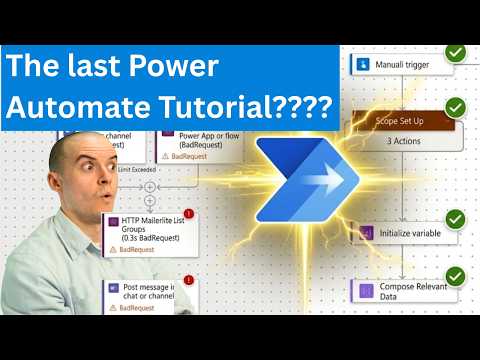
Power Automate MCP Server: Final Guide
Solutions Architect, YouTuber, Team Lead
Microsoft expert: Power Automate with GitHub Copilot MCP server in VS Code audits and auto fixes Dataverse flows
Key insights
- Power Automate MCP Server: A new agent layer that lets AI tools inspect, run, build, edit, and debug Power Automate cloud flows using natural language or code.
It implements the Model Context Protocol (MCP) so agents like GitHub Copilot can operate flows without the Power Automate UI. - Core capabilities: Create and update flows from descriptions, debug failed runs with action-level details, list and inspect flows and connections, enable/disable or re-run flows, and auto-generate documentation.
These actions let teams fix issues faster and keep flows consistent across environments. - Developer integration: Works in VS Code via the FlowStudio MCP extension and in CLI clients, so agents can act inside developer tooling.
Typical workflow: install the extension, sign in to your tenant, connect an agent to the MCP server, then issue commands to create, audit, or fix flows. - Security and governance: API keys and credentials store in the operating system keychain (Windows Credential Manager or macOS Keychain) to reduce secret exposure.
The platform supports a human approval feed for sensitive actions and respects tenant-level permissions to control agent operations. - Business benefits: AI-driven flow creation speeds automation design, no-code debugging lowers support overhead, and centralized management enables auditing and backlog generation for technical debt.
Teams can use the MCP server to proactively find dead code, unhandled edge cases, and cleanup opportunities across many flows. - Quick start checklist: Install the FlowStudio MCP extension or add the MCP endpoint in your agent CLI, Sign in to grant tenant access, connect the agent, then Test and verify flows by exercising true/false conditions and confirming external connectors work.
Run a small flow audit first to validate permissions, connectivity, and automatic fixes before broader adoption.
Overview
In a recent YouTube video, Sean Astrakhan (Untethered 365) returns to Power Automate with a focused demonstration of the Power Automate MCP Server and its integration with GitHub Copilot inside VS Code. He explains why he paused publishing Power Automate content and then shows how the MCP server changed his view by automating review and repair tasks. The video is both a short tutorial and a practical case study, showing the new tools in action on a real flow. Consequently, viewers get a clear sense of what an AI-enabled workflow tool can and cannot do today.
The presenter frames the session as the "last tutorial you need" for many routine maintenance tasks, but he also warns that the tool is not a full replacement for careful governance. He demonstrates the technology on a live flow, revealing how the agent finds issues, suggests edits, and can even apply fixes automatically. Therefore, the segment offers both immediate value and a cautionary note about relying solely on automation. The rest of this article breaks down the core features, the demo highlights, and the practical tradeoffs you should weigh.
What the MCP Server Enables
The video highlights the MCP implementation as an API layer that exposes flow operations to coding agents. Through this bridge, agents can list flows, inspect run history, manage connections, and trigger or update flows without going through the Power Automate UI. Sean emphasizes that this turns Power Automate into an AI-controllable platform, enabling tasks like automated documentation and bulk auditing. As a result, teams can scale routine checks and free engineers to focus on complex logic.
Sean also shows how the server integrates with developer tooling like the FlowStudio MCP extension and the Copilot experience in the editor. Authentication relies on API keys stored securely in the operating system keychain, which mitigates some credential risks but still requires careful admin controls. Moreover, the MCP server makes flows, Dataverse entities, and connectors accessible to agents, which significantly increases automation reach. This accessibility has clear benefits for productivity while raising obvious security and governance considerations.
Finally, the presenter describes the multi-agent compatibility that allows tools such as Copilot, Claude, and other custom agents to call MCP tools. He points out that some sensitive actions can be paused for human approval, a feature designed to balance autonomy with oversight. Thus, organizations can choose tighter review gates for high-risk operations while allowing routine fixes to proceed automatically. This hybrid model helps manage trust as teams adopt AI-augmented development practices.
Highlights from the Demonstration
Sean walks through a working but imperfect flow and asks the Copilot plugin to review it, demonstrating the process from opening the project to applying fixes. The agent quickly identifies dead code and an unhandled edge case, then proceeds to make a surgical edit that resolves the error. After the automatic fix, he runs targeted tests to verify both true and false conditions, confirming that the change worked as intended. This live debugging sequence showcases how AI can speed troubleshooting without lengthy manual searches.
He also uses the tool to clean up unnecessary variables and to validate that external integrations, such as a mailing service, were hit correctly during tests. The video shows the agent auditing all flows and generating a backlog of items that need human review or further action. Sean highlights timestamps where each step occurs, making it easy for viewers to skip to sections they care about during the demonstration. Consequently, the demo serves as a compact tutorial for both setup and verification routines.
Importantly, the clip covers environment switching and the importance of testing in the right tenant and workspace before applying fixes. Sean switches contexts to ensure the agent targets the correct flow, which underlines the practical steps users must take to avoid accidental changes. He also explains how run history and action-level error details feed the agent’s recommendations. By showing these checks, the video stresses that automation must be paired with validation to be safe and effective.
Tradeoffs and Challenges
While the video presents clear benefits, Sean and the demonstration surface tradeoffs between speed and control. On one hand, AI-assisted edits can reduce toil and accelerate fixes, but on the other hand, automated changes require governance, change tracking, and rollback plans in case of unintended consequences. Organizations must therefore invest in approval workflows, monitoring, and audit trails to keep risk within acceptable bounds. Without these safeguards, quick fixes could introduce regressions that are hard to trace.
Another challenge is the initial setup and permissions model, which can be complex for large tenants with many connectors and environments. Securing API keys in the OS keychain helps, yet administrators still need to manage scopes and human approval flows carefully. Additionally, agents may miss domain-specific logic or make syntactically correct but semantically wrong edits, so human review remains essential. Thus, teams should treat AI as an assistant rather than a final authority and build processes that combine both strengths.
Practical Implications and Next Steps
For teams evaluating the Power Automate MCP Server, the video suggests starting with audits and non-destructive reviews before enabling automatic edits. Sean recommends using the auditing features to build a backlog of prioritized fixes and to run tests in isolated environments first. Over time, organizations can expand the scope of automated actions as they gain confidence and refine approval rules. This staged approach balances the productivity gains with risk management.
Finally, the demonstration makes clear that the technology is mature enough for practical use but still requires thoughtful rollout. Teams should document policies, train staff on agent behavior, and monitor output for false positives and missed edge cases. By doing so, they can harness the time savings and consistency improvements while maintaining control over critical business processes. In short, the video by Sean Astrakhan offers a useful roadmap for adopting AI-first automation responsibly.

Keywords
Power Automate tutorial, Power Automate MCP Server, Power Automate on-premises, Power Automate server setup, Microsoft Power Automate installation, Power Automate admin guide, Power Platform server deployment, Power Automate enterprise installation