- All of Microsoft
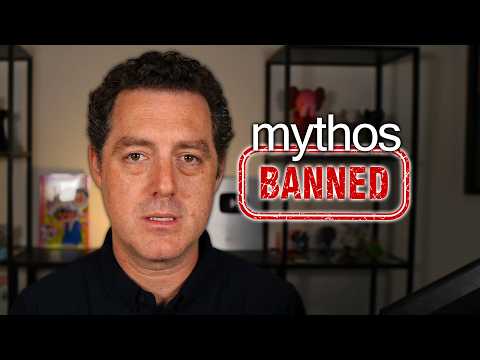
Mythos Ban: What Creators Should Know
Artificial Intelligence (AI), Open Source, Generative Art, AI Art, Futurism, ChatGPT, Large Language Models (LLM), Machine Learning, Technology, Coding, Tutorials, AI News, and more
Mythos ban sparks AI safety debate as Anthropic cites misunderstanding, orgs lean on Azure OpenAI and Microsoft Defender
Key insights
- Claude Mythos Preview became the center of a false headline: people said “you can’t use Mythos anymore.”
That misreads Anthropic’s wording — the company said the model will be "not generally available", not that no one can use it. - What Mythos is: an advanced AI model from Anthropic built for cybersecurity threat detection and for finding high‑severity software vulnerabilities.
It targets complex, hard‑to‑find bugs during development and testing. - Access rules: Anthropic will not release Mythos to the public, but it does allow controlled use by authorized partners for defensive work.
This distinction is the root of the confusion about who can use the model. - Project Glasswing is the program Anthropic uses to share Mythos with select firms.
Microsoft is a launch partner and retains private access under that initiative. - Microsoft integration: the company plans to use Mythos inside its Security Development Lifecycle (SDL) to spot vulnerabilities earlier and speed up fixes.
The model helps find subtle or emergent threats that traditional scans miss. - Safety and testing: Anthropic keeps Mythos restricted for safety restrictions to prevent misuse by threat actors, while using benchmarks like CTI‑REALM to measure real‑world detection gains.
The goal is secure, partner‑only deployment for defensive cybersecurity.
Video summary
In a recent YouTube video, Matthew Berman examined claims that “you can’t use Mythos anymore” and sought to clarify what Anthropic and Microsoft’s role. He framed the story around a short, attention-grabbing headline and then walked viewers through Anthropic’s announcement, Microsoft’s role, and the source of the misunderstanding. Consequently, the video aims to correct the record while explaining how access to advanced models like Claude Mythos Preview is being managed.
Berman noted that the controversy began when Anthropic said it will not make the model generally available, which some readers interpreted as a total ban. However, he emphasized that authorized partners still have access, and that the situation is more nuanced than many headlines suggested. Therefore, his video focuses less on drama and more on the mechanics and implications of restricted access.
Clarifying Anthropic’s message
Anthropic’s public statement said it will not release Claude Mythos Preview to the general public because of the risk that threat actors could misuse it to find vulnerabilities. Berman explained that this line means the company will restrict open access while continuing to work with vetted partners for defensive use. Thus, the key distinction is between general availability and approved, controlled deployment.
Moreover, the video highlights that Anthropic still aims to enable safe, scaled deployments down the line, suggesting a longer-term plan for governance and safety testing. Berman pointed out that this approach balances the urgent security benefits of the model with the potential for misuse if it were freely available. As a result, Anthropic’s posture is cautious but not prohibitive.
Microsoft’s involvement and how Mythos is being used
Berman reported that Microsoft remains a launch partner and continues to access Mythos through a joint initiative called Project Glasswing, which pairs Anthropic with vetted cybersecurity firms. He described how Microsoft plans to integrate the model into its Security Development Lifecycle (SDL) to find high-severity vulnerabilities earlier in the development process. In short, Microsoft uses the model defensively to detect flaws before code ships, rather than as a publicly available tool.
The video also reviewed Microsoft’s official announcement that it intends to combine AI-driven scanning with existing testing and review processes to expand coverage and speed. Berman noted that while AI can surface subtle issues, it complements rather than replaces human security engineering and conventional testing. Therefore, the partnership seeks to strengthen pre-release defenses while maintaining human oversight.
Why the “ban” narrative spread
Berman traced the misinformation to a common misreading of the phrase “not generally available,” with some people equating it to a global prohibition. He emphasized that shorthand headlines and rapid social sharing amplified the misunderstanding, which then morphed into claims that Microsoft or others had suddenly lost access. Consequently, the video argues that a mix of imprecise language and the speed of online discussion created a false narrative.
Furthermore, he explored how sensational framing can outpace careful clarifications, especially when short headlines replace context. Berman suggested that reporters and platforms should take extra care to quote and interpret source statements accurately to avoid misleading summaries. Thus, the episode serves as a reminder of the gap between nuanced policy language and viral headlines.
Tradeoffs, risks, and practical challenges
Berman also discussed the tradeoffs involved in restricting access: limiting exposure reduces the chance of misuse, but it also narrows the field of defenders who can improve security across the ecosystem. He pointed out that controlled access allows safety teams to test mitigations and work with partners, yet it may delay broader community benefits such as independent audits and research-driven improvements. Therefore, the decision to restrict availability reflects a tension between rapid defensive gains and the principle of transparent scrutiny.
In addition, the video raised practical challenges like integration work, false positives, and maintenance costs when adding advanced models to existing pipelines. Berman noted that AI-driven detection can flag novel issues but can also produce noisy signals that require human triage and engineering bandwidth. As a result, organizations must balance the promise of better coverage against the operational effort needed to use these tools effectively.
Looking ahead
Finally, Berman closed by highlighting the importance of governance, testing, and clear communication as AI models enter critical security roles. He argued that partnerships between model builders and major tech firms can yield strong defensive capabilities, provided they include transparent audit processes and responsible access controls. Consequently, the path forward will likely include more private previews, clearer public statements, and evolving best practices for safety and oversight.
Overall, the video by Matthew Berman clarifies that Mythos is not universally banned but is instead subject to controlled release to minimize misuse. He encouraged viewers to watch for formal updates from Anthropic and partner organizations and to expect ongoing debate about how best to balance innovation, security, and access.

Keywords
Mythos shutdown, Mythos discontinued, You cant use Mythos anymore, Mythos removed from platform, Why Mythos is gone, Mythos access revoked, Mythos ban explained, Alternatives to Mythos