- All of Microsoft
- Microsoft 365
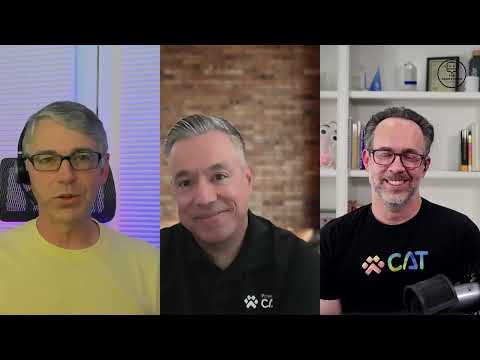
Agent Dudecast EP6: Topness & Camino
Microsoft Copilot Studio and Power Platform adoption with CAT, Power Up and Guidance Center for governed AI agents
Key insights
- Agent Dudecast: The episode explains how the channel shifted from demos to practical, real-world use of agents and Copilot.
Hosts focus on showing how teams can move from experiments to operational solutions. - Copilot Acceleration Team (CAT): CAT and CAPE help organizations adopt, scale, and govern AI by offering coaching, frameworks, and implementation support.
The teams guide technical builds and help apply governance and security practices. - Frontier Transformation Pattern: This pattern serves as a roadmap for AI maturity, outlining stages from early pilots to governed production.
It emphasizes incremental practices for risk management, scale, and measurable value. - Power Up: Power Up is a learning program designed to speed team skills in AI and agents through self-paced content and guided labs.
It pairs training with boot camps to accelerate practical adoption. - Guidance Center: The Guidance Center, live webinars, and hands-on boot camps act as core enablement resources for implementation and Q&A.
The episode highlights these resources plus the Copilot Studio Kit as accelerators for building governed, scalable agents. - Agents as collaborators: The hosts encourage individuals and organizations to treat agents as collaborators that amplify productivity and creativity.
They recommend combining governance, training, and practical labs to get safe, high-impact results.
Dewain Robinson's blog post summarizes a recent YouTube episode of the Agent Dudecast, featuring guests Phil Topness and Luis Camino, and frames it as a practical look at how organizations adopt and govern AI agents. The post highlights work by the Copilot Acceleration Team and the role of enablement programs in moving teams from experimentation to production. Accordingly, this article reviews the video's key points, explains the resources discussed, and examines tradeoffs organizations face when scaling agents across the enterprise.
Episode overview and main themes
The YouTube video opens by describing the channel's shift toward real‑world use of agents and Copilot, emphasizing hands‑on learning over theory. Hosts and guests outline a pattern they call the Frontier Transformation Pattern for AI maturity, which mixes pilot projects, governance, and broader rollout. Moreover, the conversation stresses that enablement must pair technical tools with training and organizational change to work effectively.
Robinson's summary calls attention to the Power Up program as a central accelerator, and it notes the value of live webinars and a Guidance Center for practical help. In addition, the episode highlights boot camps, hands‑on labs, and the Copilot Studio Kit as concrete ways teams can experiment safely. Therefore, the video frames adoption as a sequence of learning, governance, and scale rather than a single technical switch.
Programs and resources explained
The hosts outline several enablement tracks that aim to reduce friction for teams trying agents and Copilot. For instance, the Power Up learning path offers free, structured education while the Agent Academy and boot camps provide hands‑on labs that let people build and test agents in realistic settings. Furthermore, the Copilot Studio Kit is presented as a practical toolkit to accelerate development while embedding best practices.
Robinson emphasizes that these resources work best when organizations blend formal learning with practical labs, because people learn faster by doing. At the same time, the post suggests using the Guidance Center and recorded webinars to avoid common mistakes and to speed governance decisions. Consequently, the recommended approach combines guided learning, mentor support, and template code to reduce risk and time to value.
Implementation, governance, and the role of teams
The episode stresses that adoption relies on coordinated effort between technical teams, product owners, and governance leads, such as the Copilot Acceleration Team or similar groups. In practice, that coordination means defining guardrails, permission models, and monitoring plans before agents operate at scale, because the risks grow with autonomy. Thus, the video argues that governance should be proactive and iterative, allowing organizations to learn and tighten controls as they gain confidence.
At the same time, Robinson notes that the CAPE model — a mix of enablement, coaching, and templates — supports both speed and safety by offering standard patterns and review points. However, tradeoffs arise: stricter controls slow deployment but reduce risk, while open experimentation speeds learning but may increase exposure. Therefore, teams must balance rapid innovation with practical guardrails and regular audits to manage both risk and momentum.
Tradeoffs and challenges in scaling agents
The blog post, echoing the video, explores the tension between quick wins and long‑term robustness when scaling agents across an enterprise. On one hand, granting agents broader permissions can unlock full automation and save time, yet on the other hand it raises security, compliance, and trust concerns that demand careful design. In addition, scaling requires investment in observability and incident response so organizations can quickly detect and fix problems when agents behave unexpectedly.
Moreover, Robinson highlights the human side of the challenge: teams need to learn to collaborate with agents and update processes, not just deploy code. Therefore, training and cultural change become as important as architecture, because a resistant workforce or unclear responsibilities can stall adoption. Ultimately, organizations must weigh short‑term productivity gains against the ongoing cost of governance, maintenance, and staff training.
Key takeaways and next steps
Robinson concludes that the video promotes a pragmatic path: start small with guided programs, use kits and boot camps to gain experience quickly, and tighten governance as you scale. Furthermore, the episode encourages individuals to view agents as collaborators that amplify creativity and productivity when used with clear rules and oversight. Consequently, teams that combine technical patterns, enablement programs, and active governance stand the best chance of realizing benefits while reducing risks.
For newsrooms and readers assessing agent strategies, the takeaway is clear: invest in learning and templates first, then expand with controls and monitoring to maintain safety. In the end, the episode and Robinson's summary present a balanced approach that values speed, safety, and human collaboration equally, and they invite organizations to adopt a staged, measurable path toward productive agent use.
Keywords
Agent Dudecast EP6, Phil Topness interview, Luis Camino interview, Agent Dudecast podcast, sports agent podcast, talent agent insights, entertainment industry podcast, podcast episode Phil Topness Luis Camino