- All of Microsoft
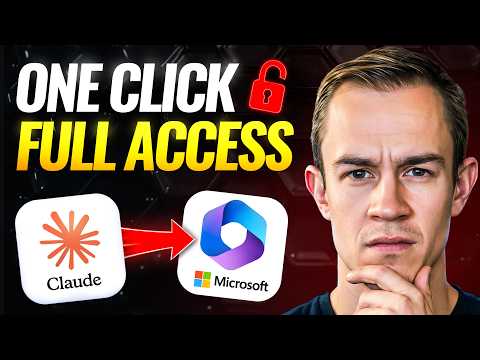
Claude & Microsoft 365: Secure Setup
Secure Claude in Microsoft three sixty five with connector, Entra app detection, Purview audit and Anthropic Copilot
Key insights
-
This video explains the Microsoft 365 connector that lets Claude access workplace data (Outlook, SharePoint, OneDrive, Teams, Calendar) using delegated permissions so Claude only sees what the signed-in user can access.
It avoids broad app-only access and aims to give context-aware answers without copying data into prompts. -
The presenter compares plan tiers: Free/Pro/Max vs Teams/Enterprise and highlights differences in data training risk and protections.
Free and lower-tier plans have higher training/exposure risk, while commercial Teams and Enterprise plans include stronger enterprise controls. -
Admin setup requires a tenant-wide admin consent in Microsoft Entra; after that users enable the connector from Claude’s Settings > Customize > Connectors and sign in with their work account.
The video walks the full admin flow and flags common OAuth issues and the required callback configuration. -
Integration uses the Model Context Protocol (MCP), so Entra shows enterprise apps (e.g., M365 MCP Client/Server) that you can inspect for troubleshooting and consent tracking.
Knowing the MCP app names helps detect unauthorized or shadow registrations in your tenant. -
Focus on operational security: enforce Conditional Access, enable per-capability connector controls, and verify audit logging (Microsoft Purview) to track who connected what and when.
The video shows how to detect unauthorized app registrations and when to revoke or re-grant permissions after scope changes. -
The video notes Anthropic models now run inside Microsoft 365 Copilot and recommends practical steps: scan tenants for shadow Claude usage, review Entra apps, confirm Conditional Access and logging, and evaluate whether Anthropic-in-Copilot meets each client’s governance needs.
These checks help decide adoption and reduce unexpected data exposure.
Intro: What the Video Covers
Nick Ross [MVP] (T-Minus365) published a concise walkthrough that explains how to connect Claude securely to Microsoft 365. In the video, he outlines what is already occurring inside client tenants, compares security controls across plan tiers, and demonstrates the full admin setup for the Microsoft 365 connector. Furthermore, Ross highlights what it means now that Anthropic models are running inside Microsoft 365 Copilot, and he points out where admins should look first. Consequently, the piece serves as both a practical guide and a security briefing for IT teams and managed service providers.
How the Connector Works
The video explains that the Microsoft 365 connector uses delegated permissions so Claude can access the content a signed-in user already sees in Outlook, SharePoint, OneDrive, Teams, and calendar data. After an administrator gives tenant-wide consent in Microsoft Entra, users connect through Claude’s Connectors page and authenticate with their work account. In addition, the integration uses the Model Context Protocol (MCP), which creates enterprise app entries like “M365 MCP Client for Claude” in Entra and helps standardize the flow. As a result, the setup ties AI access closely to Microsoft identity and permission controls rather than broad application-only access.
Security Controls Across Plan Tiers
Ross emphasizes that plan-level differences matter, because data training and retention rules vary between Free, Pro, Max, and commercial Teams or Enterprise plans. For example, free and individual plans may have broader training risk compared with business-focused plans that offer stricter contractual controls and administrative features. Moreover, the video points out that Anthropic now documents the connector across plan types, which raises the urgency for admins to confirm how individual users connect personal Claude accounts to corporate data. Therefore, organizations must weigh ease of user access against the need to protect sensitive content and comply with governance policies.
Admin Steps and Verification
Ross provides a step-by-step admin walkthrough showing how to perform the one-time tenant consent and configure the connector for Teams or Enterprise plans. He also demonstrates how to detect unauthorized app registrations and verify audit logging through Microsoft Purview and Entra app records. In addition, the tutorial includes troubleshooting details such as callback URIs and Conditional Access compatibility to help admins resolve common failures. Consequently, the video equips administrators with actionable checks to confirm the connector is installed and audited correctly.
Tradeoffs and Practical Challenges
While the connector reduces friction for end users seeking contextual answers, Ross notes several tradeoffs between convenience and control. On one hand, delegated access preserves per-user permission boundaries and makes the assistant more useful; on the other hand, it can create a shadow AI surface if users connect personal accounts without admin oversight. Furthermore, operational issues such as changing scopes, revoking permissions, and Conditional Access policy conflicts can interrupt service and require reconfiguration. Therefore, administrators must balance user productivity gains against governance needs and prepare for occasional operational overhead.
Implications for Copilot and Enterprise AI Strategy
Importantly, Ross highlights that Anthropic models appearing inside Microsoft 365 Copilot signal a deeper alignment between vendor models and Microsoft identity flows. This development may simplify some integration work, yet it also increases the importance of clear policy decisions about which models and plans to authorize in production environments. Moreover, organizations that choose to adopt Anthropic-backed Copilot features should evaluate training risk, contractual protections, and auditability before granting wide access. Thus, IT leaders must decide whether to adopt these capabilities quickly for productivity benefits or proceed cautiously to protect data and compliance.
Recommendations for IT Teams and MSPs
Ross recommends that administrators scan their tenants to identify existing, unmanaged connections and then apply tenant-wide consent and Conditional Access as appropriate. He also advises verifying Entra app registrations and confirming audit logs in Purview so that any unauthorized registrations can be detected and remediated. Additionally, managed service providers should help clients evaluate plan-level differences and set clear policies about personal AI accounts and corporate data. Ultimately, combining technical controls with user education will reduce shadow AI risk while preserving useful contextual AI features.
Conclusion
In summary, Nick Ross delivers a clear, hands-on guide that helps IT teams understand how to connect Claude to Microsoft 365 without compromising security. While the connector offers valuable contextual AI capabilities, Ross stresses that admins must manage tenant consent, monitor app registrations, and weigh the tradeoffs between user convenience and governance. Finally, the video provides practical steps and checks administrators can follow right away to improve visibility and maintain control as organizations adopt generative AI tools.

Keywords
connecting Claude to Microsoft 365, Claude Microsoft 365 integration, secure Claude Microsoft 365, connect Claude securely Microsoft 365, Anthropic Claude Microsoft 365 setup, Claude Microsoft 365 SSO, Claude data protection Microsoft 365, Claude enterprise security Microsoft 365