- All of Microsoft
Context Engineering vs RAG: What Wins?
Microsoft expert on The Shift probes context engineering vs RAG, mapping agents and AI apps to Microsoft Azure.
Key insights
-
This episode of The Shift frames Context Engineering as the wider discipline that designs and manages the entire input given to LLMs, and it positions RAG (Retrieval-Augmented Generation) as a complementary technique rather than a replacement.
Context engineering emphasizes context quality, freshness, and strategic composition to improve model results. -
Modern RAG has evolved beyond simple retrieval-plus-prompt: teams now use hybrid search, adaptive retrieval depth, agentic orchestration, and domain-aware parsing to boost relevance and accuracy.
These improvements help RAG handle dynamic knowledge bases and low-latency needs in production. -
Long-context windows (millions of tokens) excel for single long-document analysis, small document comparisons, one-off research, prototypes, and long meeting transcripts.
They still struggle with position-sensitive tasks and hierarchical abstraction, where retrieval plus evidence ordering often performs better. -
Consider the cost-efficiency trade-off: processing time and token pricing increase with very long contexts, so sending full knowledge bases to a model becomes expensive for high-volume applications.
RAG remains the practical default when you must minimize latency and token costs. -
For production, adopt context engineering as a guiding framework and choose tools by use case: use RAG for dynamic, high-query systems and long-context models for specific document-heavy tasks.
Base choices on query complexity, latency limits, accuracy needs, and compliance requirements. -
Build reliable systems with core components like vector databases, hybrid ranking, structured evidence ordering, and clear audit trails to ensure accuracy, explainability, and traceability in deployments.
Orchestrate retrieval and agent skills to keep context focused and verifiable.
Video Overview: A Timely Conversation from Microsoft Azure
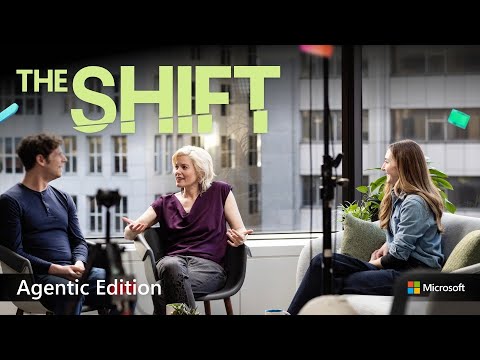
The recent YouTube episode of The Shift from Microsoft Azure brought together members of the Microsoft Foundry team to debate whether context engineering has overtaken RAG as the dominant approach to building AI applications. In the episode, Allison Sparrow, Pamela Fox, and Matt Gotteiner answered a community question and walked viewers through practical examples and emerging best practices. Recorded in February 2026, the discussion reflected the state of enterprise adoption and addressed both promising innovations and persistent limitations.
Consequently, the video aimed to clarify misconceptions and to position different techniques within a larger design framework. It emphasized that the field has moved from simple recipes toward a more deliberate engineering practice. Therefore, the episode serves as a useful update for architects and product teams deciding how to structure AI-driven systems today.
Defining Context Engineering and Its Scope
First, the hosts explained context engineering as the discipline of designing the complete context that an LLM sees, rather than treating retrieval alone as the solution. They described this approach as inclusive of vector stores, agent skills, model context protocols, and long-context windows, all coordinated to shape model behavior. As a result, teams must consider freshness, relevance, and structure when preparing inputs for generation.
Moreover, the episode argued that context engineering reframes questions about what to feed models and when to update that information. Thus, it elevates design choices about evidence ordering, query routing, and orchestration into core engineering concerns. This framing shifts responsibility from one-off prompt tweaks to ongoing contextual governance.
RAG’s Continued Relevance and Evolution
Despite the attention on context engineering, the hosts made clear that RAG—or retrieval-augmented generation—remains central for many production uses. They noted that modern RAG has matured into hybrid pipelines that blend semantic and keyword search, dynamic retrieval depth, and agentic orchestration to decide what context to surface. Consequently, RAG still performs strongly for large, dynamic knowledge bases that require repeatable audit trails and predictable latency.
However, the conversation also highlighted that RAG has evolved rather than stayed static, and teams now must weigh tradeoffs between retrieval precision and system complexity. For instance, adding advanced ranking and evidence ordering improves accuracy but increases engineering effort and maintenance. Therefore, organizations must balance the benefits of higher fidelity against operational costs and reliability needs.
Where Long-Context Models Shine — and Where They Falter
The panel acknowledged that expanded context windows, now reaching millions of tokens in leading models, unlock clear advantages for specific tasks like analyzing single long documents or preserving meeting narratives. In those cases, long-context approaches reduce the need for intermediate retrieval steps and can simplify prototypes and one-off research. Consequently, they can speed development for scenarios where the entire context naturally fits into memory.
Nevertheless, the hosts cautioned that long contexts suffer from position sensitivity and can struggle with hierarchical abstraction across many documents. Moreover, processing time and token costs rise sharply as context length grows, which makes full-context usage impractical for high-volume enterprise workloads. Thus, teams must decide when simplicity justifies higher per-query cost and when selective retrieval will yield better long-term efficiency.
Practical Tradeoffs and Implementation Challenges
Finally, the discussion turned to operational realities and recommended practices. The hosts stressed that latency, cost, and model accuracy form a three-way tradeoff: optimizing one dimension typically affects the others, so architects must prioritize based on use case requirements. For example, systems with strict audit and compliance needs may favor RAG pipelines despite increased orchestration, while exploratory research may accept long-context costs for faster iteration.
They also surfaced several implementation challenges, including the need for robust metadata, clear updating policies, and testing strategies to avoid overfitting to training artifacts. In addition, integrating agentic decision-making increases system complexity and demands stronger monitoring and debugging tools. Consequently, organizations should plan phased adoption, instrument behavior carefully, and invest in workflows that let teams iterate on context design rather than treating it as a one-time setup.
Conclusion: Complementary Approaches within a Unified Strategy
In summary, the YouTube episode from Microsoft Azure framed context engineering not as a replacement for RAG but as a broader discipline that includes it. The hosts recommended treating RAG, long-context models, and agent skills as tools in a unified toolbox, selecting each based on specific constraints like latency, cost, and document structure. Therefore, product teams should adopt a mixed strategy that aligns technical choices with business priorities.
Overall, the video provides a grounded perspective for teams planning AI applications in 2026, noting that thoughtful context design and clear tradeoff analysis will determine success more than any single emerging buzzword. As the field continues to mature, organizations that invest in context engineering practices and robust evaluation will likely gain the most durable advantages.

Keywords
context engineering, context engineering vs RAG, retrieval-augmented generation, RAG best practices, context-aware LLMs, prompt engineering for context, RAG alternatives, context management for LLMs