- All of Microsoft
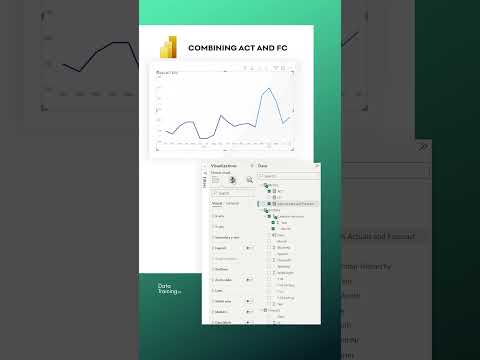
Merge Actuals & Forecasts Easily in Power BI
Unlock Insights: Seamara12345s Power BI Youtube Short Blends Forecast & Actual Data!
Key insights
- Discuss the technique of combining both forecast and actual data in Power BI.
- Focus on the visualization aspects within Power BI for effective data presentation.
- Highlight the importance of accuracy in forecasting and how it impacts business decisions.
- Explain the tools and functions in Power BI that facilitate the merging of these data types.
- Illustrate through an example or case study, the practical application of this integration.
Understanding Data Integration in Power BI
Power BI, a potent tool in Microsoft's suite, is tailored for complex data analysis and business intelligence. One of its concrete applications is the integration of forecasted data with actual outcomes. This integration allows users to gain a granular understanding of their business performance compared to the forecasted metrics.
Having accurate forecasts and integrating them with real-time data helps businesses make informed decisions. The ability to foresee performance and compare it against actual outcomes enables companies to pinpoint discrepancies, adjust expectations, and refine strategies on the fly. Power BI provides robust tools to create visual dashboards that represent both historical and forecasted data, thus making it easier to track performance over periods.
The process isn't just about juxtaposition of data but also about understanding the deviations. This understanding drives strategic business planning and operational adjustments. By leveraging Power BI to combine these data forms, businesses can enhance their analytical processes, resulting in more precise and strategic decision-making paths.
The significance of this practice is evident across various sectors, from finance and sales to supply chain management, where predictive analytics play a crucial role. Power BI’s functionality in merging forecasted and actual data not only simplifies the visual representation of data but also boosts the analytical capabilities of the organizations.
Keywords
Power BI Forecast Actuals, Power BI Actual vs Forecast, Combine Data in Power BI, Forecasting in Power BI, Actuals Reporting Power BI, Visualize Forecast Actual Power BI, Power BI Data Comparison, BI Forecast Accuracy Analysis