- All of Microsoft
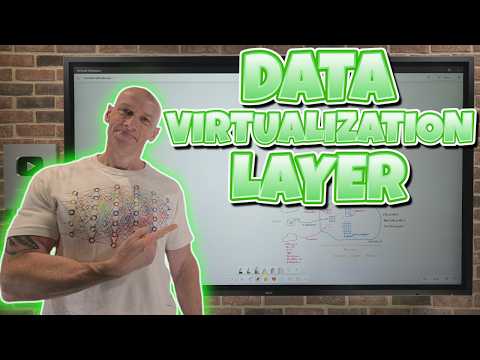
Azure: Enterprise Data Virtualization
Principal Cloud Solutions Architect
Unify data with Microsoft Fabric OneLake and Azure to virtualize silos, centralize governance, power AI semantic models.
Key insights
- Data Virtualization Layer
Creates a single logical view across databases, lakes, and clouds without copying data. This lets teams run real-time queries and combine diverse sources for analytics and reporting. - Microsoft Fabric & OneLake
Fabric uses OneLake as a single namespace and workspace model to organize data across the enterprise. That unified structure simplifies discovery, access, and collaboration for analysts and engineers. - Shortcuts and External Access
Shortcuts let you reference files or tables in place instead of duplicating them, and external tables/OpenRowset enable ad‑hoc or production queries. Use managed identities and scoped credentials to keep access secure. - Managed Transformations & Mirroring
Use managed transformations when you need repeatable, governed pipelines; choose mirroring or copies only when performance, locality, or compliance require physical data movement. Balance virtualization with targeted copies for speed. - Governance & Semantic Models
Apply policies for access control, lineage, and masking to meet security and compliance needs. Build semantic models to provide consistent business definitions for BI, reporting, and shared analytics. - Intelligence for AI
A governed virtual layer delivers clean, current inputs for AI and analytics, reducing data prep time and improving model quality. It supports use cases from real‑time scoring to enterprise reporting.
The following article summarizes a YouTube video by John Savill's [MVP] that explains why organizations should build an enterprise data virtualization layer and how to do it. In the video, the presenter outlines the pressure AI places on data teams and shows practical options using Microsoft technologies. Furthermore, the discussion covers design choices, tools, and governance practices that affect performance and compliance.
What the Video Covers
First, the video frames a clear problem: AI and analytics demand fast, governed access to many kinds of data, but most enterprises still struggle with data silos. It then walks through a set of architecture patterns that deliver a virtualized access layer without copying every dataset. Importantly, the presenter maps these ideas to familiar Microsoft components, and he shows how they combine to form a unified experience.
Next, the chapters in the video highlight specific topics such as OneLake, shortcuts, managed transformations, mirroring, and the role of semantic models for BI and AI. The step-by-step sequence helps viewers see both the tools and the operational choices that matter when building a production-grade layer. Consequently, the video blends conceptual points with hands-on examples to make the approach actionable.
Core Virtualization Techniques
The video emphasizes two main ways to virtualize data: on-the-fly querying and external table definitions. For ad-hoc exploration, the presenter demonstrates the use of OPENROWSET to probe files in a lake, which supports rapid discovery without long setup time. By contrast, production workloads benefit from persistently defined external objects such as CREATE EXTERNAL TABLE, which give repeatable performance and clearer metadata for downstream tools.
Moreover, the presenter ties these SQL patterns into platforms like Microsoft Fabric and SQL Managed Instance, and he explains how to point external data sources to lakehouse paths. He also mentions partner tools such as Denodo to provide a governed virtualization layer that adds features like data masking and Active Directory integration. Thus, the approach mixes native Fabric capabilities with partner products to balance flexibility and enterprise controls.
Practical Use Cases and Data Types
The video highlights practical scenarios where virtualization pays off, including real-time BI, AI model training, and compliance-bound analytics. For example, analytics teams can join structured tables with Parquet files in a lakehouse without duplicating data, which speeds iterations for analysts and data scientists. Additionally, virtualization supports hybrid setups where some data stays on-premises while other sources live in cloud storage.
Because data comes in many formats, the presenter covers how to register CSV, Parquet, and other file formats, and how to tune file-format settings for correct parsing. He also discusses shortcuts and external references that let teams surface data across workspaces while retaining a single logical namespace. As a result, teams can work with diverse types of data while keeping discoverability and governance intact.
Governance, Semantic Models and AI Integration
Governance features prominently in the video, where the presenter argues that a virtualized layer must still enforce policies such as row- and column-level security. He shows that semantic models add value by presenting business-friendly names and metrics to tools like Power BI, which reduces duplication of logic and improves consistency. Therefore, a good semantic layer both simplifies consumption and centralizes control.
Further, the video explains how semantic models and curated datasets feed AI workloads to ensure data quality and lineage. By providing consistent views, organizations can make models more reliable and auditable. However, the presenter cautions that adding governance layers increases operational work and requires clear processes and automation to scale.
Trade-offs and Implementation Challenges
The presenter balances benefits with clear trade-offs: virtualization reduces data movement but can increase query latency, especially for complex joins across remote sources. Consequently, teams must decide when to use shortcuts or mirroring, and when to create managed transformations that prepare data into more query-friendly forms. Each choice affects cost, latency, and maintenance effort.
In addition, the video covers organizational challenges such as skills gaps and change management. Implementing a virtual layer requires coordination across infrastructure, security, and data teams, so governance tools and automation become essential. Lastly, the presenter stresses that monitoring and tuning are ongoing tasks; without them, virtualized queries can become expensive or unreliable over time.
Conclusion
In summary, the YouTube video by John Savill's [MVP] offers a practical roadmap for building an enterprise data virtualization layer using Microsoft technologies and partner tools. It makes a persuasive case that virtualization can accelerate AI and analytics by offering a single logical view of diverse data while still supporting governance and semantics. Ultimately, organizations must weigh performance, cost, and operational complexity, but the video provides clear guidance on how to approach those trade-offs thoughtfully.

Keywords
enterprise data virtualization, data virtualization layer, virtual data layer, data virtualization architecture, data virtualization platform, real-time data virtualization, data virtualization best practices, data virtualization use cases