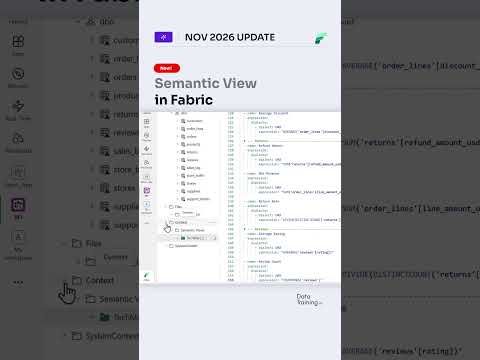
Microsoft Fabric Semantic Views: what they do
Fabric Semantic Views let teams define business metrics and relationships once, then reuse them in reports and compatible AI experiences.
Key insights
- Semantic Views define datasets, relationships, metrics, and business meaning alongside data in Fabric lakehouses.
- Metrics in the current preview must be defined with DAX.
- Publishing creates a managed, read-only Direct Lake on OneLake semantic model.
- OneLake shortcuts can reuse centrally maintained Semantic Views across lakehouses without copying definitions.
- Semantic Views are in public preview and currently can be created only in Fabric lakehouses.
Microsoft Fabric Semantic Views let teams define business metrics, relationships, and data meaning once and reuse those definitions across reports and compatible AI experiences. They matter to Fabric data teams and report authors who want shared business definitions rather than separate calculations in each experience. How to Power BI published a YouTube Short about Semantic Views; the practical workflow is to define the view in a lakehouse and publish it for consumption.
What it does
A Semantic View is a reusable description of business context associated with data in a Fabric lakehouse. It can define datasets, relationships, metrics, formulas, and plain-language descriptions, but it contains definitions rather than the underlying data. The aim is to give reports and Fabric data agents a consistent basis for interpreting metrics such as revenue or gross margin.
Definitions use a YAML-based format associated with the Apache Ossie initiative. In the current preview, metrics must be written in DAX. Publishing the view creates a managed, read-only Direct Lake on OneLake semantic model; the Semantic View remains the authoritative definition, while reports and agents consume the published model.
Who it is for and what you need
Semantic Views are for teams working with Fabric lakehouses that want to reuse business definitions across analytics and compatible AI experiences. The feature is in public preview, and Semantic Views can currently be created only in Fabric lakehouses. You will need definitions for the datasets, relationships, and business metrics you want to expose, with DAX for supported metrics.
They complement rather than replace Power BI semantic models. Use a Semantic View when definitions need to be shared across tools; use a Power BI semantic model when advanced modeling capabilities are required.
How it works
- Create or open a Fabric lakehouse and select New semantic view.
- Start from Microsoft’s YAML template or upload YAML definitions.
- Describe datasets, relationships, metrics, and their meaning; define supported measures using DAX.
- Publish the view, then use its resulting Direct Lake semantic model in reports and compatible AI experiences.
- When business definitions change, update the Semantic View and publish the changes.
OneLake shortcuts provide another way to reuse centrally maintained Semantic Views across lakehouses without copying the definitions. This can help teams keep shared business logic from drifting into separate versions.
Limitations and alternatives
Public preview means teams should evaluate the feature before relying on it as the sole basis for production-critical workloads. Semantic Views currently support selected constructs from the Apache Ossie format, not the complete standard, and the published semantic model is read-only. Preview APIs require beta settings and are intended for evaluation and development.
The feature does not include every capability of a fully developed Power BI semantic model. For advanced modeling, use a Power BI semantic model; for reusable definitions across tools, assess whether a Semantic View fits the lakehouse workflow. More Microsoft Fabric coverage can help place the feature in the broader platform.
Sources
- How to Power BI YouTube Short on Semantic Views
- How to Power BI original Short
- How to Power BI website
Frequently asked questions
Are Microsoft Fabric Semantic Views generally available?
Semantic Views are in public preview.
Where can I create a Fabric Semantic View?
Semantic Views can currently be created only in Fabric lakehouses. Select New semantic view from a lakehouse.
Do Fabric Semantic View metrics use DAX?
Yes. Metrics in the current preview must be defined using DAX.
How is a Semantic View different from a Power BI semantic model?
A Semantic View provides reusable definitions across tools and publishes as a managed, read-only Direct Lake model. A Power BI semantic model is the alternative when advanced modeling capabilities are needed.