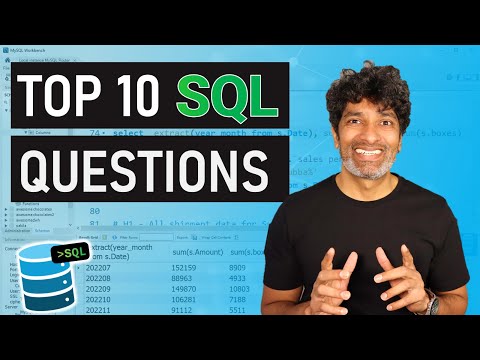
SQL Interview: 25 Real Questions
Sharpen SQL interview skills CTE vs subquery, window functions, LAG and JSON for analysts using Azure SQL and Power BI
Key insights
- SQL interview: This YouTube guide walks through 10 real interview questions tailored for data analyst roles and Microsoft-style problems.
It explains why SQL still matters in 2025 and breaks the session into five short chapters with focused examples. - Window functions: Expect questions that use ROW_NUMBER(), LAG(), and percent calculations to rank rows and compute team or company percentages.
These functions let you calculate running totals, rankings, and per-team shares without complex joins. - Aggregation & filtering: Common tasks include grouping by user, using HAVING to filter counts (for example, VIP users with >10 purchases last month), and applying WHERE clauses for precise filters.
Practice using GROUP BY, COUNT(), and date filters like recent purchases to answer business questions. - SQL Server functions: Microsoft-focused examples use functions such as DATEADD and GETDATE for time filters and demonstrate how to get Nth values with ROW_NUMBER or subqueries.
Also learn to read EXPLAIN plans and add indexes to avoid table scans and speed up queries. - SQL in applications: The video shows real scenarios like analyzing product sales, Xbox user behavior, or Azure server data and explains using SQL inside tools such as Python or BI platforms.
Be ready to describe when you embed SQL in an application and how it helped a workflow or report. - Practical coding: Focus on writing correct, efficient queries and explaining your logic clearly in interviews; practicing 7–9 real problems raises your odds of success.
Interviewers value clear solutions, performance awareness, and the ability to choose CTEs, subqueries, or window functions when appropriate.
Overview of the Video
Chandoo presents a focused YouTube tutorial titled "Test Your SQL Skills With These Real Interview Questions!" that targets candidates preparing for data analyst roles. The video frames SQL as a core interview skill and walks viewers through ten practical interview-style problems, followed by extra technical questions and broader practice resources. Overall, the presentation balances hands-on examples with interview strategy, aiming to help viewers apply queries in real-world scenarios.
The video is organized into short chapters that make it easy to follow specific topics, from the basics to advanced window function examples and final tips. In addition to the ten main questions, Chandoo lists five technical extras and points to a larger set of practice queries for deeper study. Therefore, viewers can choose focused practice for interviews or broader study paths for long-term skill building.
What the Video Covers
First, Chandoo reviews foundational tasks such as filtering and aggregation, emphasizing clear problem statements and step-by-step logic. Next, he moves into grouping logic and ranking techniques, where window functions like LAG help detect trends and compute relative metrics. Moreover, the video includes practical scenarios like computing a salesperson's share of company sales and identifying high-frequency purchasers, which mirror typical analytic questions in interviews.
Importantly, Chandoo also addresses how SQL interacts with other tools by asking about using SQL inside programming languages such as Python and about processing JSON within a database. He pairs conceptual explanations with examples that show both what to write and how to explain your approach during an interview. As a result, the content helps candidates prepare not only to code but also to communicate their reasoning clearly.
Key Concepts and Tradeoffs
Chandoo highlights several technical tradeoffs that candidates should understand. For example, choosing between a CTE and a subquery often involves balancing readability against execution characteristics; CTEs can make complex logic clearer, while inline subqueries sometimes let the optimizer do a better job depending on the engine.
Similarly, using window functions versus aggregate joins requires a tradeoff between expressiveness and performance. Window functions frequently simplify calculations like percent-of-total or running sums, but they can be heavier on processing for very large datasets. Consequently, interviewees should explain both the logical clarity and the potential performance implications of their chosen methods.
Interview Strategy and Practical Tips
Chandoo stresses the importance of structuring answers under interview pressure, recommending that candidates first restate the problem, then outline the approach, and finally write the query. This method shows the interviewer both understanding and control, which matters as much as producing a correct result quickly. Moreover, he encourages showing intermediate steps, such as creating a small grouped result before applying ranking or percentages, to make debugging easier.
When it comes to optimization, he suggests using simple tools like index-aware joins and analyzing execution plans, but warns against premature optimization in a time-limited interview. Instead, candidates should present a clear, correct solution first and then discuss optimizations if time allows. That approach balances correctness, clarity, and performance concerns effectively.
Challenges, Final Takeaways, and Next Steps
Preparing for these interview questions involves practical tradeoffs in study time: broad coverage of many query types versus deep mastery of a few complex patterns. Chandoo's video highlights that employers value both the ability to craft correct queries and to explain why that query is appropriate, so candidates must practice clear explanations as well as coding. At the same time, dialect differences across database platforms can create subtle pitfalls, so practicing on the specific engine you expect to encounter, such as SQL Server, improves readiness.
In closing, the video serves as a compact, actionable guide for anyone aiming to sharpen their SQL skills for interviews. By combining practical examples, tradeoff discussion, and interview tips, Chandoo gives viewers a usable roadmap: start with clarity, show your process, and be ready to discuss performance and alternatives. For candidates, the next steps are consistent practice, timed problem solving, and rehearsing concise explanations of design choices.
https://hubsite365cdn001img.azureedge.net/SiteAssets/TopicImages/marvin-meyer-SYTO3xs06fU-unsplash.jpgKeywords
Test SQL skills, SQL interview questions, SQL interview practice, SQL query challenges, database interview questions, advanced SQL interview questions, SQL coding interview, SQL interview prep