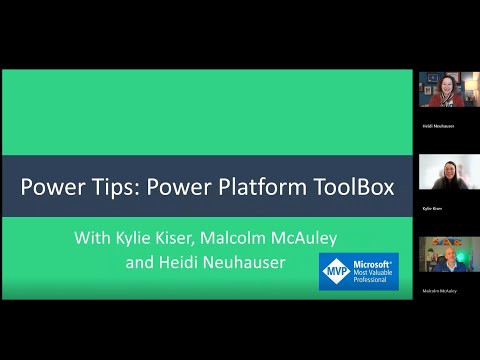
Power Platform Toolbox: Build Apps Fast
Microsoft MVP | User Adoption, Dynamics 365 + Power Platform Expert at Reenhanced
Explore Power Tips in Power Platform ToolBox for Power Apps Power Automate Power BI Dataverse boost automation insights
Key insights
- Power Platform ToolBox
Summary: I could not find an official announcement or detailed public documentation for a product by this exact name. Treat current mentions as unconfirmed until Microsoft publishes details. - productivity
Likely goal: speed up app and automation builds by offering reusable assets, templates, or utilities that save time for makers and developers. - prebuilt components
Expected content: UI components, templates, scripts or flows that teams can drop into projects to reduce repetitive work and enforce patterns. - connectors
Integration focus: the ToolBox would probably emphasize easy connection to Microsoft 365, Dataverse and common third‑party services to simplify data access and cross‑system automation. - governance
Governance and compliance: assume controls for environment targeting, solution lifecycle, and admin oversight to align with existing Power Platform policies and tenant rules. - official sources
Next steps: check the Microsoft Power Platform blog, Microsoft Learn release notes, or official product roadmaps for confirmation and full technical details before publishing.
Overview of the announcement
The YouTube video by Heidi Neuhauser [MVP] introduces a new offering called the Power Platform ToolBox, and it frames the toolbox as a collection of utilities intended to support makers and administrators on the Power Platform. The presenter outlines the purpose of the toolbox as simplifying common tasks and accelerating routine work, while noting that detailed public documentation remains limited at this time. Consequently, viewers are left with a general impression of intent rather than a complete technical specification. Nevertheless, the video represents a useful signal that the ecosystem is exploring curated tool sets to improve productivity.
Key points presented in the video
First, the video highlights a few categories of capability that the toolbox aims to address, such as app building helpers, data connectors, and governance utilities, and the speaker demonstrates a high-level walkthrough of how one or two tools might work in practice. Second, the presenter emphasizes usability and time savings, suggesting that the toolbox will bundle common shortcuts and prebuilt patterns so teams can avoid repetitive tasks. Third, Heidi stresses community feedback and iterative development as part of the roadmap, implying that the offering could evolve based on user needs and contributions. Together, these elements position the toolbox as a practical, community-aware addition rather than a closed product.
What the announcement leaves unclear
However, the video does not resolve several important questions that practitioners will want answered before adopting the toolbox for production use. For example, it remains unclear how the tools integrate with existing environments, how updates will be managed, and what the security or compliance posture will be for administrative utilities. Additionally, the presenter did not provide specifics about licensing, pricing, or any constraints that might apply to enterprise tenants. Therefore, organizations should treat the announcement as an initial preview and plan to seek formal documentation before making deployment decisions.
Tradeoffs and governance considerations
Balancing flexibility and control will be central to successful adoption of the Power Platform ToolBox, because administrators often face tradeoffs between empowering makers and maintaining governance. On one hand, bundling productivity tools can speed development and reduce accidental inconsistencies, but on the other hand, introducing new administrative utilities can expand attack surface and create versioning complexity. Consequently, teams must weigh short-term gains in speed against the long-term costs of maintenance, policy enforcement, and potential dependency on third-party or vendor-supplied components. In practice, a staged rollout with clear governance policies and pilot programs will help organizations find a pragmatic balance.
Challenges of different approaches
Developers and IT leaders face several implementation challenges regardless of the integration approach they choose, and the video implicitly points to these tradeoffs without resolving them. If the toolbox opts for deep platform integration, teams may get richer capabilities but also expose themselves to breaking changes when the platform evolves. Conversely, a lighter, loosely coupled approach reduces integration risk but may offer less seamless user experiences and require additional glue code. Moreover, support and community adoption will shape the toolbox’s practical value, so teams should consider readiness to contribute feedback and test early releases.
Next steps for teams and recommendations
Given the current level of detail in the video, practical next steps include requesting formal documentation, testing the toolbox in a sandboxed environment, and clarifying licensing and support terms with the provider. Meanwhile, project leads should plan pilot scenarios that evaluate both developer productivity gains and governance implications, because pilots will reveal how well the toolbox fits existing processes and security models. Finally, staying engaged with the creator community and monitoring updates will be important, since the presenter indicated that the offering is expected to evolve with user feedback.
Conclusion
In summary, Heidi Neuhauser’s video announces the Power Platform ToolBox as a potentially helpful set of utilities for makers and administrators, but it leaves several operational and governance questions open. Therefore, while the toolbox looks promising for speeding routine tasks and promoting reuse, organizations should proceed with careful evaluation and a phased approach. Ultimately, measured pilots and clear policies will help teams capture benefits while managing the risks that come with adding new tooling to the platform.

Keywords
Power Platform ToolBox, Power Platform tools, Power Tips, Power Platform toolkit, Power Apps tips, Power Automate tips, Power BI integrations, Low-code Power Platform