Introduction
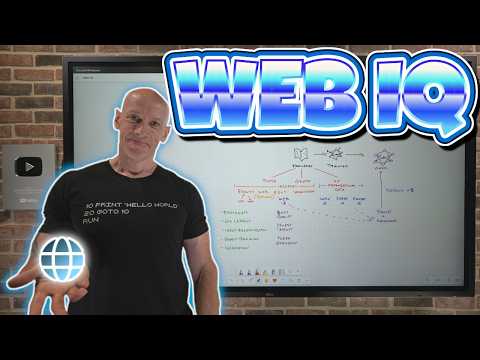
In a recent YouTube presentation, John Savill’s [MVP] walked viewers through Web IQ, Microsoft’s newly announced service aimed at giving AI systems fresh, verified web context. The video breaks the topic into chapters, beginning with model training and the limits of static datasets, and then moves through practical demonstrations of grounding agents with live web evidence. Consequently, the piece serves as both an explainer and a practical tour for developers and architects who want to understand how live web data can be fed into AI workflows.
Importantly, the presenter frames Web IQ as a tool meant for machines rather than human searchers, and he highlights the service’s intent to return ready-to-use passages and citations. Moreover, the video emphasizes that this is not a consumer search product; instead, it is positioned within Microsoft’s broader enterprise intelligence stack. Therefore, readers should view the service as infrastructure for applications that require up-to-date and verifiable information.
What Web IQ Does
According to the video, Web IQ acts as an AI-focused search layer that supplies ranked, citation-ready context from web pages, news, images, and video. The system is designed to return passages and structured evidence rather than long documents, which helps models reason with current facts rather than relying only on training data. Furthermore, the presenter explains how this evidence is intended to be injected into an agent’s context window so that downstream LLMs can use it directly during multi-step tasks.
Additionally, Microsoft positions Web IQ as one component in a suite that includes Work IQ and Fabric IQ, with Web IQ bringing external web intelligence into the enterprise mix. This separation matters because it clarifies the role of Web IQ: provide external grounding while other components handle internal signals and analytics. Consequently, organizations can mix and match these layers depending on where trusted evidence is needed.
Technical Innovations and Tradeoffs
The video highlights several technical shifts that distinguish Web IQ from conventional search APIs, including a rebuilt grounding stack and optimizations for multi-step agents. For instance, Microsoft claims sub-second grounding latency and lower token usage by returning only the most relevant passages, which can materially reduce costs for production workloads. However, these advantages come with tradeoffs: optimizing for short, high-quality passages may miss broader context found in longer documents, and aggressive passage selection can surface fragments that require careful validation.
Moreover, the presenter notes that Web IQ is model-agnostic and accessible via REST, SDKs, and MCP tooling, which reduces vendor lock-in but adds complexity for teams that must integrate new APIs into existing pipelines. Therefore, organizations face a balance between adopting a specialized grounding service that improves latency and token efficiency and maintaining the flexibility to use multiple retrieval strategies. In short, speed and cost savings must be weighed against the need for comprehensive context and integration effort.
Challenges with Data and Grounding
John Savill underscores common problems with training data that drove the need for a service like Web IQ, including stale knowledge and gaps in organizational data. He shows how injecting knowledge via prompts or external retrieval can patch those gaps, but he also warns that internet sources vary in quality and relevance. As a result, grounding systems must prioritize trust signals and clear citations so that downstream users can verify evidence quickly.
Furthermore, the presentation discusses the challenge of integrating organizational data with public web content, noting that security, access controls, and relevance ranking complicate the picture. Consequently, enterprises must design policies that govern when to surface internal documents versus publicly available evidence and ensure the system respects privacy and compliance constraints. Ultimately, delivering reliable, auditable grounding requires both engineering and governance work.
Demonstration, Modes, and Practical Use
The video includes a live demonstration that showcases features such as a passages mode and the ability to ground responses with news, images, and video excerpts. During the demo, Savill shows how Web IQ can return compact, citation-ready passages that a model can use immediately, which illustrates the product’s intended workflow. While this demo is convincing for straightforward queries, the presenter also points out cases where human review remains necessary to confirm nuanced or high-impact decisions.
In addition, he covers browse and orchestration capabilities that help agents follow multi-step reasoning chains across web sources, yet he also highlights the limits of automated ranking when content is sparse or contradictory. Therefore, teams should expect to combine automated grounding with human-in-the-loop verification, particularly for critical use cases. This hybrid approach reduces risk while leveraging the speed benefits of automated retrieval.
Availability, Pricing, and Final Takeaways
The video clarifies that Web IQ is currently available under limited access for enterprise customers, and that interested organizations must request access through Microsoft channels. Pricing and broader availability details remain selective, so early adopters should plan pilots and evaluate cost implications with concrete workloads. Meanwhile, the presenter offers practical recommendations for teams that want to test the service without committing to full production use immediately.
In summary, John Savill’s walkthrough presents Web IQ as a purpose-built grounding layer for AI agents that emphasizes freshness, speed, and citation-ready evidence. Yet, as he notes repeatedly, the tradeoffs between latency, token costs, and contextual completeness mean that organizations must design integration and governance carefully. Consequently, while Web IQ promises to simplify web grounding for agents, successful adoption will depend on balanced engineering decisions and clear verification practices.