GENIUS: Enterprise AI Advice for Professionals
Certified Power Apps Consultant & Host of CitizenDeveloper365
Microsoft expert shares Copilot Studio, Power Platform and Agents tips for enterprise AI, low-code productivity
Key insights
- Enterprise AI integration
Start now to gain measurable productivity and competitive advantage. The episode stresses AI as a partner for thinking, not just a tool for automation. - Microsoft Copilot Studio & Agents
Use Copilot Studio and agent frameworks to build personalized assistants and automate workflows. Key features include session memory, context continuity, and proactive suggestions. - 30-day Agent-Ready roadmap
Run a focused pilot: pick one use case, prepare data and connectors, secure access, and measure results. Iterate quickly based on user feedback and metrics. - Power Platform & low-code
Empower citizen developers to deliver AI-enabled apps fast with low-code tools. Combine Copilot features with Power Platform to prototype and scale solutions without heavy engineering. - AI governance & observability
Set clear policies for data handling, privacy, and human oversight. Monitor outputs, track performance, and enable controls like “forget” to meet compliance needs. - Common pitfalls & realistic expectations
Avoid overhyping results; expect iteration and training time. Invest in prompt engineering, user training, and clear KPIs to capture real value.
Overview of the Episode
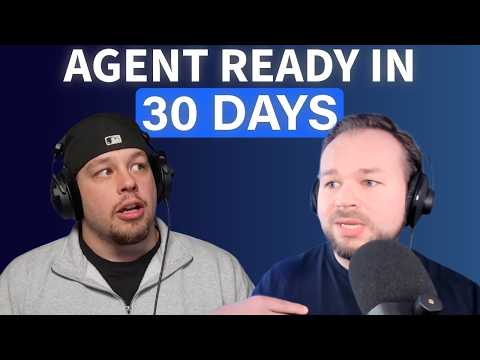
In a recent PowerTalks episode hosted by Griffin Lickfeldt (Citizen Developer), cloud architect Daniel Rohregger discusses practical strategies for applying Enterprise AI in the workplace. The conversation focuses on real-world use of tools such as Copilot Studio and Agents, and it balances technical detail with advice aimed at builders and non-developers alike. Furthermore, the episode highlights a concrete, short-term plan that organizations can use to become Agent-Ready. Overall, the discussion stresses immediate action while noting realistic limits and expectations.
- Host: Griffin Lickfeldt (Citizen Developer)
- Guest: Daniel Rohregger, Cloud Architect
- Focus: Microsoft Copilot Studio, Agents, and the Power Platform
- Format: Interview-style technical guidance and roadmap
Key Insights on Tools and Techniques
Rohregger explains that tools like Copilot Studio and integrated Agents change how teams approach problem solving by shifting routine tasks to AI-assisted workflows. He shares examples where persistent context and personalized memory speed up repeated processes, which in turn improves productivity and reduces repetitive manual work. However, he cautions that tool choice and configuration matter, because poorly tuned agents amplify errors rather than reduce them. Consequently, organizations must pair tool adoption with sensible validation and monitoring.
Additionally, the episode emphasizes the value of the Power Platform for rapid solution building, especially for citizen creators who lack heavy engineering resources. Low-code platforms shorten development cycles and make experimentation accessible, yet they can create technical debt when governance and lifecycle practices lag. Therefore, Rohregger recommends combining low-code agility with clear standards for testing, observability, and change management so solutions remain reliable as they scale. This balanced approach helps teams gain momentum without losing control.
Practical Roadmap and Tradeoffs
One of the most practical elements of the episode is a suggested 30-day roadmap to become Agent-Ready, which blends quick wins with foundational tasks such as data scoping and pilot design. Initially, teams should prioritize small, measurable pilots that validate value and uncover integration issues, and then expand based on results. While this fast-start model delivers early evidence of benefit, it has tradeoffs: rushing pilots increases the risk of incomplete compliance checks and hidden operational costs. Thus, prudent teams should thread the needle between speed and careful governance.
Financial and organizational tradeoffs also surface in the conversation, where Rohregger notes that licensing, infrastructure, and staff training require upfront investment even when long-term ROI looks positive. Moreover, the more you automate, the more you must invest in oversight to prevent small issues from becoming systemic. For example, automating document generation can save time but also multiply compliance gaps if templates are unchecked. As a result, leaders must weigh short-term gains against the resources needed to sustain safe scale.
Governance, Security and Organizational Challenges
Rohregger outlines several governance challenges, including data privacy, access control, and the need for explainability in AI-driven decisions. In particular, enterprises must ensure that persistent memories and connectors do not expose sensitive data, and they should implement "forget" capabilities and audit trails to maintain compliance. Furthermore, observability plays a critical role because teams must detect drift, measure performance, and understand when agents behave unpredictably. Without these controls, early efficiencies can turn into operational risks.
Beyond technical controls, the episode addresses human factors such as skills gaps and expectation management. Many organizations overestimate short-term capabilities of generative AI while underinvesting in training and change management, and this mismatch slows meaningful adoption. Rohregger recommends targeted upskilling for both technical staff and citizen builders, coupled with clear governance roles that preserve agility. Ultimately, successful adoption depends on a cultural shift toward shared responsibility and continuous improvement.
What This Means for Professionals and Next Steps
For professionals, the episode offers a pragmatic takeaway: begin with focused pilots, learn quickly, and scale with governance in place to capture durable benefits from Enterprise AI. Career-wise, familiarity with the Power Platform and agent design now represents tangible skill growth, especially for those who can bridge business needs and technical implementation. Nevertheless, practitioners should remain realistic about timelines and costs so they can manage stakeholder expectations and deliver steady value.
In conclusion, Griffin Lickfeldt’s interview with Daniel Rohregger provides a measured blueprint for adopting Copilot Studio and Agents in enterprise settings, combining immediate tactics with longer-term safeguards. While the promise of productivity and automation is clear, the episode stresses that balance—between speed and safety, between low-code convenience and technical rigor—is essential for lasting success. Therefore, organizations that pilot thoughtfully, govern proactively, and invest in people will most likely turn early experimentation into sustainable advantage.

Keywords
enterprise AI advice, AI for professionals, enterprise AI strategies, PowerTalks episode 90, AI adoption in enterprise, business AI best practices, AI implementation tips for professionals, enterprise AI governance and ethics